So, you've been captivated by the legendary 'Sammy smile' and the magnificent, cloud-like white coat. Welcome to the club! Bringing a Samoyed into your life is an incredible experience. These dogs are walking bundles of joy, affection, and energy. But beneath that stunning exterior lies the brilliant, and sometimes mischievous, mind of a working dog. Effective Samoyed training isn't just a good idea—it's the key to unlocking a truly magical partnership. For beginners, this journey can seem daunting, but fear not. This is your ultimate guide for 2026 on how to nurture that fluffy puppy into a well-mannered companion.
First, understand the Samoyed mindset
Before you even pick up a treat bag, you need to get inside your Samoyed's head. This isn't a Golden Retriever eager to please at any cost. The Samoyed was bred for centuries by the Samoyedic people of Siberia to be a true partner. They pulled sleds, herded reindeer, and even slept with their families for warmth. This history forged a unique temperament:
- Highly Intelligent: They pick up on cues quickly, but they also learn how to get what they want. They are thinkers, not just doers.
- Independent Problem-Solvers: Out on the tundra, a dog that waited for a command could be a liability. They were bred to make decisions. This can translate to what we call 'stubbornness' in a home environment.
- Incredibly Social: They were never left alone in a kennel; they were part of the family. This makes them prone to separation anxiety if not properly conditioned. They need to be with their people.
- Full of Energy: Their original job was physically demanding. A bored Samoyed with pent-up energy is a recipe for a chewed-up sofa and a lot of barking.
Understanding this heritage is your first training tool. You're not training a servant; you're building a relationship with a very smart, very social partner who needs a job to do.
The golden rules of Samoyed training
With their background in mind, let's lay the foundation for success. These principles will guide you through every stage of your dog's life, from a clumsy puppy to a majestic adult.
Start early and be relentlessly consistent
The moment your Samoyed puppy comes home, training begins. This doesn't mean formal, hour-long sessions. It means setting boundaries, starting potty training, and beginning socialization. The critical socialization window—roughly between 3 and 16 weeks of age—is your golden opportunity to shape a confident, friendly adult. Consistency is your mantra. If you don't want your adult Samoyed on the couch, don't let the cute puppy on the couch. Every member of the household needs to be on the same page with rules and commands.
Positive reinforcement is your only tool
Let's be crystal clear: harsh, punishment-based methods will backfire spectacularly with a Samoyed. Their sensitive and intelligent nature means they will shut down, become fearful, or simply decide you're not a fun partner to work with. Positive reinforcement is the way. This means rewarding the behavior you want to see, making your dog want to work with you.

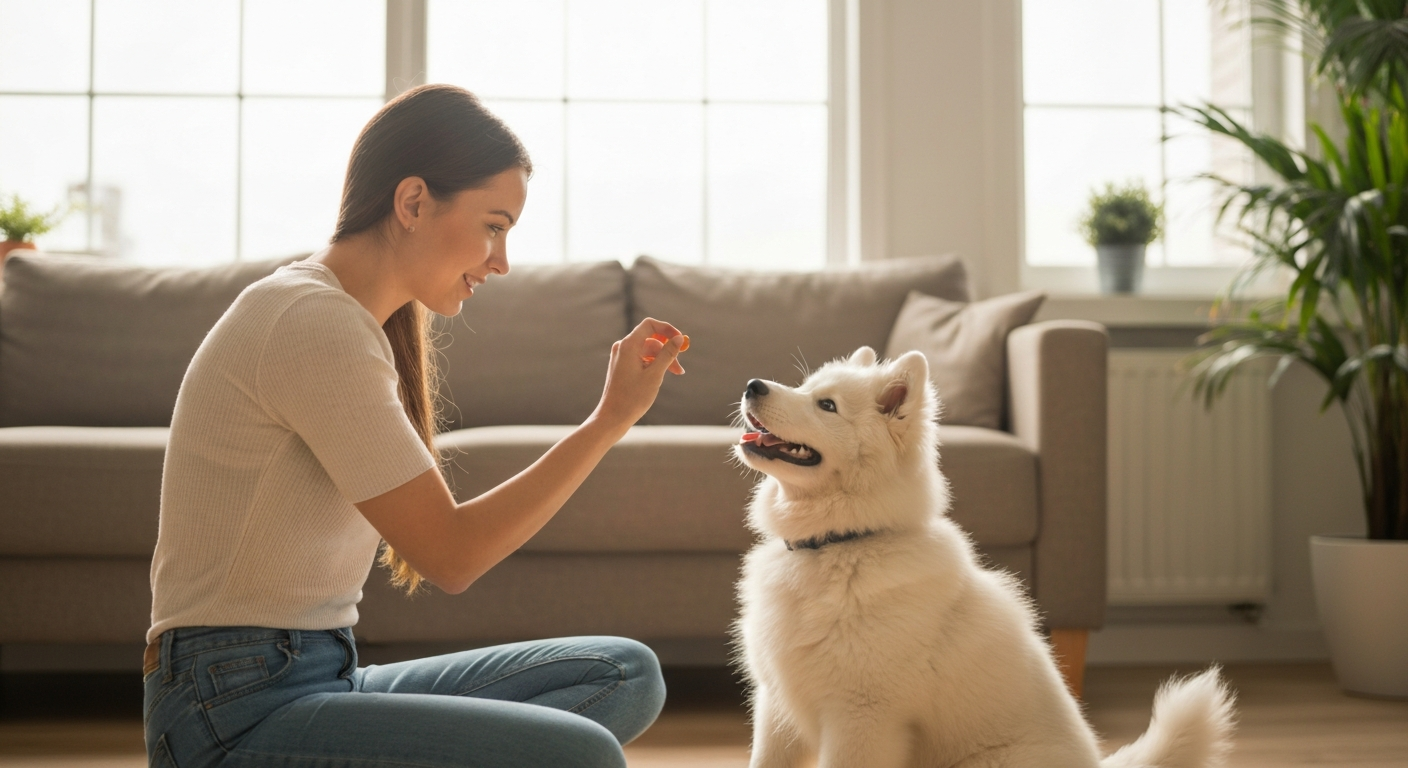
Think of it as a game. Does your puppy sit? Yes! Treat and praise! Do they look at you on a walk instead of pulling? Amazing! Treat and praise! This approach builds trust and strengthens your bond. For more in-depth techniques, explore our comprehensive dog training guides to become a positive reinforcement pro.
Keep training sessions short and fun
A Samoyed's active mind gets bored easily. Long, repetitive training sessions will lead to them 'checking out' and ignoring you. Instead of one 30-minute session, aim for three to five 5-minute sessions throughout the day. You can practice 'sit' before meals, 'stay' before going out the door, and 'come' in the backyard. Keeping it fresh, fast, and exciting will hold their attention and make them eager for the next 'game'.
Tackling common Samoyed training challenges
Every breed has its quirks, and Sammies are no exception. Here’s how to handle some of the most common hurdles you'll face.
The infamous 'Sammy Talk' (and bark)
Samoyeds are vocal. They will 'woo-woo', grumble, and bark to communicate everything from excitement to boredom. While you can't eliminate it completely, you can manage it. The key is not to yell back—that just sounds like you're barking with them! Instead, teach a 'Quiet' command. When they are barking, say 'Quiet' in a calm, firm voice. The second they pause, even for a breath, praise them and give them a treat. You're rewarding the silence, not the barking.
Leash pulling: embracing their heritage
Remember those sleds? Pulling is literally in their DNA. A standard collar and leash can put pressure on their throat and actually encourage them to pull harder (it's called oppositional reflex). A front-clip harness is a game-changer. It gently redirects them back towards you when they pull, teaching them that pulling doesn't get them where they want to go. Combine this with rewarding them every time the leash is loose, and you'll be on your way to pleasant walks. Proper exercise is crucial, not just for behavior but for their overall well-being. Ensuring their joints are supported with the right gear and activity levels is part of good preventative dog health care.
The stubborn streak: intelligence in disguise
When your Samoyed looks at you and blatantly ignores your command, they're not being defiant for the sake of it. They're asking, 'What's in it for me?' or 'Is there a better way to do this?'. Your job is to make your request the most fun and rewarding option available. Are you using high-value enough treats? Is the environment too distracting? Turn training into a puzzle they want to solve with you. Their intelligence is a gift, shared by many northern dog breeds, and learning to work with it is the ultimate training hack.
Essential gear for Samoyed training success
Having the right tools can make all the difference. You don't need a lot, but these items are non-negotiable for making your training journey smoother.
- High-Value Treats:
- Forget dry biscuits. Think small pieces of chicken, cheese, or freeze-dried liver. Something your Samoyed will go nuts for.
- Front-Clip Harness:
- As mentioned, this is essential for managing pulling without causing discomfort or injury.
- A Long Line (15-30 ft):
- Perfect for practicing recall ('come') in a safe, open area. It gives them a sense of freedom while keeping them secure.
- Puzzle Toys & Slow Feeders:
- These are crucial for mental stimulation. Feeding meals from a puzzle toy gives them a 'job' to do and tires out their brain.
Example of a daily routine for a Samoyed puppy
Structure and routine help puppies feel secure and understand expectations. Here is a sample schedule you can adapt.
| Time | Activity | Training Focus |
|---|---|---|
| 7:00 AM | Wake up, immediate potty break | Reward for successful potty outside |
| 7:15 AM | Breakfast (in a puzzle toy) | Mental stimulation, 'Sit' and 'Wait' before eating |
| 7:45 AM | Short walk & playtime | Leash manners, recall games |
| 8:30 AM - 12:00 PM | Nap/Crate time/Independent play | Crate training, preventing separation anxiety |
| 12:00 PM | Potty break & lunch | Reinforce potty training |
| 1:00 PM - 4:00 PM | Nap/Quiet time | Encourage calm behavior |
| 4:00 PM | Potty break, 5-minute training session | Practice a new cue or reinforce an old one |
| 5:30 PM | Dinner | 'Wait' command |
| 6:00 PM | Longer walk or supervised play | Socialization, controlled energy release |
| 8:00 PM - 10:00 PM | Family time, grooming, chew toy | Bonding, handling practice |
| 10:00 PM | Final potty break | Last chance before bed |
The journey is the reward
Training a Samoyed is not about achieving perfection overnight. It's about building a language and a bond of mutual respect and understanding. There will be days of frustration, but they will be vastly outnumbered by moments of joy, laughter, and pride as you watch your intelligent companion learn and grow. Embrace their spirit, work with their nature, and you won’t just have a well-behaved dog—you’ll have a loyal, smiling friend for life. Happy training!
Frequently Asked Questions
Are Samoyeds easy to train for beginners?
Samoyeds are incredibly intelligent, which means they learn quickly. However, their intelligence is paired with an independent, problem-solving nature. This can be challenging for beginners who expect blind obedience. With patience, consistency, and positive reinforcement, they are very trainable.
How do you stop a Samoyed from barking so much?
Samoyeds are naturally vocal. To manage barking, first identify the cause (boredom, excitement, alerting). Ensure they get enough physical and mental exercise. Instead of scolding, teach a 'Quiet' command by rewarding them when they stop barking on cue.
What is the most important training for a Samoyed puppy?
Early and thorough socialization is the single most important aspect of training a Samoyed puppy. Exposing them safely to a wide variety of sights, sounds, people, and other animals between 3 and 16 weeks of age builds a confident, well-adjusted adult dog and prevents fear-based behaviors later in life.