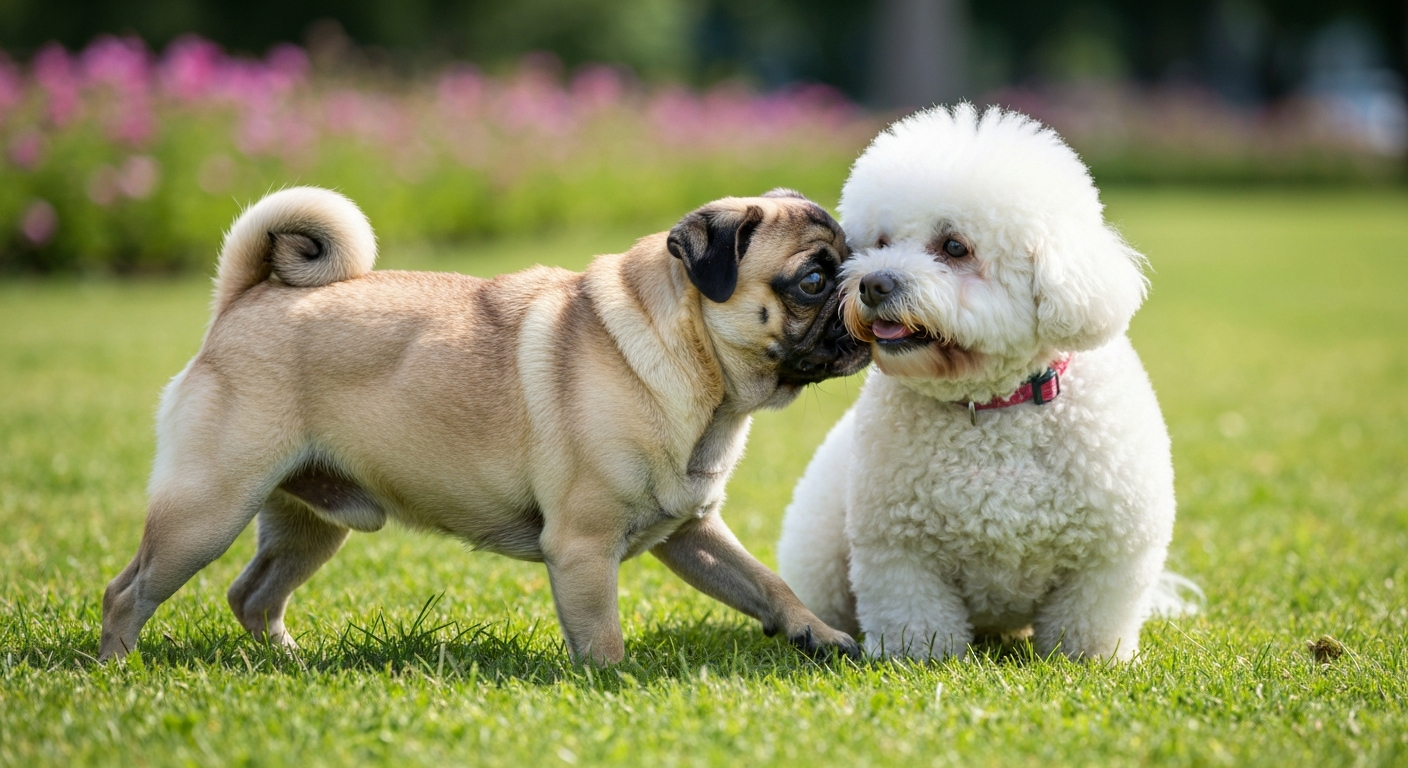
Choosing a small companion dog is a huge decision. You're not just picking a pet; you're choosing a new family member for the next 10 to 15 years! Two of the most popular contenders in the small dog world are the charming, wrinkled Pug and the fluffy, cheerful Bichon Frise. At first glance, they're both small, adorable, and suited for indoor living. But dig a little deeper, and you'll find two very different dogs with unique needs, personalities, and care requirements. So, in the great Pug vs Bichon Frise debate, which one is the right fit for you? Let's dive in and find out!
Meet the contenders: a tale of two personalities
Before we break down the details, let's get a feel for the essence of each breed. Imagine coming home after a long day. Who's waiting for you? Is it the comical Pug, snorting contentedly on the couch, who greets you with a head tilt and a series of happy grunts? Or is it the perpetually bouncy Bichon Frise, who zips around your feet in a fluffy white blur, demanding a game of fetch? Understanding their core nature is the first step in making your choice.
The Pug: an ancient charmer
Originating from China, Pugs were bred as lap dogs for emperors. They are famous for their motto, "multum in parvo," which means "a lot in a little." This perfectly captures their big personality packed into a small, sturdy body. Pugs are the clowns of the dog world—loving, a bit stubborn, and endlessly amusing.
The Bichon Frise: the cheerful performer
The Bichon Frise has roots in the Mediterranean and was later perfected in France. They were popular with royalty and eventually became beloved circus performers, thanks to their intelligence and playful spirit. A Bichon is a little ball of cottony fluff powered by pure joy and a desire to be the center of your universe.
Pug vs Bichon Frise: key differences at a glance
For those who want a quick summary, here’s a high-level comparison of these two delightful breeds. This 2026 comparison chart breaks down the most important traits.
| Feature | Pug | Bichon Frise |
|---|---|---|
| Temperament | Charming, stubborn, loving, comical | Playful, cheerful, curious, sensitive |
| Average Weight | 14-18 lbs (6-8 kg) | 12-18 lbs (5-8 kg) |
| Average Height | 10-13 inches (25-33 cm) | 9.5-11.5 inches (24-29 cm) |
| Lifespan | 13-15 years | 14-15 years |
| Grooming Needs | Moderate (heavy shedding, wrinkle cleaning) | High (daily brushing, professional trims) |
| Exercise Needs | Low | Moderate |
| Trainability | Moderate (can be stubborn) | High (eager to please) |
| Hypoallergenic | No | Yes (low-shedding) |
Temperament and personality: the heart of the matter
While both breeds are bred for companionship, their approach is quite different. Your daily life with a Pug will feel very different from life with a Bichon.
- The Pug's Personality:
- Pugs live to love and be loved. They are shadow dogs, following you from room to room. They are generally low-energy and are happiest snuggled up on your lap. However, they possess a famously stubborn streak. When a Pug decides they don't want to do something, it can take a lot of patience (and treats!) to convince them otherwise. Their comical expressions and happy snorts are endearing, but they are not the most active playmates.
- The Bichon Frise's Personality:
- Bichons are social butterflies. They are incredibly cheerful, intelligent, and thrive on activity and attention. They love to learn tricks and are known for their playful bursts of energy, often called the "Bichon Buzz" or "Bichon Blitz." They are more sensitive than Pugs and can suffer from separation anxiety if left alone for too long. Their intelligence and eagerness to please make them stars in dog training classes.
Appearance and grooming: high maintenance vs. deceptive shedding
This is arguably the biggest lifestyle differentiator between the two breeds. Don't let the Pug's short coat fool you!
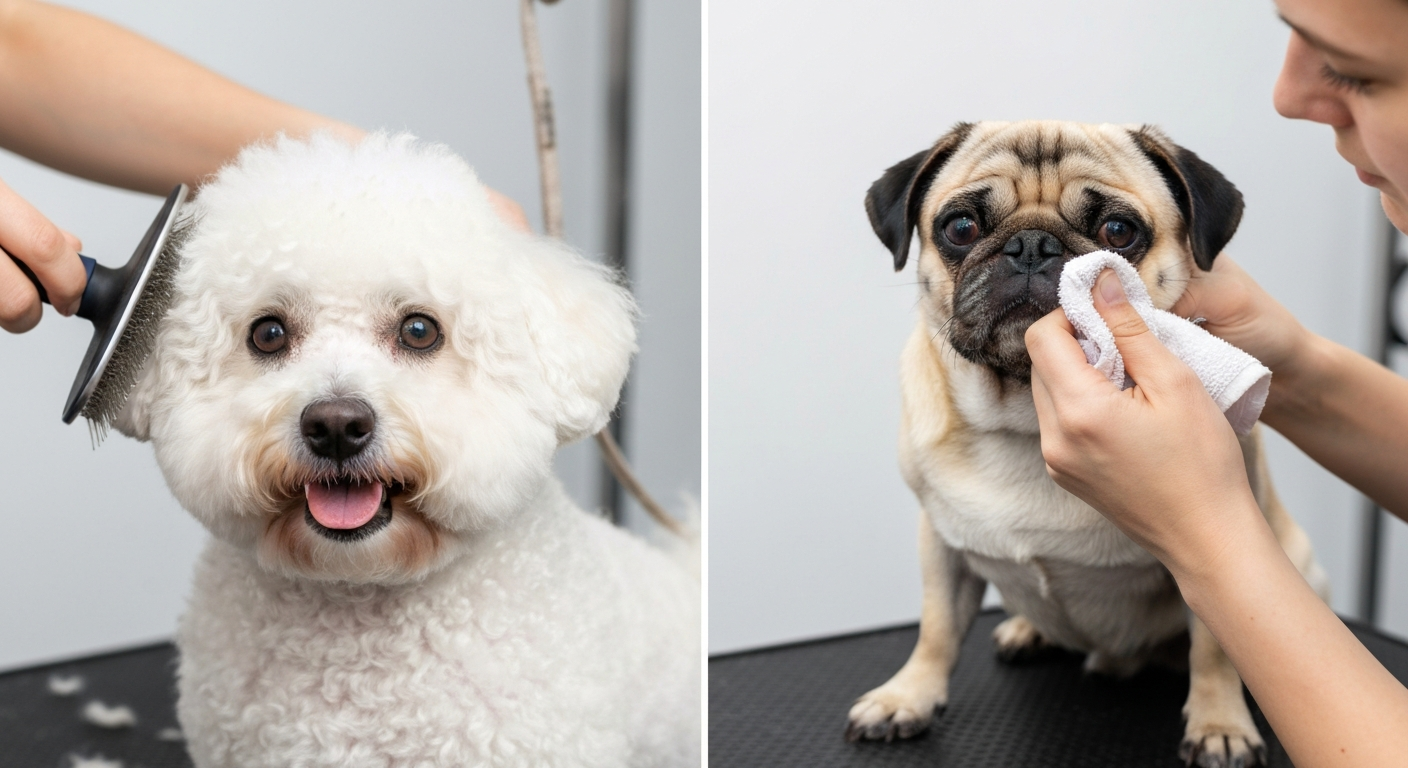
Pugs are shedding machines. Their short, dense coat sheds profusely year-round. Expect to find fawn or black hairs on your clothes, furniture, and floors. They need regular brushing to manage the shedding, but their most critical grooming need is wrinkle care. Their deep facial folds must be cleaned daily to prevent dirt and moisture buildup, which can lead to painful skin infections.
Bichon Frises are high-maintenance but low-shedding. Their double coat is soft and curly, feeling like velvet. It's often considered hypoallergenic because the shed hair gets caught in the undercoat rather than falling out. This is great for allergy sufferers, but it means their coat is extremely prone to matting. A Bichon needs daily brushing right down to the skin, plus professional grooming every 4-6 weeks. Neglecting this is not an option and can lead to serious skin problems.

Health and lifespan: a look at longevity
Both breeds can live long, happy lives, but they are prone to different genetic health issues. Proactive care is key.
Common Pug health issues
The Pug's most significant health challenges stem from being a brachycephalic (flat-faced) breed. This adorable feature can cause serious problems.
- Brachycephalic Obstructive Airway Syndrome (BOAS): This causes breathing difficulties, snoring, and an inability to tolerate heat or strenuous exercise.
- Eye Problems: Their large, prominent eyes are prone to ulcers, dry eye, and proptosis (where the eyeball dislodges from the socket).
- Skin Infections: As mentioned, their wrinkles need constant care.
- Hip Dysplasia: A common joint issue in many breeds.
Common Bichon Frise health issues
Bichons are generally healthier but still have their own set of concerns.
- Allergies: They are prone to skin allergies (atopy) from environmental factors like pollen or dust mites.
- Dental Issues: Small breeds are susceptible to dental disease, so regular cleanings are essential.
- Patellar Luxation: A condition where the kneecap slips out of place.
- Bladder Stones: They can be more susceptible to forming bladder stones.
For any potential owner, understanding these risks and committing to regular vet visits is crucial. Investing in pet insurance and staying on top of canine health care is a wise move for either breed.
Energy and exercise needs: couch potato or playful pup?
Your activity level should play a big role in your decision. A Pug wants to be your Netflix buddy, while a Bichon wants to be your walking partner.
A Pug requires minimal exercise. A couple of short, leisurely walks per day is plenty. It's vital not to over-exercise them, especially in warm weather, due to their breathing issues. They are perfect for apartment living and for owners with a more sedentary lifestyle.
A Bichon Frise has more get-up-and-go. They need daily walks and, more importantly, dedicated playtime. They love games of fetch, learning tricks, and interactive toys that challenge their bright minds. While they adapt well to apartments, they need an outlet for their playful energy to prevent boredom and destructive behaviors. Our extensive dog guides section has great ideas for indoor enrichment games.
The cost of companionship: a budget breakdown
Bringing a dog home is a financial commitment. Here’s a rough estimate of the costs you can expect for a Pug versus a Bichon Frise.
| Cost Category | Pug (Estimate) | Bichon Frise (Estimate) | Notes |
|---|---|---|---|
| Puppy Price (from a reputable breeder) | $1,500 - $3,000 | $1,500 - $3,500 | Prices vary widely based on lineage and location. Adoption is a more affordable option. |
| Annual Food Costs | $300 - $500 | $300 - $500 | Depends on the quality of food chosen. |
| Annual Grooming | $50 - $150 | $600 - $1,000+ | Major difference! Pug costs are for occasional baths/nail trims. Bichon cost includes professional grooms every 4-6 weeks. |
| Routine Vet Care (annual checkup, vaccines) | $300 - $600 | $300 - $600 | This does not include emergency care or specialized treatments. |
| Potential Health Costs | Higher | Lower | Pugs are at higher risk for expensive surgeries related to breathing (BOAS) and eyes. |
Conclusion: making your final choice
So, who wins the Pug vs Bichon Frise showdown? The truth is, there's no winner—only the right dog for you.
Choose a Pug if:
- You want a low-energy, loving lap dog.
- You appreciate a comical, quirky personality and don't mind some stubbornness.
- You are prepared for loud snoring and constant shedding.
- You are diligent about daily wrinkle cleaning and aware of the health risks associated with brachycephalic breeds.
Choose a Bichon Frise if:
- You want a playful, cheerful, and active companion.
- You enjoy training and teaching tricks.
- You need a low-shedding dog and are committed to the high cost and time commitment of daily grooming.
- You are home often and can provide the social interaction a Bichon craves.
Both the Pug and the Bichon Frise are wonderful breeds that bring immense joy to their families. By honestly evaluating your lifestyle, budget, and what you want in a canine friend, you can make a choice that leads to a beautiful, lasting bond.
Frequently Asked Questions
Are Pugs or Bichon Frises better for families with children?
Both breeds can be excellent family pets, but the Bichon Frise is often considered slightly better for families with active children due to their playful nature and higher energy levels. Pugs are loving but more delicate, especially around their eyes, and are better suited for gentle play with older children.
Which breed is healthier, the Pug or the Bichon Frise?
The Bichon Frise is generally considered the healthier of the two breeds. While they have predispositions to allergies, dental issues, and patellar luxation, Pugs are brachycephalic (flat-faced), which leads to a higher risk of serious breathing problems (BOAS), eye issues, and heat stroke.
Do Pugs shed more than Bichon Frises?
Yes, Pugs shed significantly more than Bichon Frises. Pugs are heavy shedders year-round. Bichon Frises, on the other hand, have a low-shedding, hair-like coat, which makes them a popular choice for people with allergies. However, their coat requires daily grooming to prevent matting.