Pugs are beloved companion dogs, famous for their expressive faces, curly tails, and sturdy bodies. Because their coats are short, many first-time owners assume they require almost no maintenance. Over my years working with different dog breeds as a behaviorist, I have met many surprised owners who had no idea just how much fur these little dogs can actually drop.
Pugs shed a lot. Keeping up with their coat care keeps your furniture cleaner and, more importantly, keeps your dog comfortable. From a behaviorist's perspective, grooming is also a wonderful opportunity to build trust, lower stress, and strengthen your bond. This guide offers practical tips to manage the shed while making the routine a relaxing, positive experience for both of you.
Understanding the unique pug coat
Before reaching for a brush, it helps to know what kind of coat your pug has. Pugs generally have either a double or a single coat. Most fawn pugs have a dense double coat with a soft, insulating undercoat and a coarser outer layer. In contrast, many black pugs have a single coat. This structural difference explains why some pugs seem to shed constantly while others are much more manageable, though both types need regular care.
Shedding is a natural process driven by daylight and seasonal shifts. While outdoor dogs might blow their undercoats twice a year in spring and fall, indoor pugs tend to shed moderately to heavily all year long. Climate-controlled homes disrupt natural shedding cycles, turning it into a year-round event. Regular grooming lifts away dead hair before it lands on your sofa, prevents itchy skin irritation, and keeps your dog comfortable.
Essential tools for your pug grooming kit
Using the right tools makes grooming quicker and far more comfortable. A brush that is too harsh can scratch a pug's sensitive skin, teaching them to fear grooming and run away whenever the tools appear. Building a kit designed specifically for short, dense coats makes the process easy and pain-free.
- Rubber curry brush
- A soft rubber brush is perfect for daily grooming. It gently lifts loose hair while massaging the skin, distributing natural oils to keep the coat shiny.
- Slicker brush
- This brush features fine, angled bristles that work wonders on double-coated fawn pugs, safely reaching the loose undercoat without scratching the skin.
- Wrinkle wipes
- Unscented, hypoallergenic wipes are essential for cleaning deep facial folds. Look for soothing ingredients like aloe to keep the skin calm and clear.
- De-shedding tool
- Using a dedicated de-shedding tool once or twice a week targets the loose undercoat before those dead hairs end up on your furniture.
Step-by-step pug grooming routine
Consistency is the secret to a successful routine. Keeping sessions short, predictable, and rewarding helps your dog remain calm. Follow these steps to establish a simple, stress-free habit.
1. Pre-brushing the coat
Let your dog sniff the brush before you start. Once they are relaxed, begin brushing gently in the direction of hair growth, starting from the neck and moving toward the tail. Keep your touch incredibly light. Pugs have sensitive skin, and firm pressure can cause irritation. Offer small, high-value treats throughout the session to build a positive association.
2. Cleaning the facial wrinkles
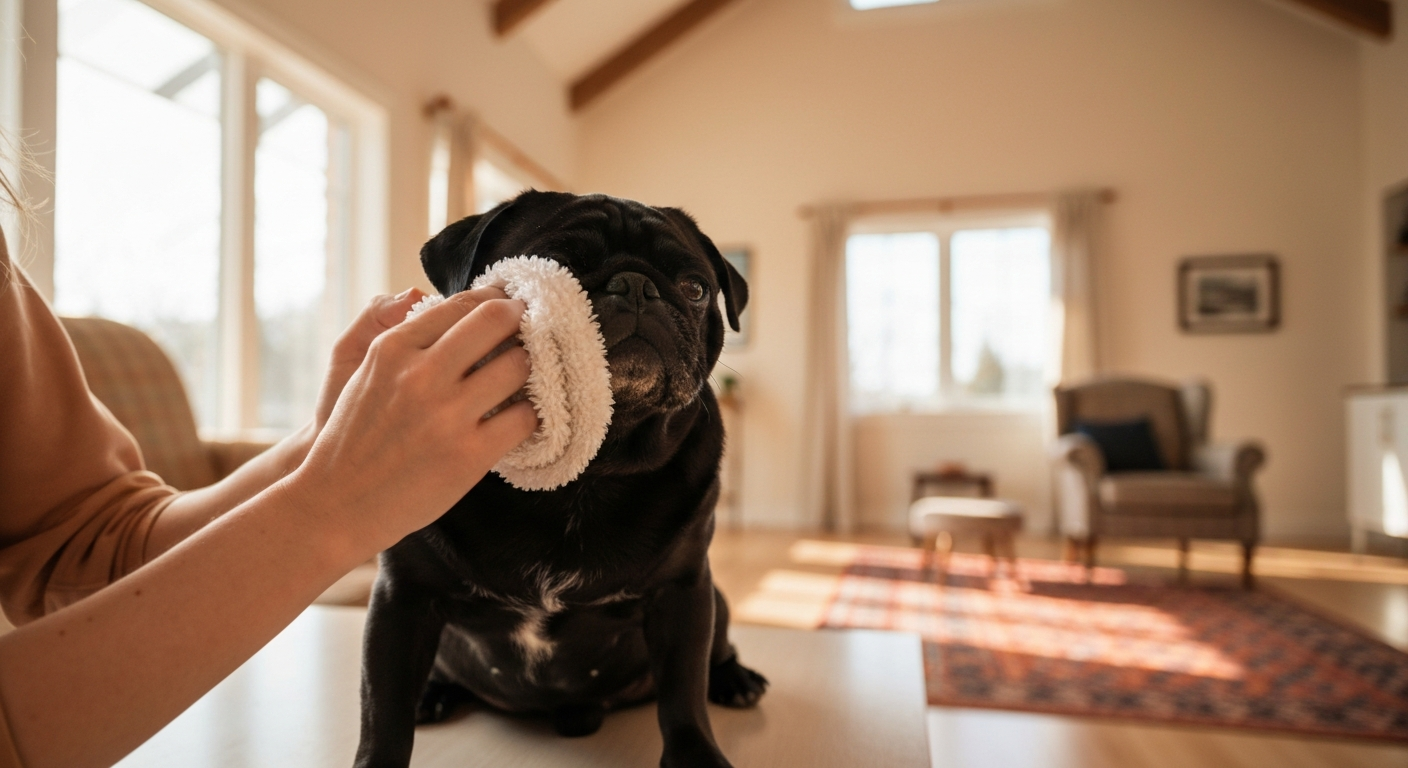
Those deep wrinkles are a classic part of the pug look, but they easily trap moisture, dirt, and debris. If left uncleaned, they can quickly develop painful, irritated skin or yeast issues. Gently lift the folds and wipe inside them with a damp cloth or a pet-safe wipe. It is vital to dry the area completely afterward with a soft towel, as lingering moisture is the primary cause of skin fold irritation.
3. Bathing
Unless your pug is visibly dirty, a bath every four to six weeks is plenty. Bathing too often strips away natural oils, resulting in dry, itchy skin. Stick to lukewarm water and use a mild, soap-free dog shampoo, such as an oatmeal formula. Take extra care to keep water and soap away from their face, as flat-faced dogs can easily inhale water or experience painful eye irritation.
4. Drying
After bathing, wrap your pug in a soft towel and gently pat them dry. Avoid high-heat blow dryers; flat-faced dogs struggle to regulate their body temperature and can overheat rapidly. If you must use a hair dryer, keep it on the absolute coolest setting, hold it far from their skin, and watch their body language closely for signs of discomfort.
The cooperative care approach: training your pug to love grooming
As a behaviorist, I advocate for cooperative care. This approach is all about giving your dog a voice and letting them participate voluntarily. Many pugs learn to dislike grooming because they feel trapped or have been handled too roughly. By introducing positive reinforcement into your usual dog training routine, you can completely change how your pug feels about being handled.
The secret is breaking the process down into tiny steps. Do not try to brush your entire dog on day one. Instead, touch the brush gently to your pug's side, give them a high-value treat, and put the brush away. Repeat this until your dog looks happy just seeing the brush. From there, gradually build up to one or two light strokes, always pairing the touch with a reward.
Watch closely for subtle signs of stress, like lip licking, yawning, turning the head away, or trying to step away. If you respect these signals and stop the session before your dog gets overwhelmed, they learn they can trust you. This simple respect for their comfort levels builds immense confidence and makes them far more willing to cooperate.
The financial side of pug grooming
While you can handle your pug's grooming needs at home, some owners prefer professional help. Budgeting for sturdy tools or the occasional professional visit is an important part of caring for your pet. Below is an estimate of typical grooming costs to help you plan.
| Grooming item or service | Estimated cost (USD) | Recommended frequency |
|---|---|---|
| High-quality slicker and curry brush set | $20 to $35 | One-time purchase |
| Hypoallergenic oatmeal shampoo | $12 to $20 | Every 3 to 6 months |
| Pet-safe wrinkle wipes (pack of 100) | $10 to $15 | Monthly replacement |
| Professional grooming session | $50 to $80 | Every 6 to 8 weeks (optional) |
Behavioral clues to skin and coat issues
Since our dogs cannot tell us when they are itchy or sore, we have to watch their actions to spot potential skin issues. A dry, flaky coat or sudden, extreme shedding can sometimes point to underlying discomfort. While keeping an eye on their skin is a regular part of basic dog health care, subtle behavioral shifts are often the first warning signs.
If you notice your pug rubbing their face against the rug, scratching at their ears, or licking their paws, they might be dealing with skin sensitivities or irritation in their folds. Sudden irritability, pulling away when you try to pet their head, or general low energy can also signal physical discomfort. Because these symptoms can have many causes, consult your veterinarian for a proper checkup and targeted plan.
Enjoying the process together
Grooming does not need to feel like a chore or a stressful event. With patience, the right tools, and a soft touch, it can become a quiet, relaxing routine that keeps your living space clean and your pug physically comfortable. By keeping sessions brief, using high-value treats, and listening to your dog's signals, you will help them feel safe and relaxed every step of the way.
Frequently Asked Questions
How often do Pugs need to be brushed?
Pugs should be brushed at least two to three times a week. During high-shedding seasons in spring and autumn, daily brushing is highly recommended to manage their heavy shedding.
How do you clean Pug wrinkles safely?
Gently wipe the folds with a damp, warm washcloth or a pet-safe, alcohol-free wipe. Always follow up with a dry cloth to absorb all moisture, as damp wrinkles can lead to skin irritation and yeast infections.
Why does my Pug hate being groomed?
Pugs often resist grooming due to fear, sensitivity, or previous negative experiences. Using cooperative care training, positive reinforcement, and keeping grooming sessions short can help rebuild their trust.
Do black Pugs shed less than fawn Pugs?
Yes, many black Pugs have a single coat, which means they tend to shed less than fawn Pugs, who typically have a thick double coat. However, black Pugs still require regular brushing and wrinkle care.