
The Brittany Spaniel, affectionately known as the "Brittany," is a breed celebrated for its boundless energy, sharp intelligence, and joyful nature. These spirited gundogs thrive on mental engagement and ample exercise, requiring a consistent grooming regimen to maintain their beautiful coats and overall health. From a behaviorist's perspective, I always stress that grooming is far more than just aesthetics; it's a critical component of your dog's well-being and a powerful way to deepen the connection you share. A well-cared-for dog is invariably more comfortable and content, which directly influences their behavior.
Understanding the Brittany Spaniel coat
Before we delve into specific grooming techniques, it's beneficial to understand the Brittany's coat. They sport a medium-length, dense coat that lies flat or has a slight wave. While they don't demand daily attention like breeds with flowing locks, their coat does feature attractive feathering on the legs, chest, belly, and tail. This feathered hair can easily become tangled and matted without proper care. Their coat colors typically present as orange and white, or liver and white, often with a delightful dusting of ticking. Expect moderate to heavy shedding, particularly during seasonal transitions.
Your Brittany grooming toolkit
Having the right equipment transforms the grooming experience for both you and your Brittany. Investing in quality supplies will not only simplify the process but also ensure your dog's comfort. Here’s a look at the essentials:
- Slicker Brush: This is your go-to tool for daily or near-daily brushing. Its fine, short wires, set at right angles, excel at lifting loose hair and preventing tangles in the Brittany's coat, especially within the feathered areas.
- Metal Comb: A high-quality metal comb, such as a greyhound comb with varying tooth spacing, is indispensable for confirming that tangles have been eliminated after brushing and for carefully working through the feathering.
- Undercoat Rake or Deshedding Tool: If your Brittany has a notably dense undercoat, particularly during shedding seasons, these tools are excellent for efficiently removing loose hair. Use them gently to avoid irritating the skin.
- Nail Clippers: Maintaining properly trimmed nails is vital for your dog's comfort and mobility. Opt for sharp, durable clippers specifically designed for dogs.
- Dog-Specific Shampoo and Conditioner: Human products can strip your dog's coat of its natural oils and lead to skin irritation. Select a mild, moisturizing formula. Conditioner is particularly beneficial for the feathering.
- Ear Cleaner: Brittanys have pendulous ears that can trap moisture, making them susceptible to infections. Regular cleaning is a key preventative measure.
- Styptic Powder: Keep this on hand as a precaution should you accidentally trim a nail too short, causing bleeding.
- Grooming Scissors: Blunt-tip scissors are ideal for tidying stray hairs around the paws, ears, and face, and for subtly shaping any unruly feathering.
Brushing: The cornerstone of Brittany coat care
Consistent brushing stands as the most crucial element of Brittany coat care. Aim to brush your Brittany at least two to three times each week. Increased frequency is especially helpful during peak shedding periods. This practice is not solely for aesthetics; it's essential for preventing painful mats, distributing natural oils that promote a healthy coat, and allowing you to inspect your dog's skin for parasites, lumps, or irritations. Always brush in the direction of hair growth.
Begin with your slicker brush to remove loose hair and start to detangle. Give extra attention to the feathering on the legs, tail, and behind the ears. After using the slicker, follow up these areas, and the rest of the body, with a metal comb. If the comb passes through effortlessly, you've succeeded. If it catches, gently use the slicker brush or your fingers to work out the tangle. Never force a comb through a mat; this is uncomfortable for your dog and can harm their skin.
Remember, regularity is key. Making brushing a pleasant experience is also paramount for your dog's behavior. Offer praise and small, tasty rewards. If your Brittany shows apprehension about being handled, especially on their feet or ears, introduce grooming gradually. Start with just a few strokes and slowly extend the duration. This positive reinforcement approach is foundational in effective dog training and transforms grooming into a collaborative effort.
Bathing your Brittany
The frequency of bathing your Brittany should align with their lifestyle. If they love to roll in the mud or have specific skin concerns, more frequent baths might be necessary. For most Brittanys, a bath every 4-6 weeks, or whenever they seem dirty or carry an odor, is sufficient. Excessive bathing can strip their coat of vital oils, leading to dry, itchy skin.
Before bathing, thoroughly brush your dog to remove as much loose hair and any existing tangles as possible. This prevents mats from tightening when wet and allows the shampoo to work more effectively. Use lukewarm water and a dog-specific shampoo. Lather gently, working from neck to tail, and rinse exceptionally well. Ensure all soap is removed from the feathering, as lingering residue can cause irritation.
When applying conditioner, concentrate on the feathered areas, as these are prone to dryness. Allow it to penetrate for a few minutes before rinsing completely. After the bath, gently towel dry your dog. If you opt for a hairdryer, use a cool or low heat setting and keep it moving to prevent overheating your dog's skin. This is an opportune moment to check their ears; clean them gently with a veterinarian-approved ear cleaner if needed, wiping away any excess moisture.
Nail trimming and foot care
Maintaining trimmed nails is essential for your Brittany's comfort and proper posture. Overgrown nails can cause discomfort, alter their gait, and even contribute to skeletal issues over time. If you hear your dog's nails clicking on hard floors, they are likely too long.
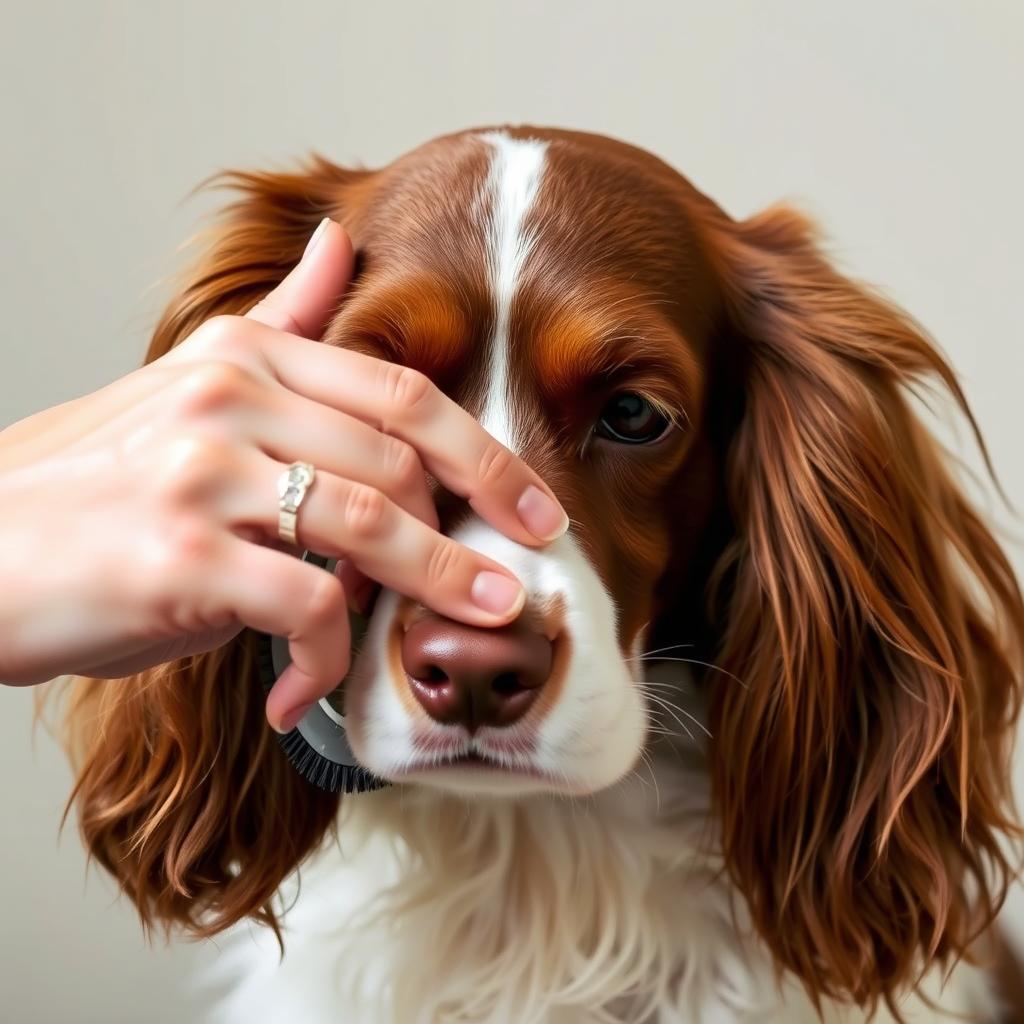
Aim to trim nails every 2-3 weeks. For dogs with dark nails, exercise caution to avoid cutting into the quick, which contains blood vessels and nerves. Trim small amounts at a time, focusing only on the tip. If you're uncertain about the correct technique, consult your vet or a professional groomer for guidance. Employing proactive health care practices like regular nail trims can prevent considerable discomfort.
While you are tending to their feet, inspect between the paw pads for any debris, cuts, or signs of irritation. Trim any long hair growing between the pads to prevent matting and enhance traction.
Ear cleaning: Preventing infections
The Brittany's attractive, floppy ears are susceptible to infections due to limited air circulation. This can result in discomfort, pain, and behavioral changes such as excessive head shaking or pawing at the ears. Regular ear checks and cleaning are therefore essential.
Inspect your dog's ears weekly for redness, unusual odor, or excessive discharge. To clean, use a veterinarian-approved ear cleaning solution. Gently introduce the solution into the ear canal, then massage the base of the ear for approximately 20-30 seconds. This action helps dislodge wax and debris. Allow your dog to shake their head, and then use a clean cotton ball or gauze to wipe away any visible dirt and excess solution from the outer ear. Never insert anything deep into the ear canal, such as cotton swabs, as this can cause injury.
Professional grooming considerations
While home grooming is quite manageable for Brittanys, some owners opt for professional groomers, particularly for more intricate tasks like shaping feathering or when addressing significant matting. A professional groomer can also provide a thorough bath, nail trim, ear cleaning, and a general coat tidy-up.
If you choose professional grooming, seek out groomers who have experience with sporting breeds. They can offer valuable advice on maintaining your Brittany's coat and may identify potential health concerns you might overlook. Regular visits to a groomer, perhaps every 6-8 weeks, can effectively complement your home grooming routine.
When to seek veterinary advice
As a behaviorist, I frequently observe how physical discomfort directly influences a dog's demeanor and actions. While grooming your Brittany, remain observant. Any persistent skin irritation, excessive scratching, bald patches, unusual lumps, persistent ear odor, or lameness should prompt a visit to your veterinarian. These signs could indicate underlying health issues such as allergies, infections, parasites, or injuries that require professional medical intervention. Always remember that while grooming is a vital part of your routine care, significant health concerns must be addressed by a licensed veterinarian. For general information on breed characteristics and care, resources like BreedExplorer offer excellent insights into dog breeds.
Making grooming a positive experience
For many Brittanys, grooming is an unavoidable aspect of life. Transforming it into a positive ritual can alleviate stress for both you and your dog. Begin grooming when your dog is young, if possible. Employ gentle handling, abundant praise, and highly motivating treats. Keep sessions brief and always conclude on a positive note. If your dog exhibits signs of stress, such as lip licking, yawning, or "whale eye," take a pause. Patience and consistency are your most effective tools in ensuring your Brittany not only looks good but, more importantly, feels good too.
By integrating these grooming practices into your routine, you will help your energetic Brittany Spaniel maintain a healthy, comfortable coat and skin, contributing significantly to their overall happiness and well-being. Consistent attention also allows you to become intimately familiar with your dog's body, making it easier to detect any emerging issues early. For further guidance on responsible pet ownership, explore our pet ownership guides.
Frequently Asked Questions
How often should I groom my Brittany Spaniel?
Brittany Spaniels require regular grooming. Aim for brushing at least 2-3 times a week to prevent tangles and remove loose hair. Baths can be given as needed, typically every 4-6 weeks, or when they get particularly dirty. Professional grooming every 6-8 weeks can help maintain their coat's condition, especially if you're trimming their feathering.
What are the main grooming challenges for a Brittany Spaniel?
The primary grooming challenges with a Brittany Spaniel involve their feathering on the legs, tail, and ears. These areas are prone to matting if not brushed regularly. They also tend to shed moderately, so consistent brushing is important. Ensuring their ears are clean and dry is also crucial to prevent infections, given their floppy ear structure.
What tools are essential for Brittany Spaniel grooming?
For a Brittany Spaniel, you'll want a good quality slicker brush for general grooming and to tackle tangles, a metal comb (especially a greyhound comb) for checking for mats and working through feathering, nail clippers, a dog-specific shampoo and conditioner, and possibly grooming scissors for tidying up the feathering and any stray hairs. A toothbrush and doggy toothpaste are also necessary for dental hygiene.
How do I handle shedding with my Brittany Spaniel?
Brittany Spaniels do shed, though not as heavily as some other breeds. Consistent brushing, ideally 2-3 times per week with a slicker brush or a deshedding tool, is the most effective way to manage shedding. This removes loose undercoat before it ends up on your furniture. Regular baths can also help loosen and remove more dead hair.