
As a pet behaviorist, I have seen almost every dog quirk imaginable. But few habits frustrate owners quite as much as scent rolling. You spend an hour bathing your dog, drying their coat, and enjoying how clean they smell, only for them to run outside, drop a shoulder to the grass, and wriggle with absolute delight. When they finally stand up, they are covered in something dark, messy, and incredibly foul-smelling.
Understanding these natural instincts is an important part of responsible pet ownership. While rolling in decaying matter or animal waste seems disgusting to us, to your dog, it is an highly appealing sensory experience. Let's explore why dogs seek out these intense odors, how this behavior helped their wild ancestors survive, and how you can manage it at home.
The evolutionary roots of scent rolling
To understand why your dog seeks out foul odors, we have to look at their evolutionary history. Even though dogs have lived alongside humans for thousands of years, they still retain deep-seated instincts from their wild ancestors. Scent rolling is not a behavioral problem; it is an ancient survival mechanism.
The hunting camouflage hypothesis
One common theory among biologists is that wild canids roll in strong odors to mask their own scent. Wolves, coyotes, and foxes rely on stealth to hunt. Prey animals like deer, rabbits, and elk have an acute sense of smell. If a predator approaches smelling like a threat, the wind will carry their scent and alert the herd.
By rolling in herbivore manure or decaying material, wild predators hide their presence. The prey animals only detect familiar waste or natural decomposition, allowing the predator to slip closer unnoticed. Even though your dog gets their meals served in a bowl, this hunting instinct remains deeply wired into their brain.
The pack announcement network
Another theory focuses on social communication. When a wild canid finds a carcass or animal waste, they might roll in it to carry the smell back to their pack. They act as a messenger, bringing back physical proof of their discovery. When they return, other pack members sniff them to figure out what was found and where it is located.
When your dog rolls in something smelly today, they might just be trying to share their discovery with you. To your dog, you are their pack, and they are bringing back an exciting sensory update.
The sensory processing power of the canine nose
To understand this behavior, it helps to recognize how different a dog's sensory experience is from our own. While we rely mostly on sight, dogs read their environment through smell. While humans have about six million scent receptors, a dog can have up to 300 million, depending on the breed. The olfactory part of a dog's brain is also much larger and more specialized than ours.
Dogs do not label smells as "good" or "bad" the way we do. We might prefer a lavender candle, but dogs are drawn to complex organic notes. A dead fish or a pile of waste contains detailed clues about what animal was there, what they ate, and how long ago they left. What we experience as a terrible odor, a dog processes as a detailed chemical profile of their neighborhood.
What types of smelly things do dogs prefer?
Not every smell is equally appealing, and many dogs have specific preferences. Here are the most common things your dog might try to roll in during walks or backyard playtime:
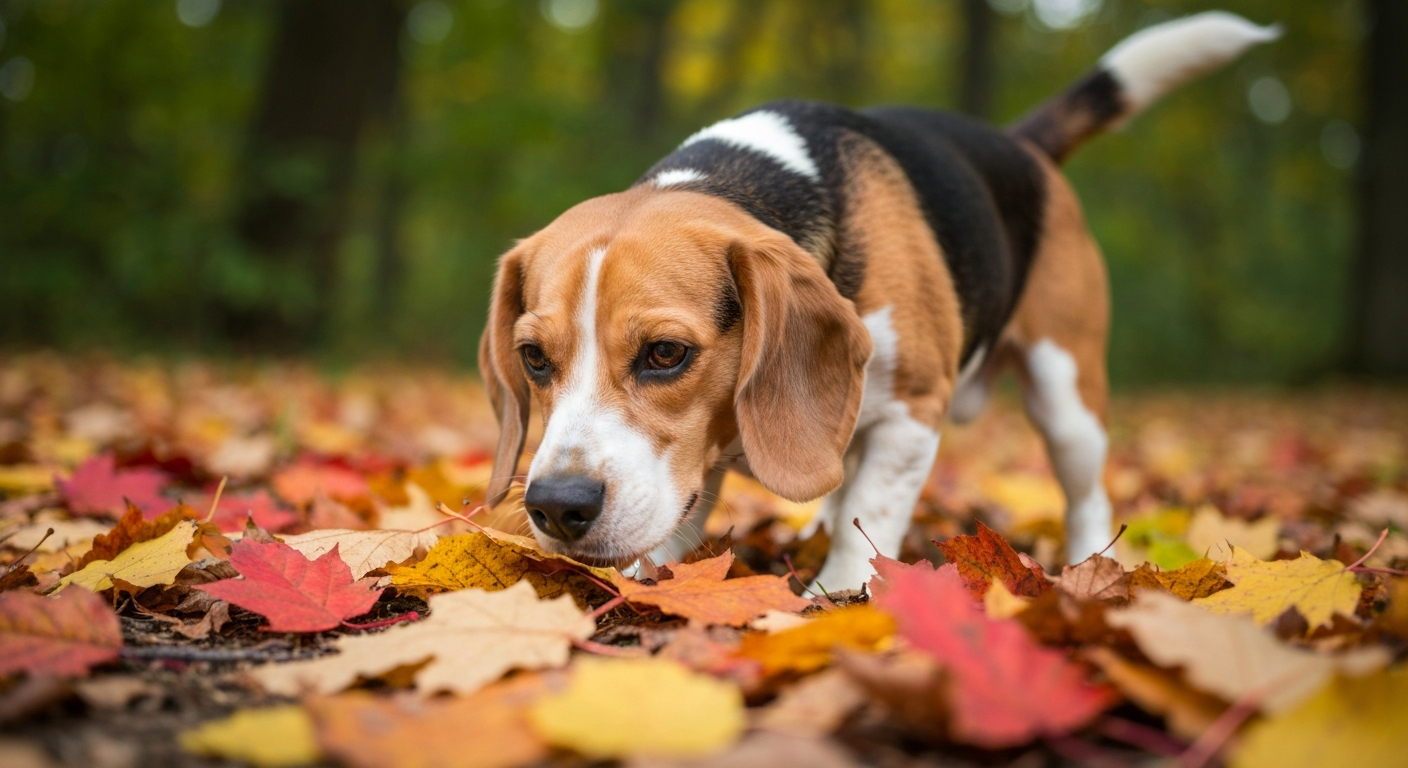
- Decaying animals
- Dead frogs, fish, birds, or rodents have strong, oily odors that cling easily to fur. To a dog, these scents are incredibly interesting.
- Manure from plant-eating animals
- Waste from horses, cows, deer, or geese contains digested plant material and earthy scents that many dogs find impossible to resist.
- Waste from other predators
- Feces from wild predators like foxes or coyotes are especially appealing. Rolling in another predator's scent might be a way for your dog to read the local neighborhood updates or leave their own mark.
- Strong household soaps and shampoos
- Many dogs bolt straight for the dirt right after a bath. They often find synthetic perfumes like lavender or citrus overwhelming and want to cover them up with a more natural, comforting scent.
Understanding the motivations behind scent rolling
The table below outlines the primary reasons dogs engage in this behavior, helping you identify what might be motivating your own pet.
| Motivation | Evolutionary purpose | Key behavioral sign |
|---|---|---|
| Scent masking | Hiding their smell to blend into the environment | Targeting areas near wildlife trails or wooded paths |
| Social sharing | Bringing information about resources back to the family | Approaching you or other pets to show off the smell |
| Odor rejection | Getting rid of strong shampoo perfumes after a bath | Running to the grass or dirt right after being washed |
| Scent marking | Rubbing their own scent onto a specific location | Leading with the shoulders and neck before rolling over |
How to manage and prevent scent rolling
Because scent rolling is a natural instinct, stopping it completely can be a challenge. But you can easily manage and prevent these messy situations with a few positive dog training and behavior modification techniques.
Master the "leave it" cue
A reliable "leave it" cue is your best tool for managing this behavior. It teaches your dog to turn away from an irresistible smell and focus on you instead. Start training this in a quiet room at home with a piece of standard kibble in one hand and a high-value treat, like a piece of chicken, in the other. Once they master the concept indoors, slowly transition to the backyard, and finally to your daily walks.
Learn your dog's pre-roll body language
Dogs almost never roll without warning. If you watch closely, you will see a predictable sequence of behaviors before they actually hit the ground. Keep an eye out for these signs:
- Stopping suddenly to sniff one specific spot with intense, frozen focus
- Tilting their head to the side and lowering one ear or cheek toward the ground
- Leaning their body weight forward and dropping their shoulder
If you see the head tilt or the shoulder drop, that is your cue to intervene immediately with a "leave it" command or a quick redirection before they make contact.
Use environmental management
If you are walking in an area known for wildlife or farm animals, a leash is your simplest and most effective tool. Certain dog breeds, specifically hounds, retrievers, and terriers, have an incredibly strong drive to follow and react to scents. Keeping them on a leash in high-risk areas allows you to steer them clear of mess before they can drop and roll.
How to handle the aftermath of a successful roll
Despite your best efforts, there will be times when your dog successfully finds a messy spot. When that happens, a prompt and safe cleanup is the best way to protect your home and keep your pet comfortable.
Choose neutral shampoos
When bathing a smelly dog, skip the heavily perfumed shampoos. While a lavender or citrus scent might seem like the perfect cover-up, it usually backfires. The strong, artificial smell can actually irritate your dog's sensitive nose, prompting them to run straight outside to find something even smellier to mask the soap. Instead, use a mild, odor-neutralizing shampoo formulated for pets, and rinse their coat thoroughly with lukewarm water.
Monitor for skin irritation or parasites
While scent rolling is mostly a messy habit, contact with wild animal waste or outdoor debris can sometimes expose your dog to fleas, ticks, or skin irritation. As part of your regular dog health care and skin hygiene routine, take a few minutes to check their skin during and after their bath. Watch for redness, scratching, or tiny bites. Because these outdoor materials can carry bacteria or parasites, it is always a good idea to check in with your veterinarian if you notice any lasting irritation, scratching, or if your dog seems a bit off after their outdoor adventure.
Embracing your dog's natural instincts
It helps to remember that your dog is not trying to annoy you or make a mess on purpose. To them, rolling in a strong scent is a perfectly normal way to explore their environment and satisfy a deep instinct. By practicing a solid "leave it" cue, learning to read their subtle body language, and choosing gentle grooming products, you can easily minimize these smelly surprises while still letting your dog enjoy their daily walks.
Frequently Asked Questions
Why do dogs roll in dead animals?
Dogs roll in dead animals due to an evolutionary instinct inherited from wild canids. This behavior, known as scent rolling, likely helped their ancestors mask their own scent to sneak up on prey, or served as a way to carry information about food sources back to the pack.
How can I stop my dog from rolling in poop?
To stop your dog from rolling in waste, work on a highly reliable 'leave it' cue, keep them on a leash in high-risk areas, and closely monitor their body language. If you see them lower their shoulder and neck toward the ground, immediately redirect their attention.
Do dogs roll in smelly things because they hate their shampoo?
Yes, this is a common reason. Strongly perfumed artificial shampoos can be overwhelming to a dog's sensitive sense of smell. They may roll in dirt, grass, or smelly organic matter to rid themselves of the artificial fragrance and reclaim a natural canine scent.