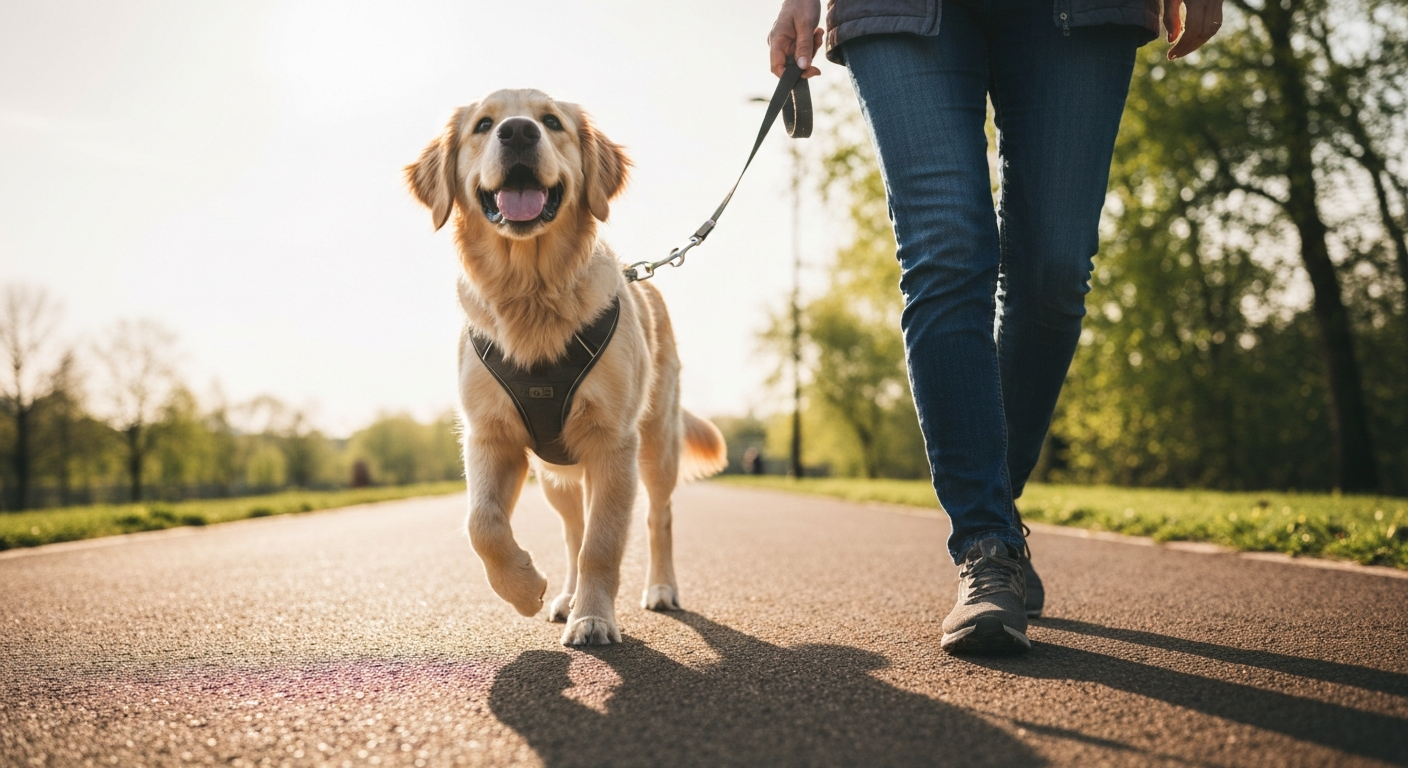
Does your daily walk feel more like a tug-of-war than a pleasant outing? Are you frequently yanked forward by your enthusiastic canine companion? You're certainly not alone. Leash pulling is a common challenge for dog owners. But picture this: a relaxed stroll with your dog walking calmly beside you, the leash hanging loosely. This is an achievable reality. This guide offers practical advice to help you teach your dog to walk nicely on a leash, turning a frustrating experience into an enjoyable part of your day.
This training is about more than just obedience; it's about clear communication, your dog's safety, and strengthening the bond you share. Let's begin!
Why walking nicely on a leash is important
Before we get into the techniques, let's understand the benefits. A dog that consistently pulls creates more than just an inconvenience. The constant tension of a tight leash can be physically and mentally draining for both you and your dog. It can lead to frustration, increased reactivity towards other dogs or people, and even physical strain on your shoulder or your dog's neck. On the other hand, successful loose-leash walks offer numerous advantages:
- Safety: A dog that walks calmly beside you is less likely to suddenly dart into traffic, lunge at distractions, or pull you off balance.
- Building trust: Training is a collaborative effort. When you teach your dog this skill with patience and positive methods, you build mutual trust and deepen your connection.
- Mental engagement: A well-behaved walk provides mental stimulation. Your dog learns to focus on you and respond to cues amidst the exciting sights and smells of the outdoors, which is a valuable mental workout.
- Shared enjoyment: Simply put, walks become more pleasurable. You can relax, appreciate your surroundings, and truly enjoy the time with your dog.
Getting ready for success: the right equipment
Just as you need the right tools for any task, selecting appropriate gear is crucial for leash training. The right equipment can make the learning process much smoother and more comfortable for everyone.
Harnesses versus collars
A standard flat collar is adequate for holding identification tags, but it's not the best choice for training a dog that pulls. Continuous pressure on a dog's throat can potentially harm their trachea, especially in smaller breeds. A properly fitted harness is a safer and more effective option for training.
- Front-Clip Harness:
- This is often the best choice for dogs that pull. The leash attaches to a ring located on the dog's chest. When the dog pulls forward, the harness gently redirects them back towards you, discouraging forward pulling without causing any choking or discomfort.
- Back-Clip Harness:
- These are comfortable for dogs that already walk well on a leash. However, for dogs that pull, a back-clip harness can sometimes encourage more pulling because it engages their natural instinct to lean into resistance.
The ideal leash
A simple, standard 6-foot leash made of nylon or leather is ideal. It provides enough length for your dog to explore a bit while keeping them close enough for you to provide guidance. Avoid retractable leashes during training; they inadvertently teach dogs that pulling makes the leash longer, which is the opposite of the desired outcome.
Highly motivating treats
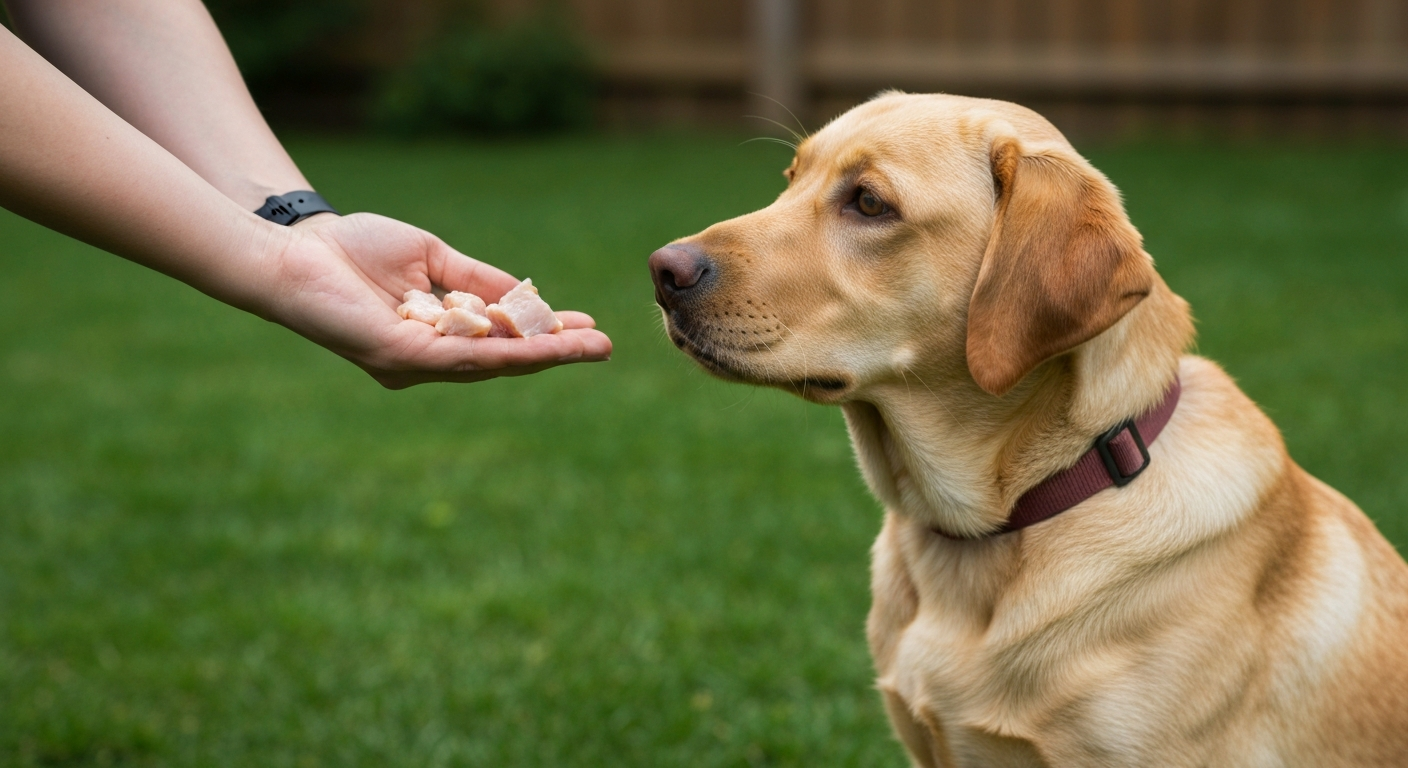
Your dog's everyday kibble likely won't be enticing enough to compete with all the interesting scents outdoors. High-value treats are special rewards that your dog doesn't usually receive. Think small, soft, and flavorful items like tiny pieces of cooked chicken, cheese, or specific training treats. These treats act as positive reinforcement for desired behavior.
Your step-by-step guide to teaching loose leash walking
Patience is essential. Learning to walk on a loose leash is a skill that requires consistent practice over time. Begin training in a quiet, low-distraction area, such as inside your home or in your backyard, before moving to more stimulating environments.
Step 1: Introduce the equipment
Before attaching the leash, help your dog become comfortable with the harness. Let them investigate it, sniff it, and offer treats. Have them wear it for short periods inside while they are engaged in positive activities like eating or playing, so they associate the harness with good experiences.
Step 2: Reward the desired position
With your dog wearing the harness and leash indoors, stand still. The moment your dog is positioned next to your leg (on the side you prefer them to walk) with a slack leash, calmly say "Yes!" and give them a treat. Place the treat on the ground near your foot to reinforce that this is the correct and rewarding spot to be.
Step 3: The 'become a tree' method
Now, try taking a single step forward. The instant the leash becomes taut, stop moving completely. Stand still and quiet, like a tree. Do not pull back or yank the leash. Simply pause. Your dog will likely notice the halt in movement and may turn to look at you or relax the leash. The moment the leash slackens, say "Yes!" and resume walking. This teaches your dog that pulling stops progress, while a loose leash allows the walk to continue.

Step 4: The 'turn-around' technique
This method works well with the 'Become a Tree' approach. If your dog pulls ahead and reaches the end of the leash, cheerfully say "This way!" and turn to walk in the opposite direction. When your dog catches up and returns to the correct position by your side, offer praise and a treat. This helps your dog learn to pay attention to your direction.
| Day | Location | Focus Skill | Goal |
|---|---|---|---|
| Monday & Tuesday | Living Room | Harness comfort and rewarding position | Dog wears harness for 10 minutes; offers attention for treats. |
| Wednesday & Thursday | Backyard | 'Become a Tree' method | Achieve 5-10 consecutive steps with a loose leash. |
| Friday & Saturday | Backyard / Quiet Street | 'Turn-Around' technique | Dog responds to direction changes without becoming distressed. |
| Sunday | Quiet Street | Combining all skills | A short, successful walk with minimal pulling. |
Addressing common leash training challenges
Even with a solid plan, you might encounter difficulties. Here's how to handle them:
- Reactivity (barking/lunging): This is a complex behavior that often requires managing distance. If you see another dog, create enough space so your dog can observe without reacting. Reward them for looking at the other dog and then shifting their focus back to you. For severe reactivity, consulting a professional trainer is highly recommended. Understanding your dog's individual temperament, which can be influenced by their breed, is also helpful in setting realistic expectations.
- Excessive sniffing and distractions: It’s important to allow your dog opportunities to explore their environment. Designate specific times during your walk for sniffing using a cue like "Go sniff!". This allows them some freedom. When it's time to move on, use your positive cue like "Let's go!" and reward them for re-engaging with you.
- Walking in a zig-zag pattern: This behavior often occurs when a dog is following scents. To encourage them to walk more directly on one side, provide frequent rewards when they are in the correct position beside you. Make that space next to your leg the most rewarding place for them to be.
Making walks a positive experience, not a burden
Remember that walks are crucial for your dog's enrichment. Ensuring they receive sufficient physical activity and mental stimulation is fundamental to their overall health and happiness. Balance your structured training walks with "sniffaris," where you allow your dog to lead the exploration (safely, of course) using their sense of smell. Varying your walking routes can also keep things interesting. A 20-minute walk filled with opportunities to sniff, engaging training games, and positive interactions is often more beneficial than a longer, forced walk with tension on the leash.
Teaching loose leash walking is a process, not an overnight fix. There will be days that go smoothly and days that feel challenging. However, with consistent effort, the right equipment, and a positive approach, you will develop a walking partnership built on mutual trust and clear communication. This skill enhances your dog's quality of life and opens up many opportunities for shared adventures. It's a key aspect of responsible and fulfilling pet ownership, and the investment you make now will bring rewards for years to come. Now, gather those treats, and let's head out for a walk!
Frequently Asked Questions
How long does it take to teach a dog loose leash walking?
The timeframe varies significantly based on the dog's age, breed, personality, and past experiences. A young puppy might grasp the concept within a few weeks with consistent training, while an older dog with established pulling habits could require several months. Patience and regular practice are crucial!
What's the best harness for a dog that pulls?
For dogs that tend to pull, a front-clip harness is generally recommended. The leash attachment on the chest gently guides the dog back towards you when they pull, helping to reduce the pulling behavior without causing discomfort or restriction.
Can I train an older dog to stop pulling on the leash?
Absolutely. It is never too late to teach an older dog new skills. While it may require extra patience and consistency to change ingrained behaviors, any dog can learn to walk politely on a leash with the application of positive reinforcement methods.