
Choosing a new canine companion is one of life's great joys, but it's also a massive decision. When you're browsing the vast world of dog breeds, you might encounter two incredibly popular yet polar opposite dogs: the diminutive, dignified Shih Tzu and the majestic, athletic Siberian Husky. It's like comparing a pearl to a glacier—both are beautiful, but they couldn't be more different. So, in the great debate of Shih Tzu vs Siberian Husky, which one truly fits your life? Let's dive in.
This isn't just about big versus small. This is about ancient royalty versus arctic adventurer, a lap warmer versus a marathon runner. By the end of this guide, you'll have a crystal-clear picture of which of these incredible breeds—if either—is your perfect match.
A tale of two breeds: Meet the contenders
Before we pit them against each other, let's get to know the personalities behind the paws. Understanding their history is key to understanding their modern-day behavior.
The regal Shih Tzu: A lapful of love
The Shih Tzu, whose name means "little lion," has a history steeped in luxury. Bred for centuries to be the cherished companions of Chinese emperors, these dogs know a thing or two about living the good life. They were not bred to hunt, herd, or pull sleds; their one and only job was to love and be loved. This history is directly reflected in their temperament today: they are affectionate, outgoing, and thrive on human companionship. A Shih Tzu's favorite place is right by your side, preferably on your lap.
The majestic Siberian Husky: A spirit of the wild
On the other end of the spectrum, we have the Siberian Husky. Developed by the Chukchi people of Siberia, these dogs were essential for survival in a harsh, frozen landscape. They were bred to be endurance sled dogs, capable of pulling light loads over vast distances in frigid temperatures. They worked in packs, possessed incredible stamina, and had an independent streak necessary for problem-solving on the trail. This working heritage means the Husky is intelligent, energetic, and has a deep-seated need to run.
Head-to-head: Shih Tzu vs Siberian Husky at a glance
Let's break down their core stats. This quick comparison immediately highlights their stark differences.
- Breed Group:
- Shih Tzu: Toy Group
- Siberian Husky: Working Group
- Size (Height):
- Shih Tzu: 9-10.5 inches
- Siberian Husky: 20-23.5 inches
- Weight:
- Shih Tzu: 9-16 pounds
- Siberian Husky: 35-60 pounds
- Lifespan:
- Shih Tzu: 10-18 years
- Siberian Husky: 12-14 years
- Temperament:
- Shih Tzu: Affectionate, Playful, Outgoing, Lap Dog
- Siberian Husky: Intelligent, Energetic, Independent, Mischievous
- Exercise Needs:
- Shih Tzu: Low (short daily walks)
- Siberian Husky: Very High (2+ hours of vigorous exercise daily)
- Grooming Needs:
- Shih Tzu: High (daily brushing, professional grooming)
- Siberian Husky: Moderate (weekly brushing, seasonal "blowouts")
The deep dive: Key differences explained
Now that we've seen the overview, let's explore what those stats mean for you as a potential owner. This is where the practical realities of living with each breed come into focus.
Energy and exercise: Couch potato vs. marathon runner
This is arguably the single most important difference. A Shih Tzu is content with a short, leisurely walk each day and some indoor playtime. Their exercise needs are minimal and easily met. A Siberian Husky, on the other hand, is a world-class athlete in a dog suit. They were born to run. A short walk is a warm-up for a Husky. They need hours of vigorous exercise daily—think running, hiking, or pulling. Without this outlet, they become bored, frustrated, and often destructive. If you're not an avid runner, hiker, or someone willing to dedicate significant time to exercise, a Husky is not for you.
Temperament: Cuddler vs. explorer
A Shih Tzu's world revolves around its people. They are true companion animals that can suffer from separation anxiety if left alone for too long. They'll follow you from room to room and are happiest when they're part of the family action. A Husky is also loyal to its family but has a powerful independent streak and a high prey drive. They are notorious escape artists, driven by an insatiable curiosity to explore the world beyond your fence. They love their people, but they also love their freedom.
Training and intelligence: Charming stubbornness vs. clever independence
Both breeds can be stubborn, but for different reasons. The Shih Tzu's stubbornness comes from a "what's in it for me?" attitude. They are intelligent but not always eager to please. Training requires patience and lots of positive reinforcement. The Husky's intelligence is a different beast entirely. They are incredibly smart and learn quickly, but they will constantly question your authority. They were bred to think for themselves, and they'll obey a command only if they see a point to it. Effective dog training for a Husky requires establishing yourself as a firm, consistent leader they can respect.
Grooming and care: Daily brushing vs. seasonal blowouts
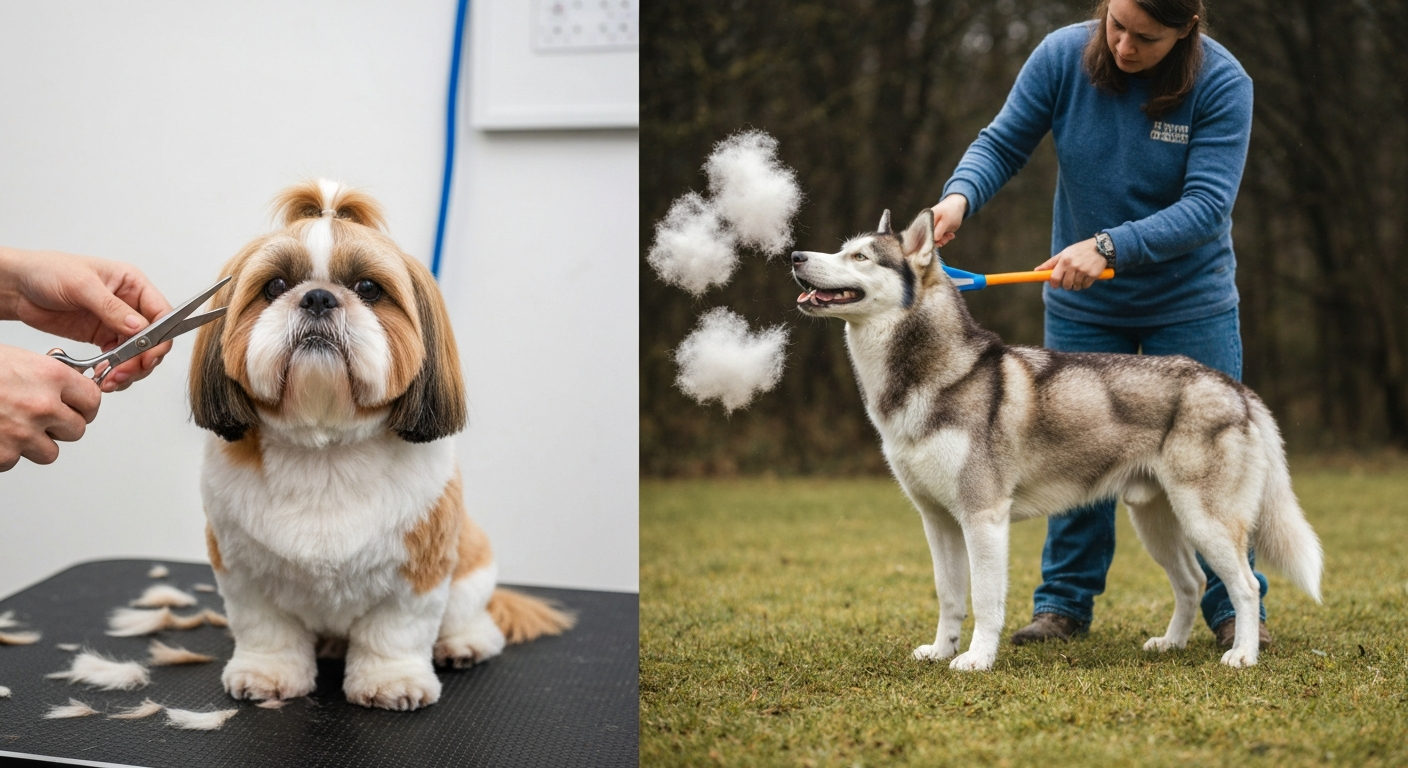
Neither of these breeds is low-maintenance. The Shih Tzu's long, luxurious coat is beautiful but requires daily brushing to prevent painful mats and tangles. Most owners opt for a professional groomer every 4-6 weeks to keep their coat in a shorter "puppy cut." The Husky has a thick double coat designed for arctic climates. While it only needs weekly brushing for most of the year, it undergoes a dramatic shedding process, or "blowout," twice a year. During this time, you will be living in a blizzard of fur. Furthermore, their coat should never be shaved, as it provides insulation from both heat and cold. Proper grooming is a cornerstone of good dog health care for both breeds.
Living arrangements: Apartment dweller vs. fenced-yard enthusiast
A Shih Tzu is an ideal apartment dog. Their small size and low exercise needs mean they can thrive in smaller living spaces, as long as they get their daily walk. A Husky in an apartment is a recipe for disaster. They need space to move and, most importantly, a securely fenced yard. And when we say secure, we mean a six-foot fence that's dug into the ground. Their ability to jump, climb, and dig their way to freedom is legendary.
Cost of ownership: A 2026 budget breakdown
The financial commitment is another critical factor. While initial costs can be similar, long-term expenses differ significantly. This is a crucial aspect of responsible pet ownership.
| Cost Category | Estimated for Shih Tzu | Estimated for Siberian Husky |
|---|---|---|
| Average Puppy Price | $1,000 - $3,000 | $800 - $2,500 |
| Initial Supplies (Crate, Bed, etc.) | $200 - $400 | $400 - $700 |
| Annual Food Cost | $300 - $500 | $700 - $1,200 |
| Annual Grooming Cost | $500 - $1,000 (professional grooming) | $200 - $400 (de-shedding tools, occasional bath) |
| Annual Vet Care (Routine) | $400 - $700 | $500 - $800 |
| Estimated First Year Total | $2,400 - $5,600 | $2,600 - $7,200 |
Which breed is right for you? The final verdict
So, after comparing these two fascinating breeds, the choice comes down to a simple, honest assessment of your lifestyle.
You might be a Shih Tzu person if:
- You live in an apartment or a home with a small yard.
- You're looking for a low-energy companion for cuddles on the couch.
- You are a first-time dog owner, a senior, or a family with older, considerate children.
- You enjoy the ritual of daily grooming or are prepared for the expense of a professional groomer.
You might be a Siberian Husky person if:
- You live an extremely active, outdoorsy lifestyle and want a canine partner for your adventures.
- You have a large, very securely fenced yard.
- You are an experienced, confident dog owner who understands pack leadership.
- You have a high tolerance for dog hair, noise (howling!), and mischief.
Ultimately, there is no "better" breed, only a better fit. The Shih Tzu and the Siberian Husky are both wonderful dogs who bring immense joy to the right homes. By choosing the breed that aligns with your energy, environment, and experience level, you are setting both yourself and your new best friend up for a lifetime of happiness.
Frequently Asked Questions
Can a Siberian Husky and a Shih Tzu live together?
Yes, they can, but it requires careful management. A Husky's high prey drive can be a risk for a small dog like a Shih Tzu. Socialization from a very young age, constant supervision, and separate feeding times are crucial for a safe and harmonious household.
Which breed is better for a first-time owner, Shih Tzu or Husky?
The Shih Tzu is overwhelmingly recommended for first-time owners. Their needs are much more manageable, their temperament is more adaptable to various lifestyles, and their training is less demanding than the highly energetic and independent Siberian Husky.
Do Shih Tzus or Huskies bark more?
Shih Tzus are more prone to barking, often to alert their owners to strangers or noises. Siberian Huskies are not big barkers; instead, they are famous for their complex vocalizations, including howling, 'talking,' and whining.
Which dog is more expensive to own, a Shih Tzu or a Husky?
While the initial puppy price can be similar, the long-term cost of owning a Siberian Husky is generally higher due to their much larger food consumption, potential for destructive behavior if bored, and higher costs for boarding and supplies. Shih Tzus, however, have significant professional grooming expenses.