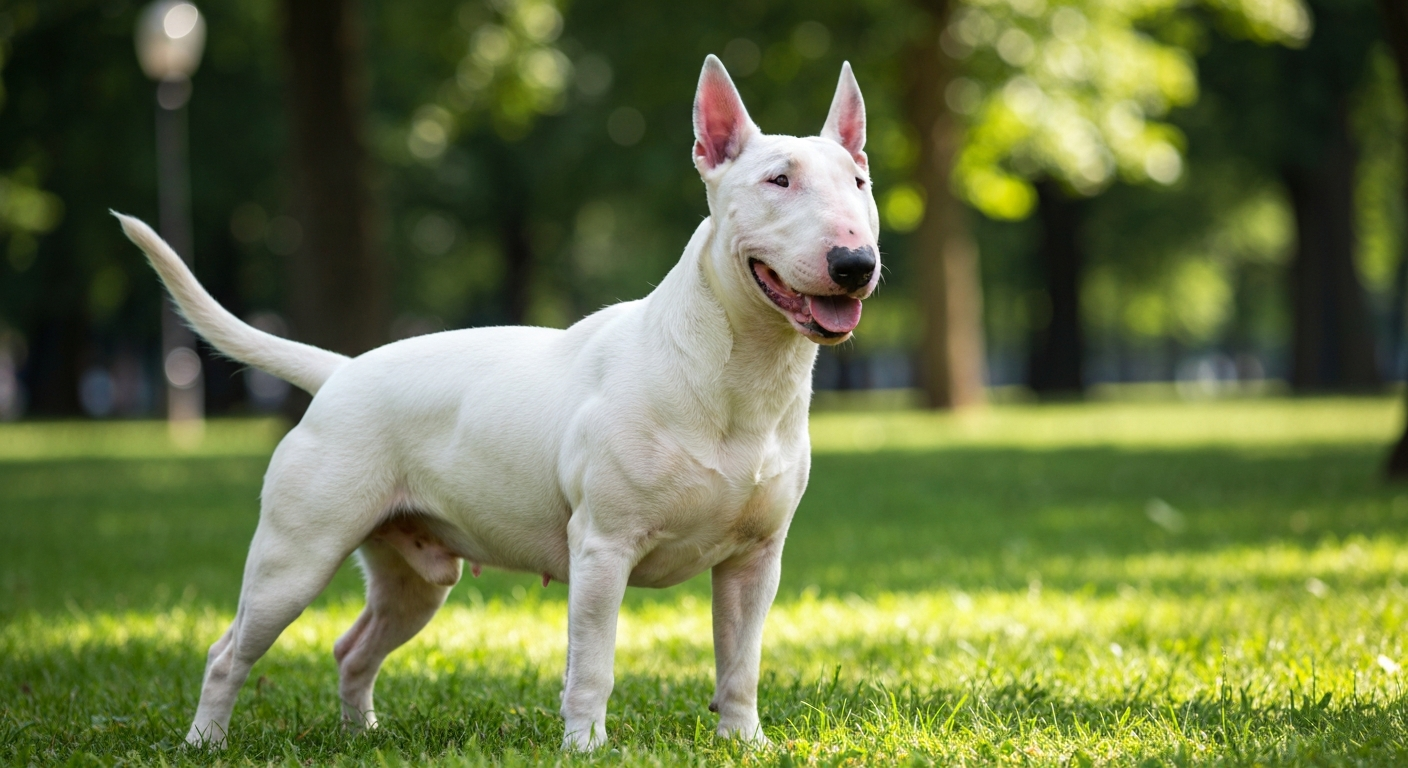
Welcome to the wonderful, wacky world of the Bull Terrier! With their unmistakable egg-shaped head, muscular build, and mischievous glint in their eyes, these dogs are true originals. But before you bring one of these clowns in a dog suit into your life, a common question pops up: just how big do Bull Terriers get? Understanding the Bull Terrier size and growth trajectory is crucial for providing the best care, from puppyhood to their powerful adult years.
Whether you're curious about the brawny Standard or the pocket-rocket Miniature, this guide will walk you through everything you need to know about their size, weight, and development. Let's dive in!
A tale of two terriers: Standard vs. miniature Bull Terrier size
First things first, it's vital to know that the "Bull Terrier" actually comes in two distinct, officially recognized varieties: the Standard and the Miniature. They share the same spirited personality and iconic look, but their size is worlds apart. Think of them as a heavyweight and a welterweight champion of the same family.
- Standard Bull Terrier:
- This is the dog most people picture. They are medium-sized but incredibly dense and muscular. There's no official weight or height limit, but the breed standard emphasizes a balanced, powerful dog that is solid and symmetrical.
- Miniature Bull Terrier:
- As the name suggests, this is a scaled-down version. Critically, they have a strict height limit. According to the American Kennel Club (AKC), they should not exceed 14 inches at the shoulder. They pack all the Bull Terrier personality into a more compact, apartment-friendly frame.
Key size differences at a glance
- Height:
- Standard: 21-22 inches (53-56 cm)
Miniature: 10-14 inches (25-36 cm) - Weight:
- Standard: 50-70 pounds (22-32 kg)
Miniature: 18-28 pounds (8-13 kg)
It's important to remember that males are typically larger and heavier than females in both varieties. When choosing a puppy, knowing which variety the parents are is the first step to predicting final size.
The Bull Terrier growth chart: A puppy's journey from month to month
Watching your Bull Terrier puppy grow is a fascinating experience. They transform from a roly-poly potato into a muscular athlete in what feels like the blink of an eye. While every dog is an individual, this chart provides a general guideline for the average weight of a Standard Bull Terrier during their first year. Miniatures will be significantly lighter.
| Age | Average Weight Range (Male) | Average Weight Range (Female) | Key Developmental Milestones |
|---|---|---|---|
| 2 Months | 15 - 20 lbs (6.8 - 9 kg) | 12 - 18 lbs (5.4 - 8.2 kg) | Socialization window is wide open. Introduction to basic commands and house training. |
| 3 Months | 22 - 28 lbs (10 - 12.7 kg) | 20 - 25 lbs (9 - 11.3 kg) | Puppy teeth are in full force. Teething and chewing increase. Consistent training is key. |
| 4 Months | 30 - 38 lbs (13.6 - 17.2 kg) | 26 - 34 lbs (11.8 - 15.4 kg) | Rapid growth spurt. Looks lanky and a bit awkward. Energy levels are high. |
| 6 Months | 40 - 50 lbs (18.1 - 22.7 kg) | 35 - 45 lbs (15.9 - 20.4 kg) | Nearing adolescent phase. May test boundaries. Reached about 60-70% of adult weight. |
| 8 Months | 48 - 58 lbs (21.8 - 26.3 kg) | 42 - 52 lbs (19 - 23.6 kg) | Growth in height starts to slow down. Begins to fill out and gain more muscle mass. |
| 12 Months (1 Year) | 50 - 65 lbs (22.7 - 29.5 kg) | 45 - 58 lbs (20.4 - 26.3 kg) | Close to final height. Still has muscular development to go. Mentally still a puppy! |
| 18 Months | 50 - 70 lbs (22.7 - 32 kg) | 45 - 60 lbs (20.4 - 27.2 kg) | Considered fully grown in size, with a mature, muscular physique. |
A Quick Note: Don't panic if your puppy is slightly above or below these ranges! This chart is an average. Genetics, diet, and activity level all play a huge role in your specific dog's growth.
What influences a Bull Terrier's final size?
Genetics may load the gun, but environment pulls the trigger. Several factors beyond the puppy chart will determine your Bull Terrier's adult physique.

Genetics and lineage
The most reliable predictor of your puppy's adult size is the size of its parents and grandparents. A reputable breeder will be able to show you the parent dogs and give you a very accurate estimate of your pup's potential. They know their lines better than anyone!
Nutrition: Fueling the engine
What you feed your Bull Terrier puppy is paramount. A diet formulated for medium-to-large breed puppies will provide the right balance of protein, fat, calcium, and phosphorus for controlled, healthy growth. Poor nutrition can lead to stunted growth, while overfeeding can cause obesity and put dangerous stress on developing joints. Proper nutrition is a cornerstone of good canine health and wellness.
Exercise and activity levels
Bull Terriers are active, playful dogs. Regular exercise helps them build the strong, dense muscle they're known for. However, it's crucial not to over-exercise a growing puppy. Forced, repetitive exercise like long-distance running on hard surfaces can damage their soft growth plates. Instead, focus on short bursts of play and structured walks. Integrating fun activities is a great part of any dog training regimen.
Is my Bull Terrier overweight or underweight?
Because they are so stocky, it can sometimes be hard to tell if a Bull Terrier is at a healthy weight. Forget the scale for a moment and use your hands and eyes.
- The Rib Check: Gently run your hands along your dog's sides. You should be able to feel their ribs easily under a thin layer of fat, but you shouldn't see them clearly from a distance. If you can't feel them at all, your dog may be overweight.
- The Overhead View: Look at your dog from directly above. You should see a visible tuck or waistline between their ribs and hips. If their body looks like a straight line or a barrel, it's a sign they're carrying extra pounds.
If you're ever concerned about your dog's weight, your veterinarian is your best resource. They can help you create a diet and exercise plan tailored to your specific dog.
Living with a Bull Terrier: Size and space considerations
A Standard Bull Terrier is a substantial, powerful animal. While they aren't giant dogs, their density and energy require some thought about your living space. They can adapt to apartment living, provided they get plenty of daily exercise and mental stimulation. A tired Bull Terrier is a happy Bull Terrier! Without an outlet for their energy, they can become destructive. A home with a securely fenced yard is ideal, giving them a safe space to get the "zoomies" out. Their powerful build also means investing in durable toys and a solid understanding of responsible pet ownership to ensure they are managed safely and happily.
Ultimately, understanding the Bull Terrier's growth from a tiny puppy to a muscular adult is key to being a prepared and responsible owner. Embrace their development, provide them with love and structure, and you'll be rewarded with a loyal, comical, and endlessly entertaining companion for years to come.
Frequently Asked Questions
How big does a standard Bull Terrier get?
A standard Bull Terrier typically stands 21 to 22 inches (53 to 56 cm) tall at the shoulder and weighs between 50 to 70 pounds (22 to 32 kg). Males are generally on the heavier and taller end of this spectrum.
What is the size difference between a Standard and a Miniature Bull Terrier?
The primary difference is size. Miniature Bull Terriers are significantly smaller, standing 10 to 14 inches (25 to 36 cm) tall and weighing 18 to 28 pounds (8 to 13 kg), while Standards are much larger at 21-22 inches and 50-70 pounds.
When is a Bull Terrier fully grown?
Bull Terriers typically reach their full height by about 12 months of age, but they will continue to fill out, gaining muscle and weight, until they are around 18 to 24 months old. This is when they are considered fully mature.