
So, you’ve welcomed a Rottweiler into your life. Congratulations! You're embarking on a journey with one of the most loyal, intelligent, and powerful breeds on the planet. But that handsome, confident exterior houses a brilliant mind that needs guidance. Proper Rottweiler training isn't just a good idea—it's an absolute necessity for raising a well-behaved, happy canine citizen. Forget the outdated, intimidating stereotypes; a well-trained Rottweiler is a gentle giant and a testament to your dedication.
This guide is your starting block. We'll cut through the noise and give you the foundational tools and knowledge you need to train your Rottweiler puppy or adult dog successfully. Let's get started.
Before you train: Understanding your Rottweiler
Before you even pick up a treat pouch, you need to understand the machine you're working with. Rottweilers aren't Golden Retrievers or Beagles. They were bred for a job. Descended from Roman drover dogs, their history is steeped in herding cattle, pulling carts, and guarding their people. This heritage is hardwired into their DNA.
What does this mean for you?
- They are wickedly smart: A Rottie will learn a command in just a few repetitions. They will also learn how to outsmart you if you're not consistent.
- They are confident and assertive: They need a calm, confident leader they can trust. If you are uncertain or harsh, they may decide they need to be the one in charge.
- They are fiercely loyal: This is their most beloved trait. They bond deeply with their family and have a natural instinct to protect. Early socialization is key to ensuring this loyalty doesn't turn into over-protectiveness or suspicion of strangers.
Understanding these core traits is the first step toward effective training. You're not trying to suppress their nature; you're channeling it in a positive direction.
The foundational pillars of Rottweiler training
If you build your training program on these three pillars, you're setting your dog up for a lifetime of success. These are non-negotiable for this breed.
Start early: The critical socialization window
The most critical period in a puppy's life is the socialization window, roughly between 3 and 16 weeks of age. During this time, their brains are like little sponges, soaking up information about what is safe and what is scary. Your job is to expose your Rottweiler puppy to as many new sights, sounds, people, and well-behaved dogs as possible in a positive way. This includes vacuum cleaners, car rides, children playing, people in hats or uniforms—everything! Proper socialization prevents fear and aggression down the road. It's the single most important part of raising a stable, confident adult dog.
Positive reinforcement is non-negotiable
Let's be crystal clear: harsh, punishment-based methods have no place in training a Rottweiler. Using force, intimidation, or pain-based tools will break their trust and can lead to fear-based aggression. Rottweilers are sensitive souls despite their tough looks. They want to please you.
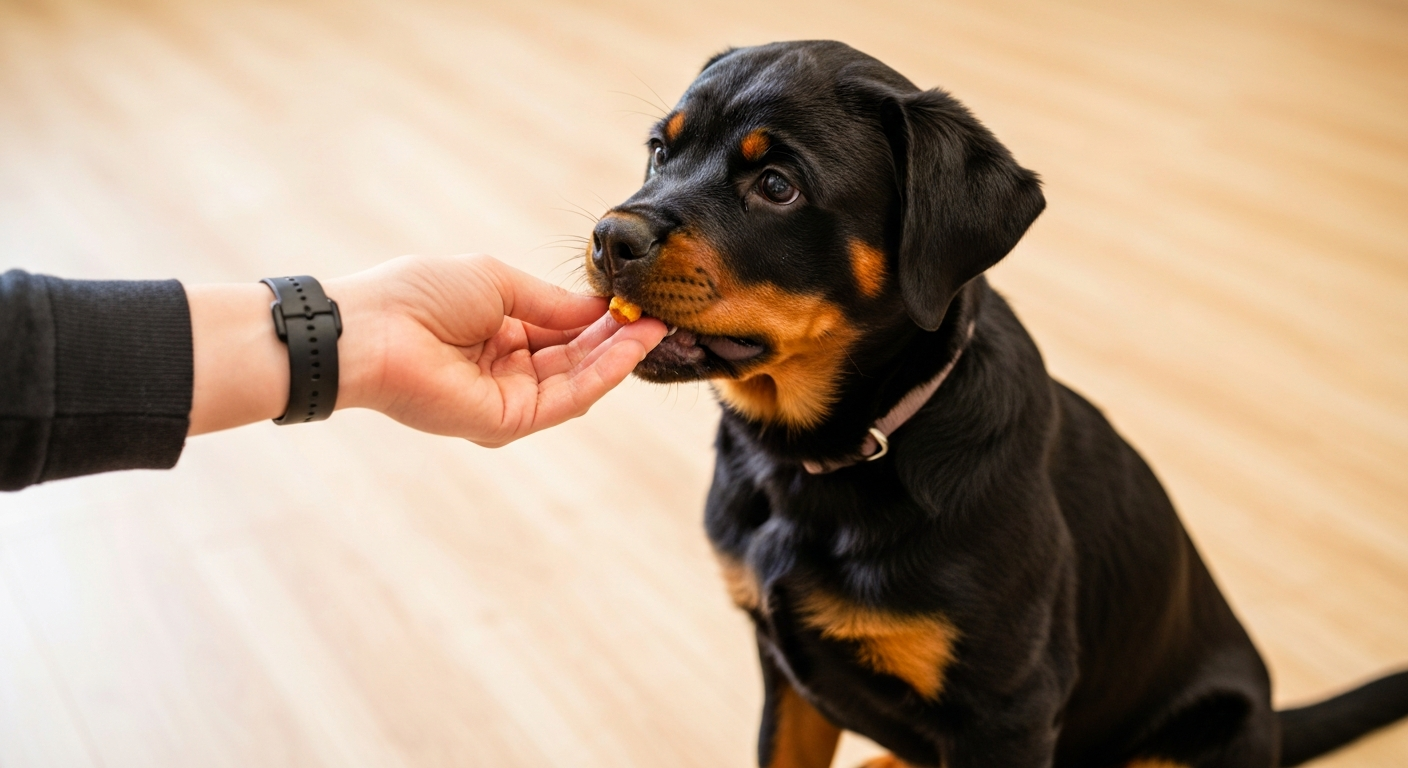
Positive reinforcement training means rewarding the behavior you want to see. When your puppy sits, they get a treat and praise. When they come when called, they get their favorite toy. This method builds a powerful bond and teaches your dog that learning is fun. More advanced techniques and principles can be found in our comprehensive dog training guides, which are a great next step.
Consistency is your best friend
Every single person in your household must be on the same page with the rules and commands. If one person lets the dog on the couch and another doesn't, you are sending mixed signals that will confuse your intelligent Rottie. Decide on your rules from day one and stick to them. Consistency creates a predictable world for your dog, which helps them feel secure and understand their place in the family pack.
Your Rottweiler's first lessons: Essential commands
Once you have the fundamentals down, it's time to start teaching basic obedience. Keep training sessions short and fun—no more than 5-10 minutes at a time for a young puppy.
Core obedience: Sit, Stay, and Come
These three commands are the bedrock of a well-behaved dog. 'Sit' is often the easiest to teach and is a great default behavior. 'Stay' teaches impulse control, a vital skill for a powerful dog. And a reliable 'Come' (recall) can literally save your dog's life. Start in a quiet room with no distractions and gradually practice in more challenging environments.
'Leave It': A potential lifesaver
A strong 'Leave It' command is crucial. Whether it's a dropped pill, a piece of chocolate, or something questionable on your walk, you need your Rottweiler to immediately back away from an object on command. Their powerful jaws can do a lot of damage quickly, so this command is a top priority for their safety.
The 'Look' or 'Watch Me' command
This might be the most underrated command. Teaching your Rottweiler to make eye contact with you on cue is a game-changer. It allows you to get their attention in a distracting situation, redirect them from something they shouldn't be focused on, and strengthens your bond. It's the foundation for all other training.
Navigating common Rottweiler puppy challenges
Every puppy presents challenges, but with a Rottweiler, it's important to manage them early before they become ingrained habits in a large, powerful adult.
Mouthing and bite inhibition
Puppies explore the world with their mouths. It is your job to teach them 'bite inhibition'—how to control the pressure of their jaw. If your puppy mouths you too hard during play, let out a high-pitched yelp like a littermate would and briefly withdraw your hand. Immediately offer them an appropriate chew toy. They will learn that human skin is sensitive and that toys are for chewing.
Leash pulling
An adult Rottweiler pulling on a leash is no joke. Start leash training from day one. Use a front-clip harness to give you better control without putting pressure on their throat. If they pull, simply stop walking. Only move forward when the leash is loose. They will quickly learn that pulling gets them nowhere.
Structuring your training for success
A little structure goes a long way. Plan your training to integrate seamlessly into your daily life. Remember, a tired and mentally stimulated dog is far less likely to get into trouble. Ensuring they get enough exercise is a key part of responsible pet ownership and directly impacts their trainability.
| Day | Morning Session (5-10 mins) | Evening Session (5-10 mins) | Daily Goal |
|---|---|---|---|
| Monday | 'Watch Me' practice | 'Sit' practice | Focus & Basic Obedience |
| Tuesday | Leash walking basics (indoors) | 'Leave It' introduction | Impulse Control |
| Wednesday | 'Come' when called (short distance) | Handling exercises (touch paws/ears) | Recall & Grooming Prep |
| Thursday | 'Sit' and short 'Stay' | Socialization outing (e.g., pet-friendly store) | Obedience & Confidence |
| Friday | 'Leave It' with more tempting items | Playtime with rules (e.g., 'Drop It') | Advanced Impulse Control |
| Saturday | Leash walking practice (outdoors) | 'Come' from another room | Real-World Skills |
| Sunday | Review all commands | Puzzle toys & mental games | Reinforcement & Fun |
Essential gear for Rottweiler training in 2026
You don't need a lot of fancy equipment, but a few key items will make your training journey much smoother. Investing in quality gear is also part of maintaining your dog's well-being, just like regular check-ups and preventative dog health care.
- Sturdy 6-Foot Leash:
- Avoid retractable leashes, which teach dogs to pull and offer little control. A simple, strong nylon or leather leash is best.
- Front-Clip Harness or Head Halter:
- These tools provide excellent control for strong pullers without causing pain or choking, unlike prong or choke collars.
- High-Value Treats:
- Your Rottie's kibble might not be exciting enough for training. Use small, soft, smelly treats like bits of cooked chicken, cheese, or commercial training treats.
- Treat Pouch:
- Allows for quick access to rewards, which is critical for timing your positive reinforcement correctly.
- Durable Chew Toys & Puzzle Feeders:
- Essential for redirecting chewing, keeping your dog's mind busy, and preventing boredom-related behaviors.
The journey is the reward
Training a Rottweiler is not a short-term project; it's a long-term commitment that defines your relationship with your dog. The work you put in now will pay off for years to come, resulting in a confident, gentle, and impeccably behaved companion. Embrace the process, celebrate the small victories, and never forget that you have the privilege of sharing your life with an incredible canine partner. The bond you forge through patient and positive training will be one of the most rewarding experiences of your life.
Frequently Asked Questions
Are Rottweilers good for first-time owners?
Rottweilers can be good for dedicated first-time owners who are committed to extensive training, socialization, and meeting their exercise needs. Their intelligence and strength require a confident, consistent leader. It is a challenging but highly rewarding experience for the right person.
When should I start training my Rottweiler puppy?
Training should begin the day you bring your Rottweiler puppy home, typically around 8 weeks old. Start with simple concepts like house training and socialization. Formal obedience command training can start immediately with short, positive sessions.
How do I stop my Rottweiler from jumping on people?
To stop a Rottweiler from jumping, you must teach an alternative behavior. When they jump, turn away and ignore them. When all four paws are on the floor, reward them with praise or a treat. Also, train a solid 'Sit' command and ask for it when guests arrive, rewarding them for sitting instead of jumping.
Do Rottweilers need a lot of exercise?
Yes, Rottweilers are an active breed that requires significant daily exercise to stay physically and mentally healthy. Aim for at least 60 minutes of activity per day, which can include brisk walks, jogging, fetch, and puzzle toys to challenge their minds.