
So, you're captivated by the Belgian Malinois. It’s impossible not to be. With their intense gaze, chiseled physique, and seemingly boundless energy, they are the super-athletes of the canine world. But before you bring one of these incredible dogs into your life, there’s a question you must ask yourself, and you must be brutally honest with the answer: can you handle their exercise needs? This isn't just about a daily walk. We're talking about a significant lifestyle commitment. Understanding the Belgian Malinois exercise requirements is the single most important factor in ensuring a happy life for both you and your dog.
Forget what you know about exercising a typical family pet. The Malinois was not bred to be a companion who lounges on the sofa. This is a working dog through and through, originally developed for herding livestock in Belgium. Their intelligence, drive, and stamina made them a top choice for police and military K-9 units worldwide. They are, in essence, four-legged professionals who are happiest when they have a job to do. An unemployed Malinois is a recipe for a frustrated dog and a chaotic home.
Why a simple walk around the block is not enough
Let me be direct: a 30-minute leash walk twice a day is barely a warm-up for a healthy adult Malinois. It's like asking an Olympic marathon runner to be satisfied with a stroll to the mailbox. When these dogs don't get the physical and mental stimulation their genetics demand, they will find their own 'jobs,' and you probably won't like their choices. These self-assigned tasks often include re-landscaping your garden with enthusiastic digging, testing the structural integrity of your furniture with their teeth, or practicing their alert-barking skills at every passing leaf.
This isn't malicious behavior; it's the desperate cry of a brilliant, under-stimulated mind and body. The key is to channel that incredible energy into productive, structured activities. True fulfillment for a Malinois comes from a combination of vigorous physical workouts and challenging mental tasks. One without the other is an incomplete equation. Proper exercise is foundational to their well-being, directly impacting everything from their behavior to their physical condition. It's an integral part of responsible pet ownership when choosing a high-drive breed.
How much exercise does a Belgian Malinois actually need?
While every dog is an individual, there are some solid baselines for the Belgian Malinois. We're not talking in minutes, but in hours of dedicated, focused activity every single day. Rain or shine, busy schedule or not, your Malinois will be ready to go. Here’s a breakdown of the minimum daily requirements by age to give you a clearer picture.
| Age Group | Daily Physical Exercise | Daily Mental Stimulation |
|---|---|---|
| Puppy (8-16 weeks) | Multiple short sessions (15-20 mins) of play and structured walks. Focus on socialization. | 15-20 minutes of training, puzzle toys, and exploration. |
| Adolescent (4-18 months) | 60-90 minutes of varied, vigorous activity. Avoid excessive high-impact running on hard surfaces. | 30+ minutes of advanced obedience, nose work, or interactive games. |
| Adult (1.5 - 7 years) | 90 minutes to 2+ hours of intense exercise (running, sports, fetch). | 30-60 minutes of challenging training, puzzle solving, or scent work. |
| Senior (7+ years) | 45-60 minutes of low-impact activity (swimming, brisk walks). Adjust based on health. | 20-30 minutes of familiar games and gentle puzzle toys to keep the mind sharp. |
Remember, these are starting points. Many Malinois will thrive on even more activity, especially during their peak adolescent and adult years.
The best types of physical exercise for a Malinois
Variety is the spice of life, and it's also the key to keeping your Malinois physically conditioned and engaged. Simply running in a straight line can get boring and put repetitive stress on their joints. Mix it up!
- Structured Running or Canicross:
- Running alongside you on a jog or participating in canicross (cross country running with dogs) is a fantastic way to burn energy. Always ensure they are running on softer surfaces like trails or grass to protect their joints. This is a critical aspect of preventative dog health care for an active breed.
- Canine Sports:
- This is where the Malinois truly shines. Sports like Agility, Flyball, Dock Diving, and Schutzhund (a protection sport) provide both intense physical and mental challenges. They satisfy the breed's innate desire to work in partnership with their handler.
- Advanced Fetch:
- Don't just throw a ball. Make it a training session. Use a frisbee or ball to practice commands like 'stay,' 'wait,' and a reliable 'drop it.' This combines physical exertion with impulse control, a vital skill for this breed.
- Swimming:
- An excellent, low-impact, full-body workout. It’s perfect for hot days and is also a great option for older dogs or those recovering from injury. Not all Mals are natural swimmers, so introduce them to water positively and patiently.
- Hiking:
- Navigating varied terrain on a long hike provides incredible physical conditioning and a wealth of sensory enrichment. The new sights, sounds, and smells are a workout for the brain, too.
Don't forget the brain games: mental stimulation is key
A physically exhausted Malinois with a bored mind is still a problem waiting to happen. Mental exercise can be just as tiring, if not more so, than a physical workout. Integrating these activities into your daily routine is non-negotiable.
Start incorporating brain games from day one. Short, fun sessions are more effective than long, frustrating ones.
- Obedience & Trick Training:
- Daily training sessions reinforce your bond and give your dog's brain a job. A 15-minute session of learning a new trick or perfecting a known command is incredibly powerful. For more ideas, our section on dog training has a wealth of resources.
- Nose Work & Scent Games:
- A dog's primary sense is smell. Engaging this sense is deeply fulfilling and mentally taxing. Hide treats around a room and let them 'find it,' or get involved in formal scent work classes. It's a natural fit for the Malinois.
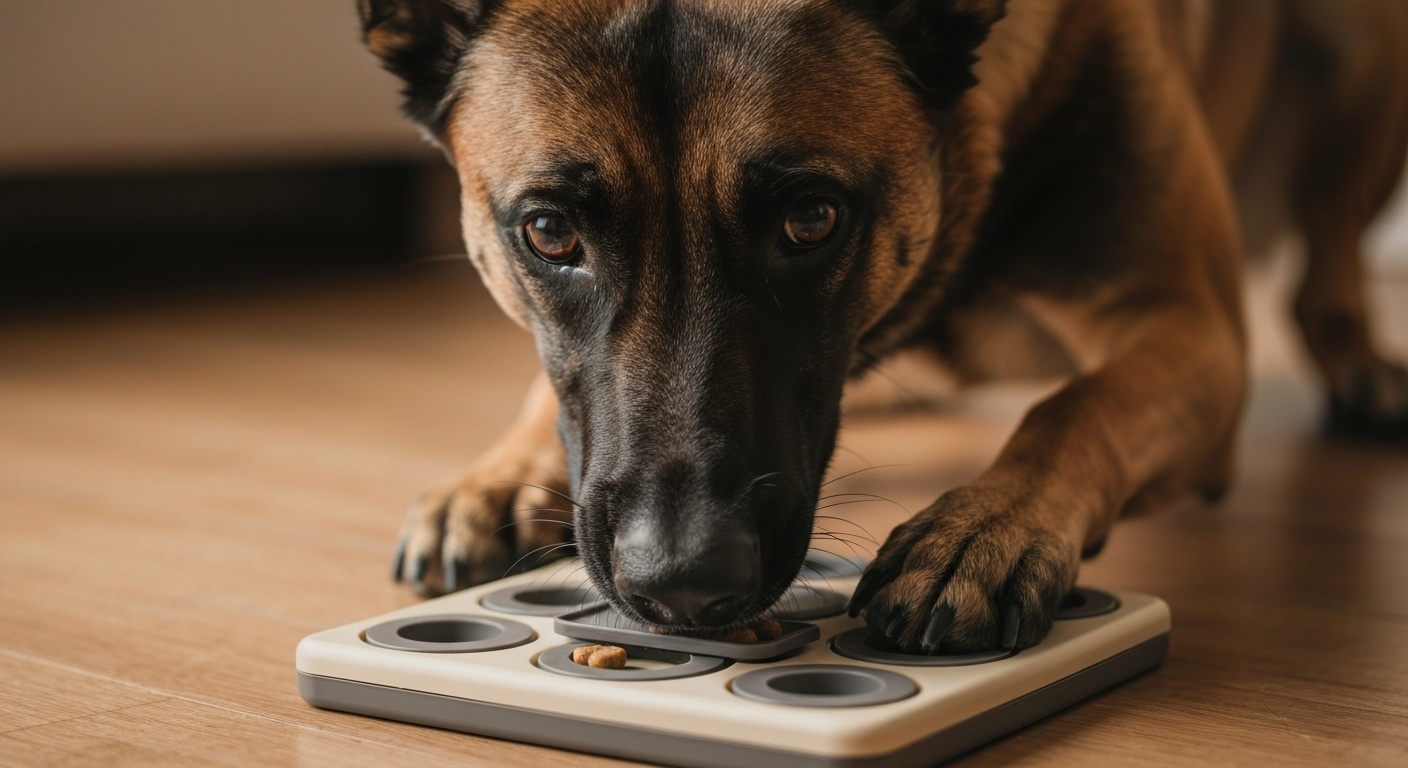
- Puzzle Toys & Food Dispensers:
- Ditch the food bowl. Make your Malinois work for their meals using puzzle feeders, snuffle mats, or treat-dispensing toys. This mimics their natural foraging instincts and prevents them from gobbling down their food in seconds.
- 'Find the Toy' or Hide-and-Seek:
- These simple games are fantastic for mental engagement. Have your dog stay while you hide their favorite toy (or yourself!) and then release them to find it. This builds focus and problem-solving skills.
Signs your Malinois is not getting enough exercise
Your Malinois will give you clear signals if their needs aren't being met. Look out for these red flags, which indicate your dog is crying out for more activity:
- Destructive Behavior: Chewing on furniture, door frames, or walls. Digging holes in the backyard or even in your carpet.
- Excessive Vocalization: Nuisance barking, whining, or howling without an obvious cause.
- Hyperactivity: An inability to settle down or relax in the house, often called 'Velcro dog' syndrome but driven by anxiety.
- Repetitive Behaviors: Constant pacing, spinning in circles, or tail chasing.
- Reactivity on Leash: Lunging and barking at other dogs, people, or vehicles out of sheer frustration and pent-up energy.
- Nipping and Mouthiness: Using their mouth on you more than is appropriate, a common sign of over-arousal and boredom.
If you see these signs, it's time to honestly re-evaluate your daily routine and ramp up both the physical and mental exercise. It’s not just a phase; it's a direct communication from your dog.
A lifestyle, not just a pet
Owning a Belgian Malinois is less like having a pet and more like taking on a new, demanding, and incredibly rewarding hobby. They will push you to be more active, more consistent, and a better trainer. Their exercise needs are significant, but meeting them unlocks the most loyal, intelligent, and capable canine partner you could ever imagine. A tired Malinois is a happy, well-behaved Malinois, and a joy to live with. Are you ready for the challenge?
Frequently Asked Questions
How much exercise does an adult Belgian Malinois need per day?
An adult Belgian Malinois needs a minimum of 90 minutes to 2 hours of vigorous physical exercise per day, coupled with at least 30-60 minutes of dedicated mental stimulation like training or puzzle toys. This is a baseline, and many Mals will happily take more.
Can a Belgian Malinois live happily in an apartment?
It is challenging but not impossible. An apartment-dwelling Malinois requires an extremely dedicated owner who can provide several hours of outdoor exercise and indoor mental enrichment every single day, regardless of weather. Access to a nearby large park or running space is essential.
At what age do Belgian Malinois start to calm down?
Belgian Malinois are a high-energy breed that often maintains a puppy-like energy level well into their adult years. You might see a slight mellowing around age 3-4, but they typically remain very active until they are well into their senior years (7-8+). Don't expect them to ever become couch potatoes.
What happens if a Belgian Malinois doesn't get enough exercise?
An under-exercised Malinois can quickly develop behavioral problems. These include destructive chewing and digging, excessive barking, hyperactivity, anxiety, and sometimes even reactivity or aggression towards people or other animals. Providing sufficient outlets for their energy is non-negotiable.