
Welcoming a cat into a home with children can create wonderful moments filled with purrs, playful energy, and deep affection. However, selecting the right feline companion is key to ensuring a peaceful and joyful relationship for everyone. As a behaviorist, I stress that while breed characteristics offer a starting point, understanding an individual cat's personality and using proper introduction techniques are most important. This guide will cover cat breeds well-suited to families with children, focusing on their tolerance, playfulness, and adaptability, along with essential care and introduction advice.
Cat breeds well-suited for families with children
When choosing a cat for a home with kids, we look for breeds known for their patience, sociability, and robust nature. These cats are less likely to be upset by sudden movements or loud noises and often enjoy interactive play. It's important for responsible owners to ensure the cat has its own quiet space and that children are taught how to interact respectfully.
Ragdoll
Ragdolls are a popular choice for families, and their reputation is well-earned. These cats are known for their calm and easygoing disposition. They are very affectionate, often staying close to their owners and enjoying gentle petting. Ragdolls are generally relaxed and can tolerate being held by children if handled carefully. Their semi-longhaired coat needs regular brushing, but it typically doesn't tangle as easily as some other longhaired breeds. They enjoy play but aren't overly demanding, fitting well into many family environments.
Temperament: Calm, affectionate, easygoing, sociable.
Care Needs: Moderate grooming, best kept indoors, needs social interaction.
Suitability for Kids: Excellent. Their gentle nature means they are very accepting of children.
Maine Coon
The Maine Coon, another large and striking breed, is often described as a gentle companion. These cats are known for their friendly, outgoing, and playful personalities. They are intelligent and curious, usually forming strong bonds with their families. Maine Coons generally get along well with children and other pets, showing patience and tolerance. They enjoy interactive games and can even be trained to do tricks. Their shaggy, water-resistant coat requires regular brushing to prevent tangles. Despite their size, they are often quite graceful and don't tend to be overly rambunctious indoors, though they do have energetic bursts of play.
Temperament: Friendly, outgoing, intelligent, playful, patient.
Care Needs: Regular grooming, needs space, interactive toys, enjoys attention.
Suitability for Kids: Very good. Their patient and playful nature suits active households.
American Shorthair
The American Shorthair is a consistently good choice. This breed is known for its relaxed, adaptable, and good-natured personality. They are typically sturdy cats, not overly delicate, which can be an advantage in homes with younger children. American Shorthairs are usually friendly, playful, and like being part of family activities without being too demanding. They are known for their resilience and are not prone to excessive vocalization. Their short, dense coat is easy to care for, needing only occasional brushing. They have a balanced temperament, content with quiet companionship as well as enjoying playtime.
Temperament: Easygoing, good-natured, adaptable, playful, sturdy.
Care Needs: Low grooming needs, needs active play, adapts to different environments.
Suitability for Kids: Good. Their calm demeanor and sturdiness make them a sound choice.
Burmese
Burmese cats are known for being very social, affectionate, and people-focused. They often exhibit "dog-like" traits in their desire for companionship and interaction. Burmese cats are typically quite playful and enjoy engaging with their families, including children. They are intelligent and can be taught tricks or to play fetch. Their short, silky coat requires minimal grooming. While they are active and enjoy play, they are also very cuddly and can form deep attachments. It's important for families to recognize that Burmese cats thrive on attention and can feel lonely if left alone for extended periods.
Temperament: Social, affectionate, playful, intelligent, communicative.
Care Needs: Minimal grooming, requires significant social interaction and playtime.
Suitability for Kids: Good, especially for families who can dedicate ample attention and playtime.
Abyssinian
The Abyssinian is an active, curious, and intelligent breed that can be a great fit for an active family. Abyssinians are playful, enjoy mischief, and love to explore their surroundings. They often enjoy interactive games and can be very entertaining with their antics. While they aren't typically lap cats who will sit for long periods, they like to be involved in family activities and can form strong connections. They are generally good with children who respect their energetic nature and understand their need for play space. Their short, dense coat is very low maintenance. It's important to offer them plenty of stimulation to prevent boredom.
Temperament: Active, curious, intelligent, playful, engaging.
Care Needs: High activity level requires enrichment, low grooming, needs mental stimulation.
Suitability for Kids: Good for active families with older children who understand their need for play and exploration. Supervision is recommended.
Introducing your new cat to the family
Bringing a new cat into a home with children requires a careful and patient approach to ensure everyone feels safe and comfortable. This is a crucial step in building a positive cat behavior foundation.
Slow and steady wins the race
Don't rush the introduction process. When you first bring your cat home, set them up in a quiet, separate room with their food, water, litter box, and a comfortable bed. Allow them to adjust to their new environment for a few days before introducing them to the rest of the household. This helps reduce stress.
Supervised interactions
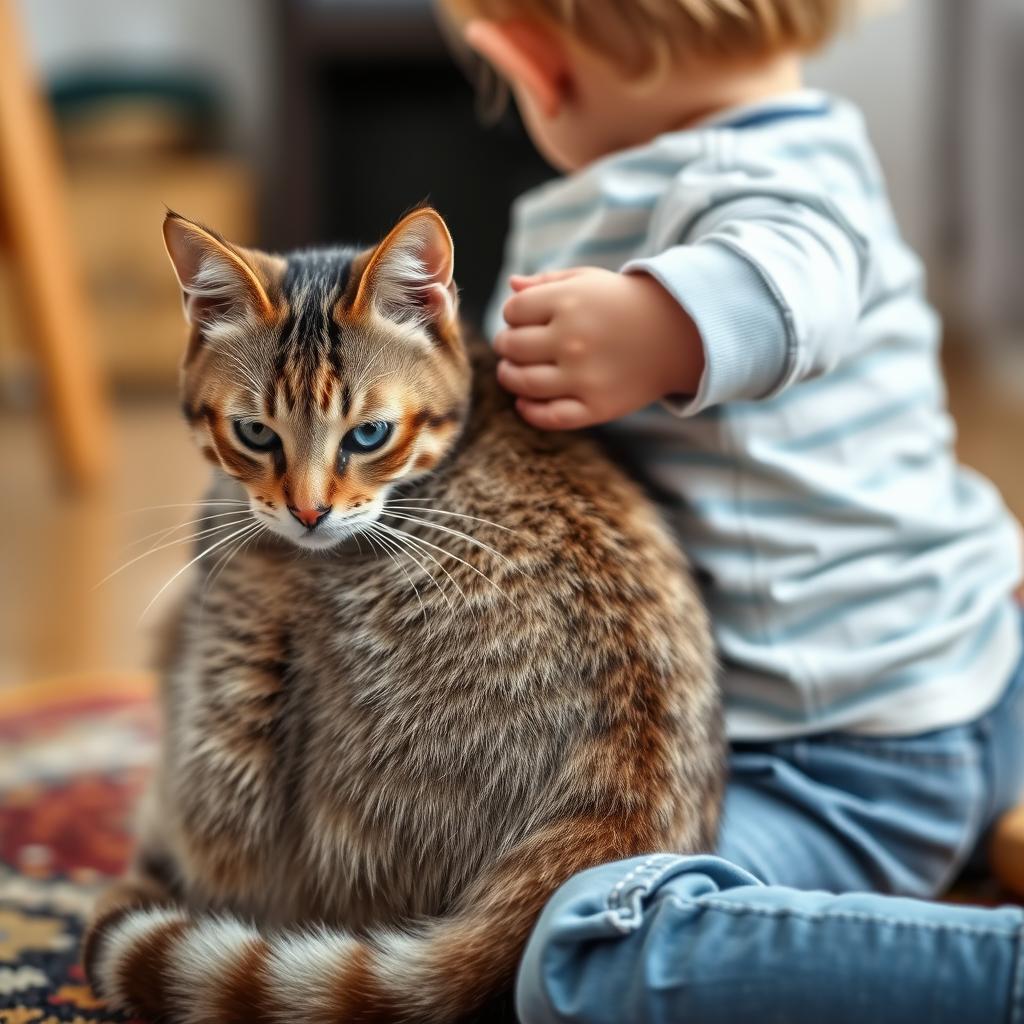
Once the cat seems comfortable in its designated space, begin short, supervised introductions with the children. Let the cat approach the child. Teach your children how to approach the cat gently, offer a hand for sniffing, and pet softly along the back or under the chin. Avoid startling the cat or chasing it. Ensure children understand that the cat can hide or leave if it feels uncomfortable.
Teach respectful handling
Educate your children about feline body language. Show them what it looks like when a cat is happy (e.g., purring, slow blinks, relaxed posture) versus when it's stressed or fearful (e.g., flattened ears, hissing, swatting, tail flicking). Teach them never to pull the cat's tail, ears, or fur, and to always let the cat initiate physical contact.
Provide escape routes and safe havens
It's essential for the cat to have places where it can retreat and feel safe. This could be a high shelf, a cat tree, or a cozy bed in a quiet corner. Children should understand that when the cat is in its safe space, it should not be disturbed.
Daily care and health considerations for family cats
Ensuring your cat is healthy and happy contributes significantly to its temperament and ability to interact positively with children. While I am a behaviorist and not a veterinarian, I can offer guidance on daily care and recognizing behavioral signs that might indicate an issue.
Nutrition and hydration
A balanced diet is crucial for your cat's overall health and energy levels. Consult your veterinarian about the best food for your cat's age, activity level, and any specific health needs. Always provide fresh, clean water. Cats can be prone to urinary tract issues, and proper hydration is key to prevention. Look for changes in drinking habits or litter box usage, and always discuss these with your vet.
Grooming routines
Regular grooming is not just about keeping your cat looking good; it's also an opportunity to bond and check for any physical issues. Brushing helps distribute natural oils, reduces shedding, and can prevent mats, especially in longhaired breeds. It's also a chance to check for fleas, ticks, or any skin abnormalities. Start grooming sessions when your cat is young to get them accustomed to it.
Environmental enrichment
A bored cat can become a destructive or anxious cat. Provide plenty of toys, scratching posts, climbing structures, and opportunities for interactive play. Puzzle feeders can also provide mental stimulation. Environmental enrichment is vital for preventing behavioral problems that can arise from stress or lack of stimulation, which is a key aspect of understanding cat behavior.
Recognizing signs of illness or stress
Cats are masters at hiding discomfort. Keep an eye out for subtle changes in behavior. These might include:
- Increased hiding or withdrawal.
- Changes in appetite or thirst.
- Lethargy or reluctance to play.
- Changes in vocalization (more or less meowing).
- Changes in grooming habits (over-grooming or neglecting grooming).
- Altered litter box habits (accidents outside the box).
- Reluctance to jump or move normally, which could indicate pain.
If you notice any persistent changes, it's always best to consult your veterinarian for a professional diagnosis and treatment plan. They can provide guidance on specific medical conditions and their management.
Choosing the right cat for your family
Beyond breed, consider adopting an adult cat from a shelter. Adult cats often have established personalities, and shelter staff can usually provide insights into their temperament and suitability for homes with children. Mixed breeds can also make wonderful, healthy companions. The most important factor is finding a cat whose individual personality meshes well with your family's lifestyle and energy levels. Always remember that responsible pet ownership, understanding feline behavior, and teaching children to be kind and respectful are the cornerstones of a lasting, loving relationship between cats and kids.
Frequently Asked Questions
Which cat breeds are generally good with children?
Breeds like the Ragdoll, Maine Coon, American Shorthair, Burmese, and Abyssinian are often recommended for families with children due to their patient, playful, and sociable temperaments. However, individual personality plays a huge role, so always consider the specific cat's disposition.
How can I introduce a new cat to my children?
Start with short, supervised interactions. Teach your children how to approach and pet the cat gently, respecting its space. Allow the cat to approach the child on its own terms. Provide plenty of safe spaces for the cat to retreat to if it feels overwhelmed. Patience and positive reinforcement for both child and cat are key.
What are the daily care needs for a family cat?
Daily care includes providing fresh food and water, cleaning the litter box, engaging in playtime, and offering affection. Regular grooming, depending on the breed's coat, and monitoring for any changes in behavior that might indicate illness are also important aspects of <a href="https://breedexplorer.com/cat-health-care">cat health care</a>.
Are there specific training tips for cats living with kids?
While cats don't typically undergo formal 'training' like dogs, you can teach them basic cues and encourage good behavior. For family cats, focus on redirecting unwanted behaviors, like scratching furniture, to appropriate outlets like scratching posts. Teaching children gentle handling is crucial for a harmonious environment.