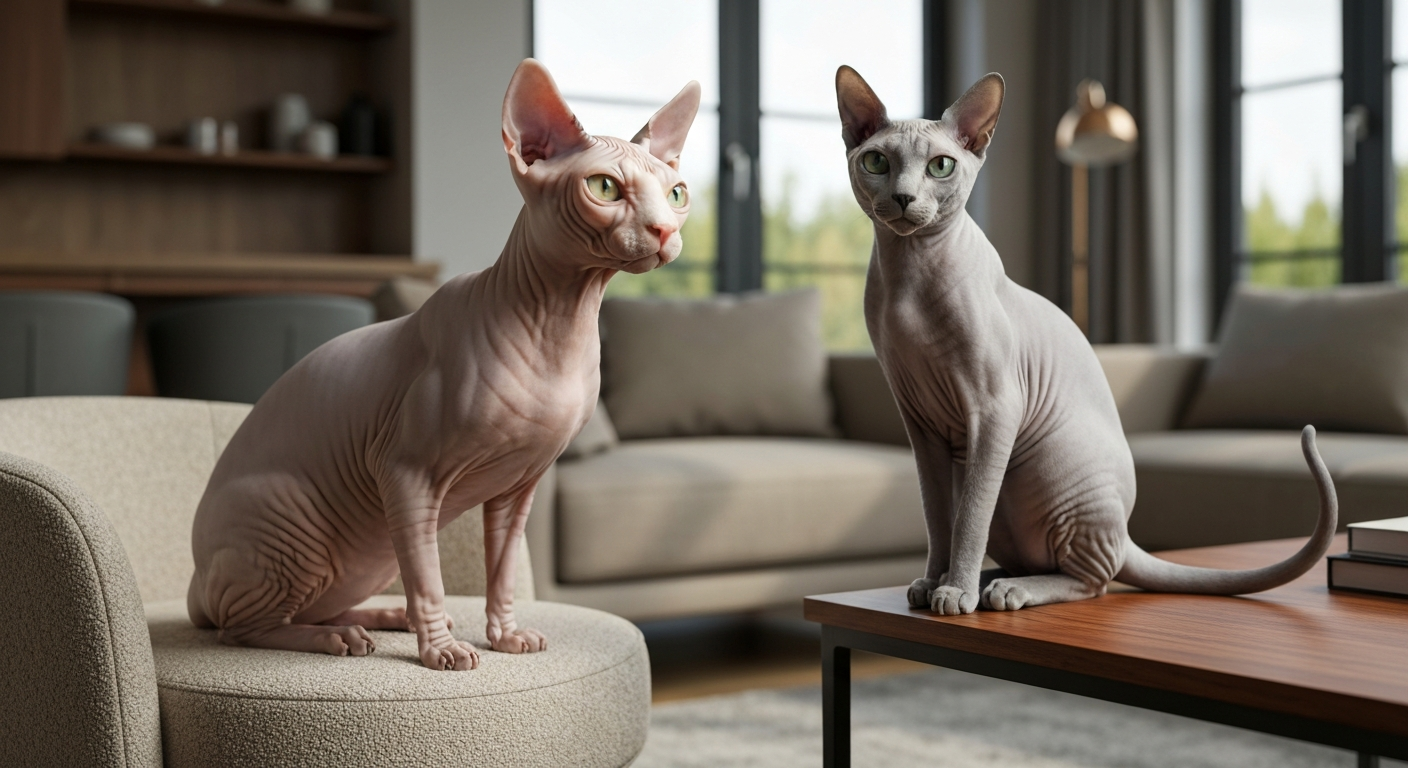
Do you dream of feline companionship but cringe at the thought of fur-covered furniture, clothes, and... well, everything? You're not alone. The constant battle with the vacuum cleaner is a reality for many cat owners. But what if I told you that you could enjoy all the purrs and head-butts with far less of the fluff? Welcome to the wonderful world of low-shedding cat breeds!
Before we dive in, let's clear up a common misconception. No cat (with fur) is truly 100% non-shedding, and no cat is 100% hypoallergenic. Allergies are caused by a protein (Fel d 1) in a cat's saliva and skin glands, not the hair itself. However, cats that shed less spread fewer of these allergens around your home. So, if you're looking for a tidier living space or have mild allergies, choosing one of these breeds could be a game-changer. Let's explore the top low-shedding cat breeds that might just be your perfect match.
The Sphynx: The icon of hairless elegance
When you think of a cat that doesn't shed, the Sphynx is probably the first image that comes to mind. Their unique, wrinkled, and seemingly naked appearance is unforgettable. While they look hairless, they are typically covered in a fine, downy fuzz that feels like peach skin. Since they have no coat to shed, they are the undisputed champions of the low-shedding world.
But don't mistake their lack of fur for a lack of maintenance. These cats require a dedicated care routine. Their skin produces oils that would normally be absorbed by fur, so they need weekly baths to stay clean and prevent skin issues. They are also total social butterflies—expect your Sphynx to be your little shadow, craving attention, cuddles, and warmth.
- Temperament:
- Curious, Mischievous, Affectionate, People-Oriented
- Lifespan:
- 8 to 14 years
- Grooming Needs:
- High (Weekly bathing required)
- Activity Level:
- High
The Cornish & Devon Rex: Waves of affection
Often grouped together due to their unique coats, the Cornish Rex and Devon Rex are two distinct breeds with one thing in common: a single, soft, curly undercoat. They lack the long, coarse guard hairs of most cats, which means significantly less shedding. Petting a Rex is like stroking warm velvet!
Cornish Rex
The Cornish Rex has a fine, tightly waved coat and a sleek, athletic body reminiscent of a greyhound. They are incredibly active and intelligent, and their kitten-like personality lasts a lifetime. They love to play fetch, learn tricks, and explore every high shelf in your home.
Devon Rex
The Devon Rex has a looser, more suede-like curl, large ears, and an adorable pixie-like face. They are the clowns of the cat world, with a mischievous and playful spirit. A Devon Rex wants to be involved in everything you do, often perching on your shoulder to supervise your activities. Their social nature means understanding their unique cat behavior is key to a happy home.

The Siberian: The hypoallergenic longhair
Wait, a long-haired cat on a low-shedding list? It sounds counterintuitive, but it's true! The magnificent Siberian is a fascinating exception. While they do have a dense, triple-layered coat perfect for surviving harsh Russian winters, they are known to produce significantly lower levels of the Fel d 1 allergen than most other breeds. They do shed seasonally, but many people with mild to moderate cat allergies find they can live comfortably with a Siberian. Their fur is also less prone to matting than other long-haired breeds, requiring only occasional brushing.

- Temperament:
- Playful, Loyal, Fearless, Affectionate
- Lifespan:
- 10 to 18 years
- Grooming Needs:
- Moderate
- Activity Level:
- High
The Russian Blue: The silver-coated aristocrat
The Russian Blue is a picture of grace and elegance with its shimmering silver-blue coat and striking green eyes. Their secret to low shedding lies in their incredibly dense double coat. The short, plush fur doesn't fall out easily, instead remaining trapped in the coat until you brush it out. A weekly brushing session is usually all it takes to keep shedding to an absolute minimum.
These cats are known for being gentle, quiet, and a bit reserved with strangers. However, they form incredibly strong bonds with their chosen family members and are loyal, loving companions. Their grooming is simple, but consistent care is part of their overall preventative health care plan.
The Burmese: A satin coat with a heart of gold
The Burmese cat boasts a short, fine, satin-like coat that requires very little maintenance and sheds minimally. Their fur lies close to their body, and a quick weekly wipe-down with a soft cloth is often enough to keep them looking pristine. They come in a variety of beautiful, solid colors, with the traditional deep brown (sable) being the most famous.
Beyond their easy-care coat, Burmese cats are renowned for their people-loving, dog-like personalities. They are playful, trusting, and incredibly sociable, making them a fantastic choice for families. They thrive on interaction and don't do well if left alone for long periods.
Other notable low-shedding breeds
While the cats above are superstars, a few others deserve an honorable mention in your search for a fur-free companion:
- Oriental Shorthair: With a fine, short coat and a body type similar to the Siamese, they shed very little. They are vocal, intelligent, and demand to be the center of attention.
- Siamese: The classic Siamese also has a short, fine coat that doesn't require much grooming and sheds less than many other breeds. Like the Oriental, they are talkative and form deep bonds.
- Bengal: Known for their wild, leopard-like markings, Bengals have a unique 'pelt' that feels more like a rabbit's than a typical cat's. This coat sheds very little and is remarkably easy to care for.
Comparing low-shedding cat breeds at a glance
To help you decide, here's a quick comparison of our top contenders. Remember, 'Hypoallergenic Potential' refers to their suitability for people with allergies, not that they are allergen-free.
| Breed | Shedding Level | Grooming Frequency | Hypoallergenic Potential |
|---|---|---|---|
| Sphynx | Almost None | Weekly (Bathing) | Very High |
| Cornish/Devon Rex | Very Low | Bi-Weekly (Bathing/Brushing) | High |
| Siberian | Low to Moderate (Seasonal) | Weekly (Brushing) | High (Lower Fel d 1) |
| Russian Blue | Very Low | Weekly (Brushing) | Moderate to High |
| Burmese | Very Low | Weekly (Wipe-down) | Moderate |
| Oriental Shorthair | Very Low | Weekly (Brushing) | Moderate |
Choosing the right cat for you
Picking a low-shedding breed is a fantastic start to minimizing fluff in your home. However, the most important factor in choosing a feline friend is personality and lifestyle compatibility. An active, high-energy Devon Rex might not be the best fit for a quiet, sedentary household, just as a reserved Russian Blue might be overwhelmed by a loud, busy family. Research each breed's temperament and needs to ensure you're making a choice that will lead to a happy, lifelong bond. This decision is a huge part of responsible pet ownership. By choosing wisely, you can enjoy years of companionship, with far fewer lint rollers involved!
Frequently Asked Questions
Are low-shedding cats completely hypoallergenic?
No cat is 100% hypoallergenic. Allergies are typically triggered by Fel d 1, a protein found in a cat's saliva, skin, and urine, not the hair itself. Low-shedding cats may produce less of this allergen or spread less of it around the home due to minimal shedding, making them better tolerated by many allergy sufferers, but they are not allergen-free.
Do hairless cats like the Sphynx require any grooming?
Yes, absolutely. Hairless cats require significant grooming. Because they lack fur to absorb natural skin oils, they need regular baths (often weekly) to prevent skin problems and oil stains on furniture. They also need their ears cleaned frequently.
Which low-shedding cat is best for a family with children?
The Burmese and Devon Rex are excellent choices for families. Both are known for their playful, patient, and sociable personalities. The Burmese is particularly known for its dog-like loyalty and gentle nature with kids.
How can I reduce shedding in the cat I already have?
Improving your cat's diet with high-quality food rich in omega fatty acids can promote a healthier coat. Regular brushing (daily, if possible) removes loose fur before it ends up around your home. Also, ensure your cat is in good health, as excessive shedding can sometimes be a sign of an underlying medical issue.