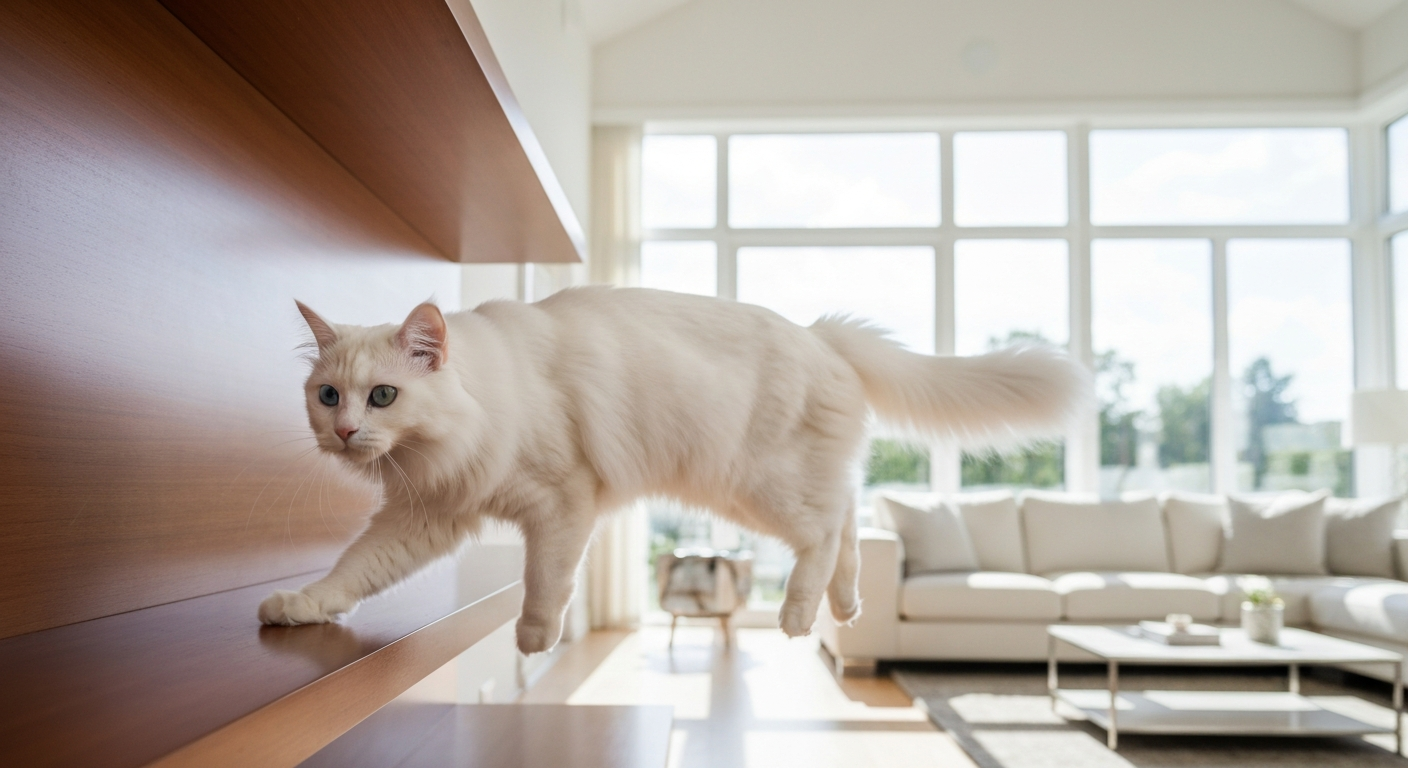
At first glance, a Turkish Angora looks like the ultimate lap cat. Their silky coat, fine bones, and elegant posture suggest they belong on a plush cushion, watching the world go by. But in my years working as a pet behaviorist, I have learned that these cats are anything but passive. Behind that delicate, graceful exterior is an athletic, highly intelligent, and often mischievous companion.
To build a rewarding life with a Turkish Angora, you need to understand what makes them tick. By looking closely at their daily energy levels, social needs, and training potential, you can set both of you up for a happy, harmonious life together.
An active and energetic temperament
If you are looking for a quiet lap cat to snooze on the sofa all day, this breed is likely not the match for you. Turkish Angoras are high-energy cats who remain incredibly playful well into their senior years. They treat your entire home as a personal playground and have an absolute obsession with heights.
In my practice, I have rarely encountered a breed with such a powerful drive to climb. Do not be surprised to find your Angora perched on top of an open door, balancing on the highest kitchen cabinet, or riding on your shoulders as you vacuum. They feel most secure when they can survey their territory from above, meaning vertical territory is a necessity, not a luxury.
To keep such an active cat happy, consider adding some of these vertical features to your home:
- Heavy, sturdy cat trees that will not wobble when leaped on
- Wall-mounted climbing shelves and paths
- Secure window perches for watching outdoor wildlife
- High walkways that allow them to traverse a room off the floor
Interactive play is just as crucial. Simply tossing a few toy mice on the carpet will not keep this clever breed engaged for long. They need games that mimic a real hunt, which means they need you to participate. Daily play sessions with feather wands, fishing-pole toys, or laser pointers are fantastic for burning off physical energy and strengthening your mutual bond.
Understanding their social needs and vocal communication
Turkish Angoras are deeply social creatures. Instead of merely tolerating human presence, they demand to be part of the action. If you open a laptop, they will likely sit on the keyboard; if you read a book, they will park themselves right across the pages. They form incredibly tight bonds with their chosen humans and will follow you from room to room like a shadow.
Because they crave connection, they can struggle if left alone for long stretches. If your home is empty for ten hours a day, a single Angora may become lonely or anxious. They generally thrive with other animal companions, including active cats and dog-friendly dogs. Just keep in mind that in any multi-pet household, an Angora will almost certainly establish themselves as the boss, no matter the size of the other animals.
Their communication style is equally charming. While they are highly vocal, they are rarely loud or obnoxious. Instead, they use a delightful series of soft chirps, trills, and quiet meows to tell you about their day. They will look you directly in the eye and respond to your voice, making you feel as though you are holding a real conversation.
Training tips for an intelligent breed
These cats are brilliant problem-solvers. If you do not give them constructive ways to use their minds, they will gladly invent their own entertainment. This often includes figuring out how to open cabinet doors, turning on water faucets, or methodically knocking items off counters to watch them fall.
This sharp intellect makes them perfect candidates for clicker training. Teaching your Angora tricks is far more than a fun party trick; it provides the vital mental stimulation they need to prevent common cat behavior issues born from frustration and boredom.
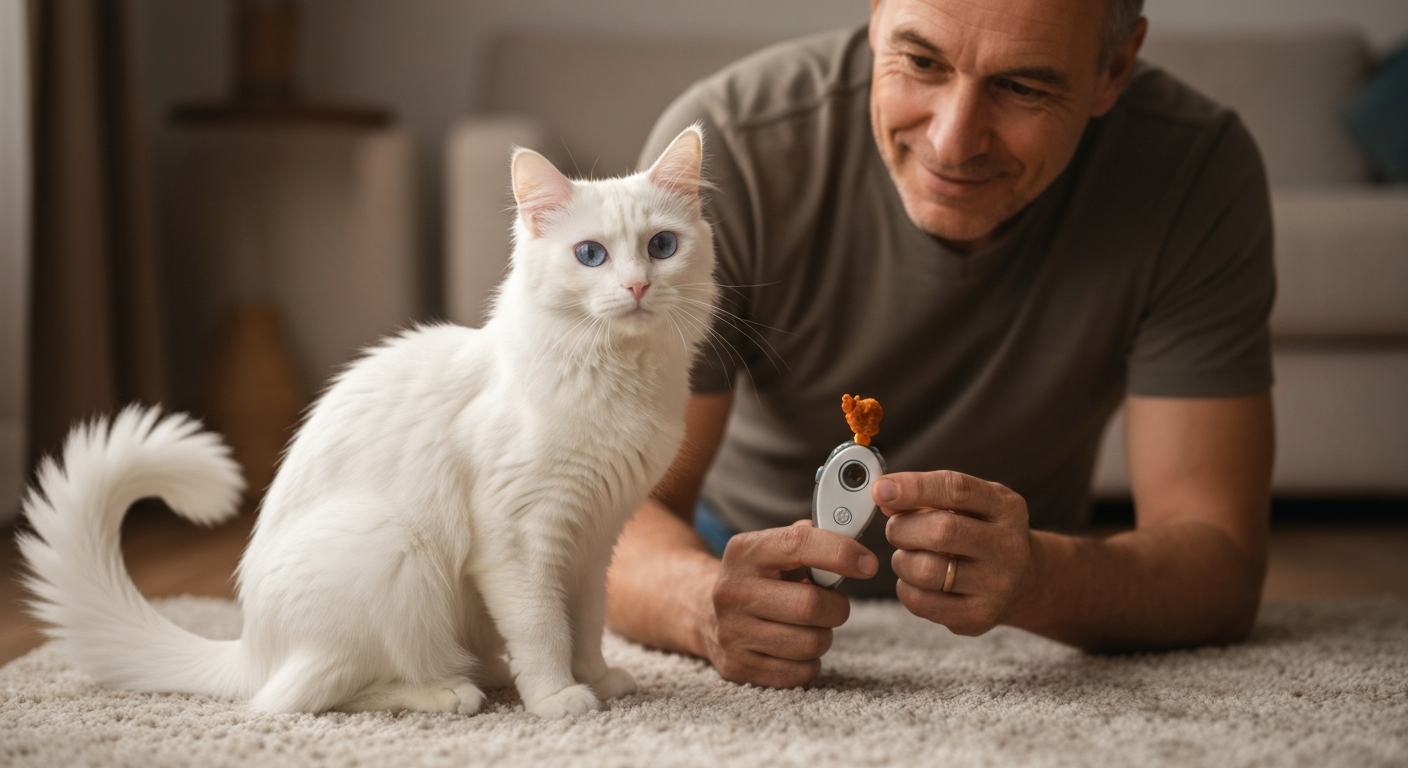
To get started with training, keep these simple, positive tips in mind:
- Use high-value rewards, like small pieces of freeze-dried meat, reserved strictly for training.
- Keep sessions short, positive, and fun, lasting only three to five minutes at a time.
- Focus entirely on positive reinforcement, never using scolding or loud corrections that could damage their trust.
- Use a clicker or a consistent marker word to pin-point the exact moment they do what you ask.
Many Angoras quickly learn to fetch toys, sit on cue, shake paws, and even walk on a leash. Getting them comfortable with a harness takes patience, but it is an outstanding way to let these curious cats safely explore the world outside.
How behavior signals physical health changes
I always remind clients that sudden behavioral shifts are rarely just behavioral issues. More often than not, a change in how a cat acts is the earliest indicator of physical discomfort. Because cats are naturally hardwired to hide pain, we must pay close attention to subtle shifts in their daily routines.
For instance, if a senior Angora who once leaped onto the fridge now stays on the floor, do not just chalk it up to getting older. This reluctance to jump often points to joint stiffness, meaning they could benefit from senior mobility adjustments, such as pet stairs or ramps to their favorite spots. Similarly, if a social cat starts hiding, vocalizing unexpectedly, or resisting touch, it is a signal to consult your veterinarian.
Supporting your cat's lifelong comfort relies on preventative care, including healthy weight management, careful portion control, and regular dental hygiene. This proactive approach is especially important for white-coated Angoras, who can sometimes be born deaf in one or both ears. Deaf cats lead exceptionally happy, normal lives, but they do require minor home adjustments. For instance, you can use clear hand signals instead of spoken cues, and always approach them gently to avoid startling them from behind.
Always consult your veterinarian if you notice changes in sleeping patterns, litter box habits, or appetite, as these are key indicators of physical health issues. For more practical advice on keeping your cat thriving, check out our guide to cat health care.
Deciding if this cat is right for your home
Living with a Turkish Angora is an incredibly rewarding experience, but it is a true commitment. These are not low-maintenance pets you can simply leave to their own devices. They expect to be full, active members of the household who participate in your daily routine.
To help you decide if this breed fits your lifestyle, let's look at their main traits:
- Energy level
- High. They require daily interactive play sessions and multiple elevated climbing spots.
- Grooming needs
- Low to moderate. Because their silky single coat lacks a thick undercoat, it is less prone to matting, but they still benefit from a quick brush once or twice a week.
- Mental stimulation
- High. They need food puzzles, trick training, and novel games to keep their busy minds occupied and prevent boredom.
- Social needs
- Extremely high. They form intense bonds with their families and thrive best in households where people are present throughout the day.
To give you an idea of what to expect, here is a breakdown of a typical daily routine that meets their needs:
| Daily Activity | Recommended Time | Purpose |
|---|---|---|
| Interactive play | 30 to 45 minutes | Burns off physical energy to prevent unwanted household behaviors. |
| Mental exercises | 15 to 20 minutes | Keeps their sharp minds engaged using puzzle feeders and short training games. |
| Socializing and affection | Whenever you are home | Satisfies their high need for companionship and active involvement in your day. |
| Brushing and coat care | 5 to 10 minutes | Maintains their silky, single coat, prevents tangles, and minimizes hairball risks. |
Turkish Angoras are clever, elegant, and highly engaging companions. If you are happy to invest time in active play, positive training, and sharing your high vertical spaces, you will gain a loyal, entertaining partner who brings endless joy and lively energy to your home.
Frequently Asked Questions
Are Turkish Angora cats lap cats?
While they are deeply affectionate and form strong bonds with their human companions, Turkish Angoras are generally too active and curious to sit on a lap for long periods. They prefer to be near you, participating in whatever you are doing, rather than sleeping on your lap.
Do Turkish Angora cats get along with other pets?
Yes, Turkish Angoras are highly social and usually get along well with other cats and friendly dogs. Because of their assertive nature, they often assume the role of the house leader, even among larger animals.
Are Turkish Angora cats loud or vocal?
They are moderately vocal cats. Rather than loud meowing, Turkish Angoras prefer to communicate using a series of soft chirps, trills, and quiet meows to hold conversations with their owners.
Can Turkish Angoras be left alone during the day?
They can manage during a typical workday if they have plenty of environmental enrichment, such as puzzle toys and high perches. However, they can develop separation distress if left entirely alone for long stretches, so having another pet for company is often highly recommended.