
Welcome to BreedExplorer.com! As Sarah Jenkins, a pet behaviorist and trainer, I'm happy to guide you through the wonderful world of Miniature Schnauzers. These spirited dogs, with their distinctive beards and alert expressions, make wonderful companions. If you're new to the breed, understanding their unique traits and how to train them effectively is your first step toward a harmonious life together. This guide offers beginner-friendly training tips for your Miniature Schnauzer.
Understanding the Miniature Schnauzer's Temperament
Before we begin training, it's important to understand what makes a Miniature Schnauzer tick. These dogs are known for being intelligent, alert, friendly, and sometimes a little spirited. They were originally bred in Germany as farm dogs, excelling at catching small rodents and guarding. This history contributes to their watchful nature and their tendency to bark to alert you to anything unusual.
Their intelligence means they pick up on commands quickly, but it also means they can get bored easily. A bored Schnauzer might find their own (often undesirable) entertainment. They are also social dogs who thrive on company and can become anxious if left alone for long periods. Understanding this can help you tailor your training and daily routine to meet their needs.
Key Temperament Traits:
- Intelligent: Learns quickly, but can also be clever in finding ways to get into trouble.
- Alert: Excellent watchdogs; they will certainly let you know if someone is at the door.
- Friendly: Generally good with families and other pets when properly introduced and socialized.
- Spirited: Possess a good amount of energy and enthusiasm for life.
- Loyal: Forms strong bonds with their families.
Essential Miniature Schnauzer Training for Beginners
Training a Miniature Schnauzer is a rewarding experience. The key is consistency, patience, and positive reinforcement. They respond best to methods that make learning fun and engaging. Here are the core areas every beginner should focus on:
1. Socialization: Building a Confident Dog
Socialization is arguably the most critical part of early puppy development. It's the process of exposing your Miniature Schnauzer puppy to a wide variety of sights, sounds, people, and other animals in a positive and controlled way. Starting this between 3 and 16 weeks of age is vital.
A well-socialized Schnauzer is less likely to develop fear-based aggression or excessive shyness. Introduce them gradually to different environments like parks (once fully vaccinated), busy streets, and around children. Make sure these experiences are pleasant. For instance, give them treats and praise when they encounter something new or potentially intimidating.
Tips for Effective Socialization:
- Enroll in a puppy socialization class.
- Introduce them to different types of people (various ages and appearances).
- Let them meet vaccinated, well-behaved adult dogs.
- Expose them to various sounds (vacuum cleaner, doorbell, traffic) at a low volume initially.
- Handle their paws, ears, and mouth gently to prepare them for grooming and vet visits.
2. House Training: Patience and Routine
House training a Miniature Schnauzer requires a consistent routine and vigilance. These dogs can be a bit stubborn, so stick to a schedule and celebrate successes.
Key Strategies for House Training:
- Take your puppy out frequently, especially after waking up, after meals, and after playtime.
- Choose a designated potty spot in your yard and take them there every time.
- Praise and reward them immediately with a high-value treat and enthusiastic praise when they eliminate outside.
- If you catch them having an accident indoors, interrupt them calmly with a clap or a word like "Oops" and immediately take them outside to their spot. Never punish them after the fact, as they won't understand.
- Supervise them closely when they are not in their crate or confined area.
- Consider crate training. A crate can be a valuable tool, as dogs are naturally reluctant to soil their sleeping area. Ensure the crate is the right size for your Schnauzer.
For more in-depth guidance on house training, you might find our resources on dog training techniques helpful.
3. Basic Obedience: The Foundation of Good Behavior
Teaching basic commands is crucial for safety and good manners. Miniature Schnauzers are smart and can learn commands like 'sit', 'stay', 'come', and 'down' quickly.
Positive reinforcement is the best approach. Use small, tasty treats, praise, and gentle petting. Keep training sessions short (5-10 minutes) and fun to maintain their interest.
Teaching 'Sit':
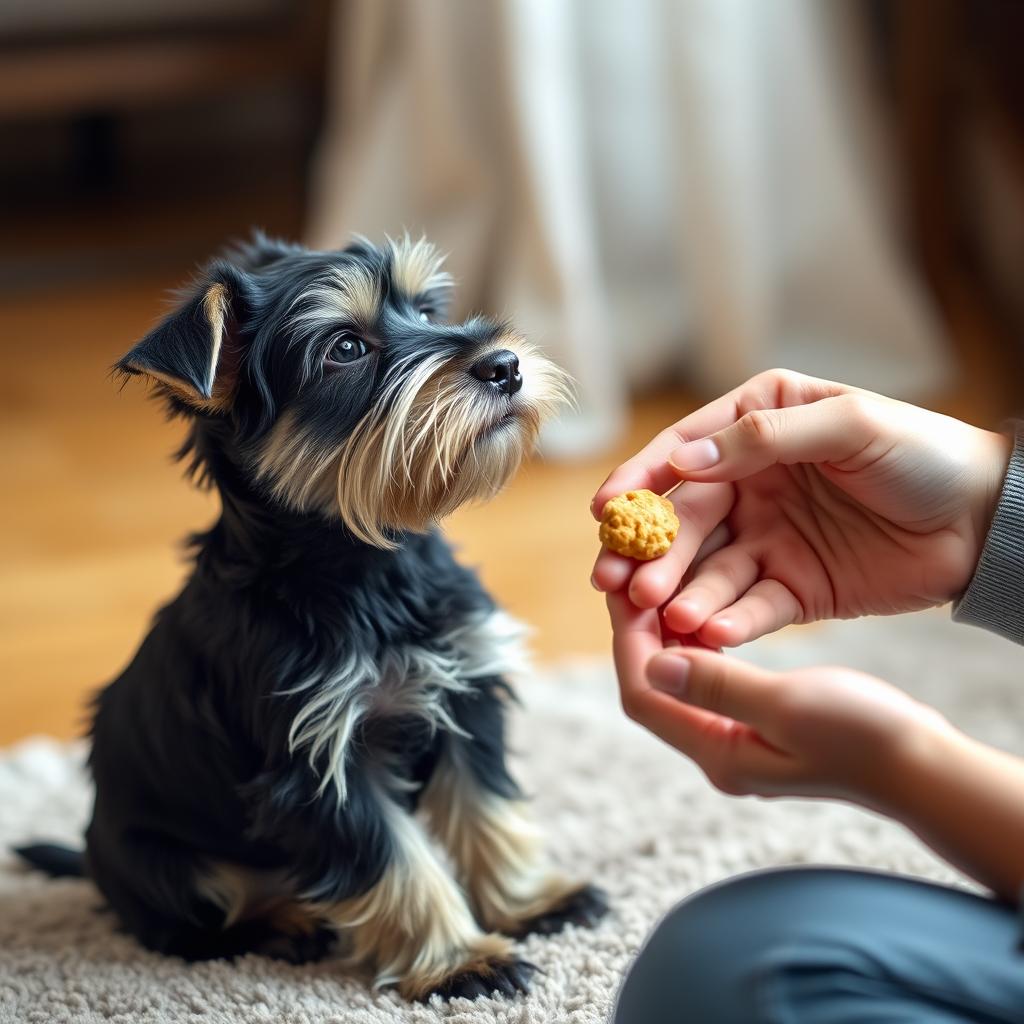
- Hold a treat near your Schnauzer's nose.
- Slowly move the treat up and back over their head. As their nose follows the treat, their rear end should naturally lower into a sit.
- As soon as their rear touches the ground, say "Sit," praise them enthusiastically, and give them the treat.
- Repeat this several times in short sessions throughout the day.
Teaching 'Come':
- Start in a quiet, enclosed area.
- Get down on their level and call their name followed by "Come!" in a happy, encouraging tone.
- When they come to you, reward them with treats, praise, and perhaps a fun game.
- Gradually increase the distance and introduce distractions as they master the command.
4. Leash Training: Walking Nicely
Miniature Schnauzers can be eager walkers, so leash training is important. Start by getting them comfortable with a collar or harness.
- Let them wear the collar or harness for short periods indoors, associating it with positive experiences like treats or play.
- Once comfortable, attach the leash and let them drag it around under supervision.
- Begin short walks inside first, rewarding them for walking calmly beside you.
- When walking outdoors, if they pull, stop moving. Only resume walking when the leash slackens. This teaches them that pulling stops the fun.
- Avoid yanking or jerking the leash, which can create fear or resistance.
5. Barking Control: Managing Their Alert Nature
Due to their alert nature, Miniature Schnauzers can be prone to barking. While you can't stop it entirely (nor would you want to, as it’s a form of communication), you can manage it.
- Identify the triggers for their barking. Is it people walking by, other dogs, or specific sounds?
- Teach a "quiet" command. When they bark, let them bark a couple of times, then say "Quiet" and hold a treat near their nose. When they stop barking to sniff, praise and reward.
- Don't reward barking by giving them attention or opening the door when they bark at the window.
- Ensure they are getting enough mental and physical stimulation. A tired dog is often a quieter dog.
- Consider professional guidance if excessive barking becomes a significant problem. Behaviorists can help pinpoint the cause and develop a tailored plan.
Daily Care and Enrichment for Your Miniature Schnauzer
Beyond training, daily care is fundamental. This includes diet, exercise, grooming, and mental enrichment.
Diet and Nutrition
Feed your Miniature Schnauzer a high-quality dog food appropriate for their age and activity level. Portion control is important to prevent obesity, which can lead to health issues. Always provide fresh, clean water. Consult your veterinarian about the best diet for your individual dog, especially if they have any specific dietary needs or sensitivities.
Exercise Needs
As mentioned, these dogs need daily exercise. Aim for at least two walks a day, plus playtime. Puzzle toys, training sessions, and even learning new tricks can provide excellent mental stimulation. A mentally stimulated dog is less likely to develop behavioral problems.
Grooming
Miniature Schnauzers have a distinctive wiry coat that requires regular grooming. This typically involves brushing several times a week to prevent mats, professional grooming (clipping and stripping) every 6-8 weeks, and regular ear cleaning and nail trimming.
A well-groomed dog is a happy dog. Regular grooming also provides another opportunity to check your dog for any lumps, bumps, or skin irritations, allowing for early detection of potential issues. If you notice behavioral changes like hiding or reluctance to be touched during grooming, it's worth a vet check.
Veterinary Care
Regular veterinary check-ups are essential for preventative care. Your vet can advise on vaccinations, parasite control, and address any health concerns. While I focus on behavior, changes in your dog's behavior can sometimes be the first sign of an underlying medical issue. For instance, a sudden reluctance to jump or play might indicate joint pain, or changes in appetite could point to digestive problems. Always discuss any behavioral changes with your veterinarian to rule out medical causes.
For comprehensive advice on maintaining your dog's health, consider exploring resources on dog health care.
Common Pitfalls to Avoid
Beginners can sometimes fall into common training traps. Awareness can help you avoid them:
- Inconsistency: If rules change or are not enforced consistently, your Schnauzer will become confused.
- Punishment-based training: This can damage your relationship with your dog and lead to fear or aggression. Focus on rewarding good behavior.
- Lack of socialization: Neglecting early socialization can lead to a fearful or reactive adult dog.
- Not enough mental stimulation: A bored Schnauzer is an unhappy Schnauzer and more prone to problem behaviors.
- Expecting too much too soon: Training takes time and patience. Celebrate small victories.
Conclusion
Training your Miniature Schnauzer is an ongoing, positive experience. By understanding their temperament, focusing on early socialization, using consistent positive reinforcement, and providing for their daily care needs, you'll build a strong bond and have a well-behaved companion. Enjoy the process, and relish the unique personality of your smart and spirited Miniature Schnauzer!
Frequently Asked Questions
What is the best age to start training a Miniature Schnauzer?
It's best to start training your Miniature Schnauzer as soon as you bring them home, typically around 8-10 weeks old. Early socialization and basic obedience are crucial for developing a well-adjusted dog.
Are Miniature Schnauzers easy to train?
Yes, Miniature Schnauzers are generally considered intelligent and eager to please, making them quite trainable. However, like all breeds, they benefit from consistent, positive training methods and early socialization.
How much exercise does a Miniature Schnauzer need?
Miniature Schnauzers are energetic dogs that require daily exercise. Aim for at least 30-60 minutes of activity per day, which can include walks, playtime in a secure yard, or engaging in dog sports.
What are common behavioral challenges with Miniature Schnauzers?
Common challenges can include barking (they are alert dogs), stubbornness if training is inconsistent, and potential digging if bored. Addressing these with proper training and mental stimulation is key.