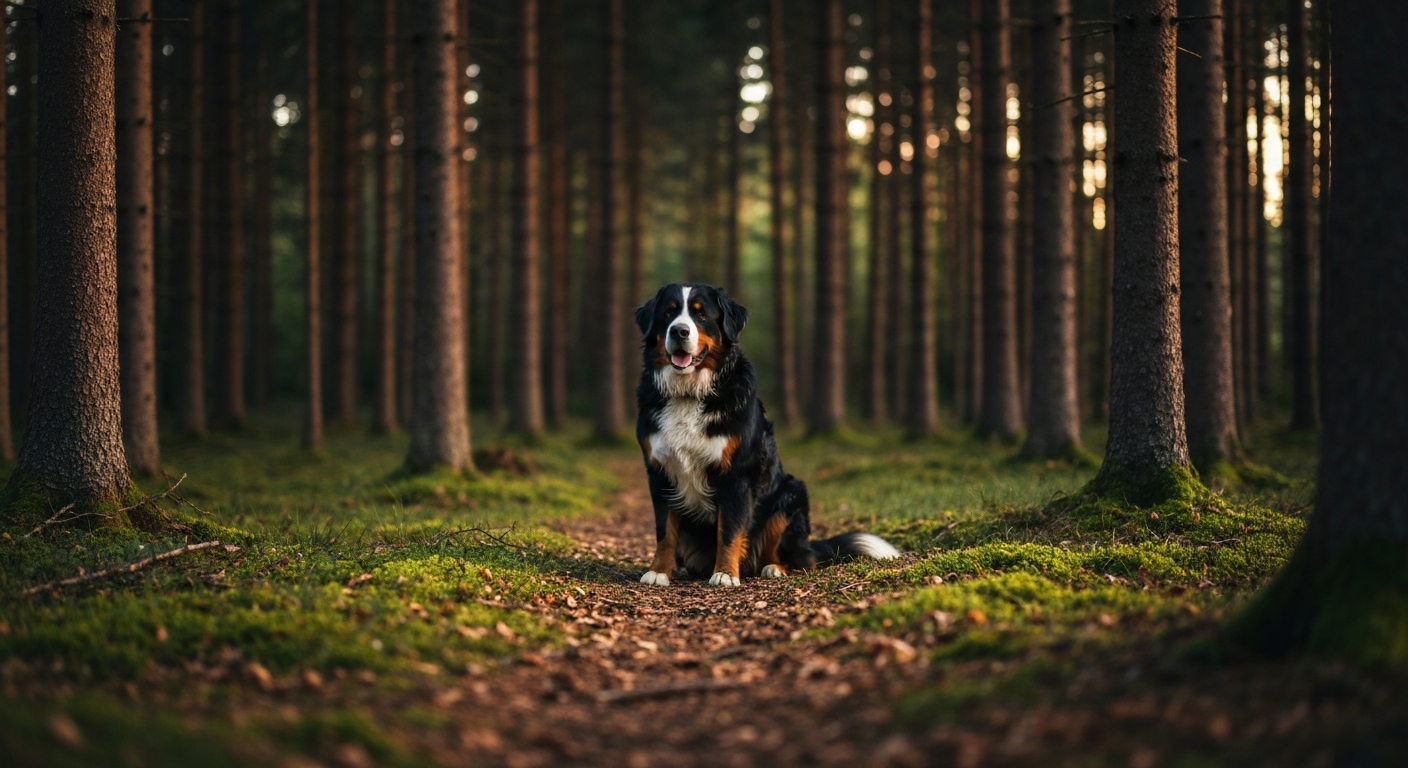
Welcoming a new dog into your home is a truly rewarding experience. With so many incredible breeds to consider, navigating your options can feel a bit overwhelming. Today, we’re comparing two breeds that appear strikingly different at first glance: the magnificent, kind-hearted Bernese Mountain Dog and the spirited, fluffy Pomeranian. One is a robust dog bred for life in the mountains, while the other is a tiny dog developed for companionship. So, Bernese Mountain Dog versus Pomeranian: which of these wonderful breeds might be the right fit for your life?
Let's delve into the key distinctions to help guide your decision. We'll look beyond mere size to discuss personality traits, health considerations, and what it truly means to share your home with each of these unique breeds.
At a glance: A side-by-side snapshot
Before we dive into the specifics, here’s a quick comparison of these two breeds.
- Breed Group:
- Working Group (Bernese Mountain Dog) vs. Toy Group (Pomeranian)
- Weight:
- 70-115 lbs (Bernese) vs. 3-7 lbs (Pom)
- Height:
- 23-27.5 inches (Bernese) vs. 6-7 inches (Pom)
- Lifespan:
- 7-10 years (Bernese) vs. 12-16 years (Pom)
- Temperament:
- Good-natured, calm, strong (Bernese) vs. Inquisitive, bold, lively (Pom)
- Grooming Needs:
- High - Frequent brushing required
- Exercise Needs:
- Moderate (Bernese) vs. Low to Moderate (Pom)
The gentle giant: Meet the Bernese Mountain Dog
Picture a stunning tri-color dog with a wonderfully kind expression. Hailing from the Swiss Alps, these dogs were skilled and versatile farm helpers, adept at pulling carts, herding livestock, and serving as loyal guardians. This heritage profoundly shaped their nature; they are strong, dependable, and deeply devoted to their families.
A well-bred Berner embodies the essence of a calm, large companion. They are celebrated for their good nature, patience with children, and generally quiet demeanor at home. However, do not mistake their calmness for a lack of energy. They thrive on having a purpose, which might simply involve accompanying you on a lengthy hike. Their intelligence and eagerness to please can make training a rewarding experience. For further insights into working with their intelligence, exploring our dog training guides can provide an excellent foundation for you and your Berner.
The pint-sized prince: Introducing the Pomeranian
Now, let’s turn our attention to a much smaller breed. The Pomeranian, often affectionately called a "Pom," is a tiny bundle of fluff packing a personality far larger than its physical size. Descended from larger Spitz-type sled dogs, these small dogs were selectively bred down in size in the Pomerania region of Germany and Poland. Queen Victoria's own fondness for the smaller variety helped solidify their popularity as the cherished toy companions we recognize today.
Poms are energetic, intelligent, and fiercely loyal. They often seem entirely unaware of their diminutive stature, exhibiting a bold and curious outlook on life. This makes them rather effective little watchdogs, as they are quick to alert you to any sounds outside. They forge strong connections with their owners and relish being the center of attention. Their small size renders them adaptable to various living arrangements, but their active minds require engagement to ward off boredom and potential mischief.
Size and space: A significant difference
This is the most obvious contrast between the two. A fully grown Bernese Mountain Dog can easily outweigh fifteen Pomeranians combined. This substantial size disparity carries significant practical implications for potential owners.
- Living Space: A Pomeranian can be perfectly content in a compact apartment, provided they receive daily walks and opportunities for play. A Bernese Mountain Dog, conversely, truly benefits from more expansive living quarters. While they can adjust to apartment life, it is not their ideal environment. A home with a securely fenced yard where they can move freely is far preferable.
- Your Personal Space: A Pom will likely find a cozy spot on your lap. A Berner, however, will occupy a considerable portion of your lap, or quite possibly, your entire sofa. Be prepared to share your living space with a very large, very affectionate dog.
- Travel: Transporting a Pomeranian in a carrier for a trip is typically a straightforward affair. Arranging travel for a Bernese Mountain Dog on an airplane or even fitting them comfortably in a car can present a notable logistical challenge.
Temperament and personality: Calm guardian versus spirited companion
Beyond their physical size, their core personalities present distinct differences. The Bernese Mountain Dog offers a calm, steady presence. They are watchful and may be reserved around unfamiliar people but are not typically aggressive. Their demeanor leans more toward that of a "gentle guardian" rather than a fiercely protective guard dog. They are frequently described as wonderful with children, thanks to their inherent patience.
The Pomeranian, on the other hand, is brimming with energy. They are outgoing, lively, and consistently engaged in household activities. Their intelligence, coupled with a natural tendency toward independence, means they benefit from an owner who provides confident leadership and establishes clear boundaries. Without appropriate guidance, they can develop behaviors such as bossiness and excessive barking. Early and consistent socialization is crucial for any puppy, but it is particularly advantageous for a Pom destined to grow into a well-adjusted adult. Grasping the fundamentals of responsible pet ownership from the outset serves as an invaluable resource for all new owners.

Grooming and maintenance: Dealing with the fluff
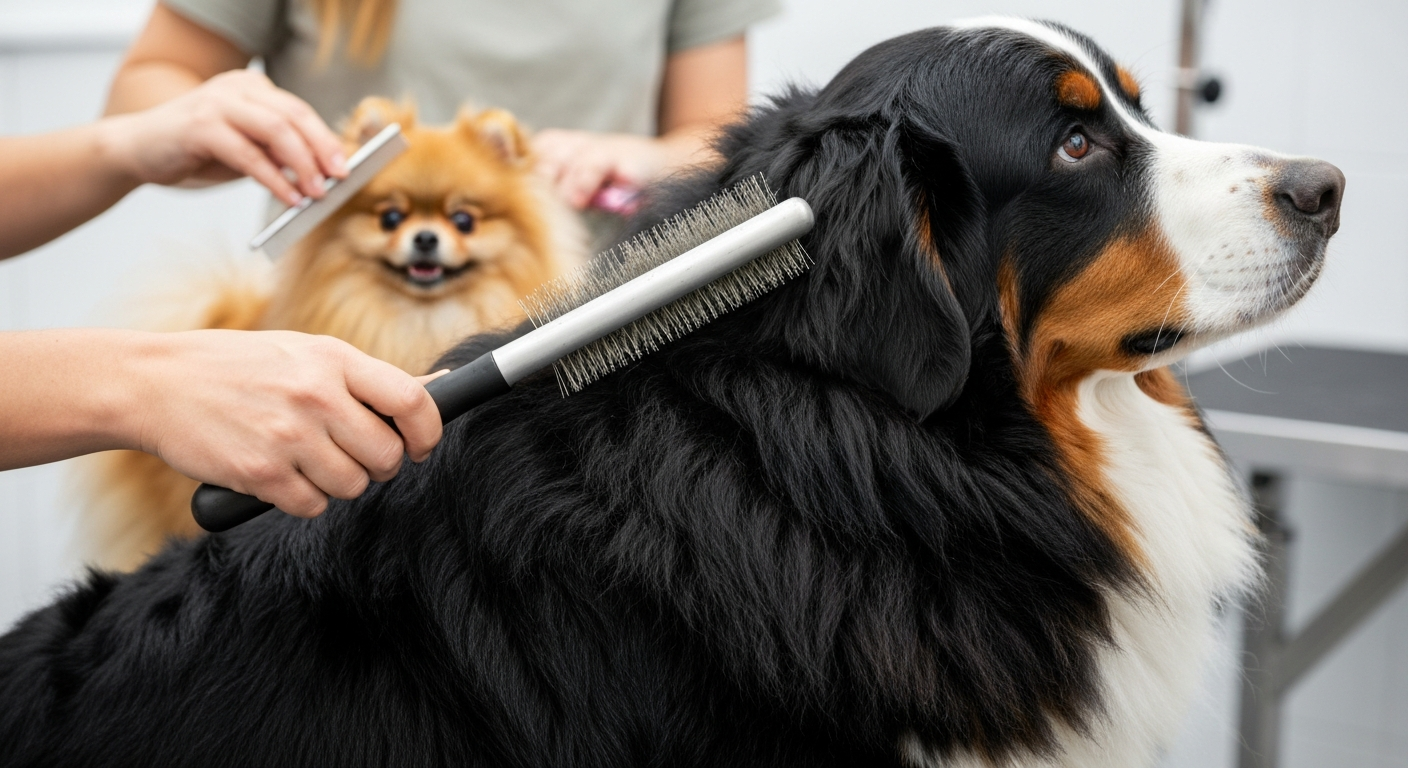
Both breeds are notably fluffy, a characteristic attributed to their thick double coats. This means one thing is certain: shedding. Expect a considerable amount.
- Bernese Mountain Dog: Their long, dense coat requires brushing several times a week to prevent matting and manage shedding, which occurs year-round with heavier shedding periods twice annually. You will need robust grooming tools such as a slicker brush and an undercoat rake.
- Pomeranian: Their dense coat also necessitates regular brushing, at least 2-3 times weekly, to prevent tangles, particularly around the neck and hindquarters. While their smaller size makes the task quicker, it is just as vital for maintaining coat health.
Health and lifespan: Important considerations
This is perhaps the most significant divergence. Committing to a Bernese Mountain Dog often involves facing potential health challenges. Their average lifespan of 7-10 years is regrettably brief for a dog, frequently impacted by a higher incidence of certain cancers. They are also susceptible to bloat, a critical medical emergency, and joint issues such as hip and elbow dysplasia. For any prospective owner, understanding these risks and consulting with a veterinarian about preventive care is an integral part of responsible ownership. You can find more information about breed-specific health concerns in our dog health care section.
Pomeranians, much like many smaller dog breeds, typically enjoy a longer lifespan, ranging from 12-16 years. However, they have their own common health considerations, including luxating patellas (slipping kneecaps), tracheal collapse (a frequent issue in toy breeds), and significant dental problems. Diligent dental care is essential for any Pom owner.
Cost of ownership: An estimated annual budget (2026)
The financial commitment for owning either breed varies considerably. From the initial purchase price to the ongoing monthly food expenses, the difference is substantial.
| Cost Category | Bernese Mountain Dog (Annual Estimate) | Pomeranian (Annual Estimate) |
|---|---|---|
| Initial Puppy Cost | $2,000 - $4,000+ | $1,500 - $3,500+ |
| Food | $1,000 - $1,800 | $300 - $500 |
| Routine Vet Care | $500 - $800 | $400 - $700 |
| Grooming | $400 - $600 (professional) | $300 - $500 (professional) |
| Supplies & Toys | $300 - $500 (larger beds, crates, leashes) | $200 - $400 |
| Total Estimated First Year | $4,200 - $7,700+ | $2,700 - $5,600+ |
Which breed is right for your lifestyle?
Ultimately, the decision hinges on a realistic assessment of your lifestyle, your activity level, and your home environment.
Choose a Bernese Mountain Dog if...
- You have ample living space and a secure yard.
- You lead an active lifestyle and enjoy outdoor pursuits, seeking a steadfast companion for hikes.
- You reside in a cooler climate, as they do not tolerate heat well.
- You desire a calm, devoted family member and are prepared for the presence of a very large dog.
- You are ready to manage their potential health concerns and shorter lifespan.
Choose a Pomeranian if...
- You live in an apartment or a home with limited space.
- You want a portable companion who can accompany you on various outings.
- You are seeking a spirited, alert dog with a big personality.
- You enjoy regular grooming and are committed to consistent dental care.
- You desire a companion with a longer potential lifespan and are prepared for training to manage their lively nature.
Whether you opt for the gentle, soulful Bernese Mountain Dog or the spirited, charming Pomeranian, you are poised to welcome a wonderful new friend into your life. The key lies in selecting the dog whose needs, energy levels, and temperament align best with your own. By undertaking thorough research, you are not merely choosing a dog; you are laying the groundwork for a fulfilling, long-term relationship.
Frequently Asked Questions
Are Bernese Mountain Dogs good with small dogs like Pomeranians?
Generally, yes. Bernese Mountain Dogs are known for their gentle and good-natured temperament. With proper socialization from a young age, they can coexist peacefully with small dogs. However, due to the extreme size difference, all interactions should be supervised to prevent accidental injury to the Pomeranian.
Do Pomeranians bark a lot more than Bernese Mountain Dogs?
Pomeranians tend to be more vocal and are known for being alert barkers. Bernese Mountain Dogs have a deep, imposing bark but typically use it more sparingly, often to alert their family to strangers. Consistent training can help manage excessive barking in both breeds.
Which breed is better for a first-time owner?
Both breeds can be suitable for first-time owners, but they present different challenges. The Bernese Mountain Dog's eagerness to please makes training relatively straightforward, but their large size and strength can be overwhelming. The Pomeranian is smaller and more manageable, but their sassy intelligence can lead to 'small dog syndrome' if not trained properly.
What is the biggest health concern for each breed?
For the Bernese Mountain Dog, the most significant health concerns are various forms of cancer and bloat (Gastric Dilatation-Volvulus), which contribute to their unfortunately short lifespan. For Pomeranians, common issues include luxating patellas (dislocated kneecaps), tracheal collapse, and dental problems.