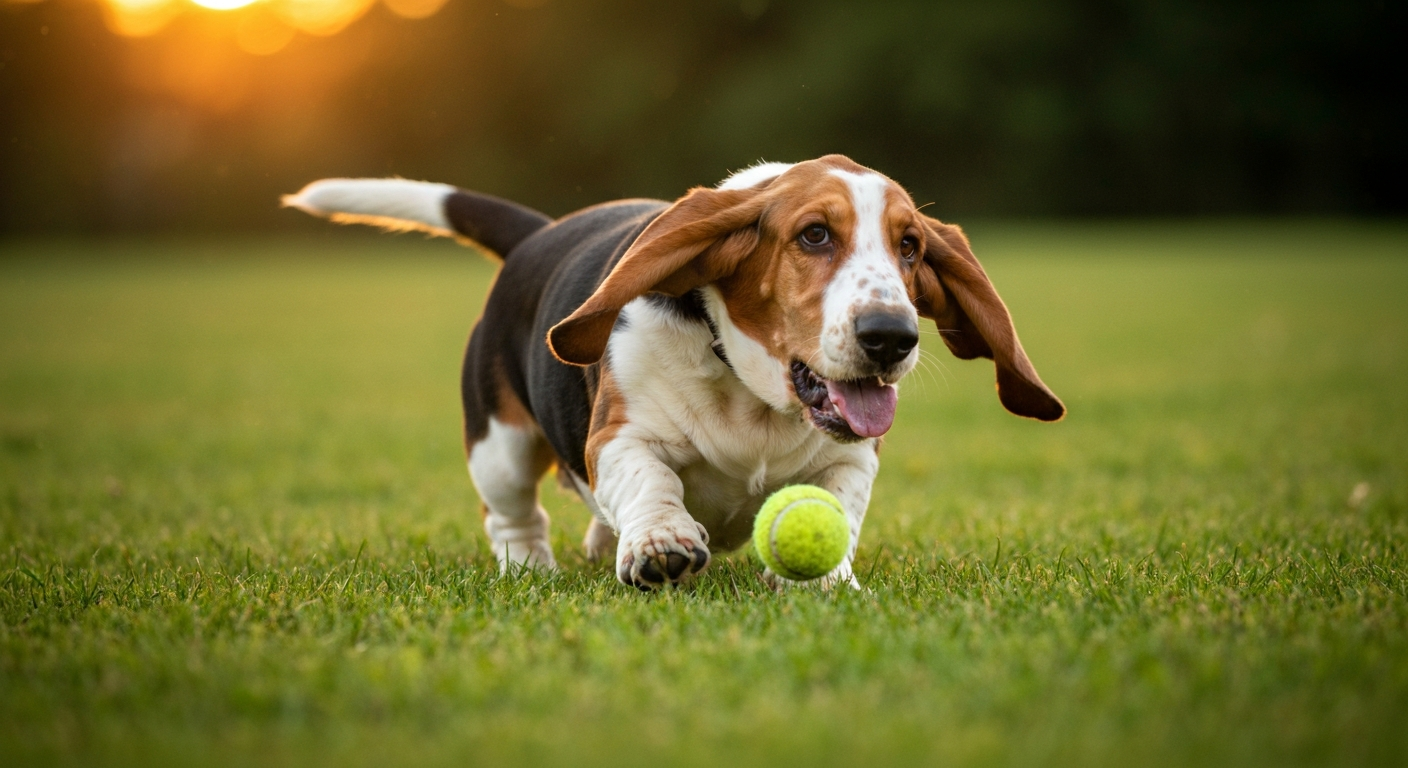
So, you've fallen for those soulful, droopy eyes, the comically long ears, and that low-slung, ambling gait. Welcome to the wonderful world of the Basset Hound! These dogs are charming, affectionate, and utterly unique. But as you're likely discovering, training a Basset Hound comes with its own special set of challenges. You might be asking yourself, "Is my dog stubborn, or am I doing something wrong?"
Let me put your mind at ease: you're not alone, and your dog isn't intentionally being difficult. Effective Basset Hound training isn't about breaking a stubborn will; it's about understanding and working with centuries of breeding. These aren't just dogs; they are elite scenting machines on four short legs. In this guide, we'll unlock the secrets to training your Basset, turning potential frustration into a fun and rewarding partnership.
Understanding the Basset Hound's unique mindset
Before you teach a single command, you must understand what makes your Basset tick. They were bred in France to be trailing hounds, capable of following a scent for miles over difficult terrain without needing constant direction from a human. This history is the key to everything.
- Scent-Driven World:
- A Basset's nose is one of the most powerful in the canine kingdom, second only to the Bloodhound. When they catch an interesting scent, their brain effectively switches off everything else. It's not defiance; it's instinct. Your voice becomes background noise to the symphony of smells they are experiencing.
- Independent Thinker:
- They were designed to solve problems (like finding the source of a smell) on their own. This translates to an independent streak in a home environment. They don't always look to you for permission or guidance because they are wired to be self-sufficient.
- Not Stubborn, Just... Focused:
- What we perceive as stubbornness is often just a single-minded focus. If your Basset doesn't want to do something, it's usually because they have determined that something else (like sniffing a particularly interesting blade of grass) is a much higher priority. Your job is to become more interesting than the grass!
The golden rules of Basset training
General obedience principles apply, but with Bassets, you need to amplify certain strategies. Forget old-school, dominance-based training; it will get you nowhere with these sensitive souls. The entire foundation of your relationship should be built on positive reinforcement, a cornerstone of modern dog training techniques.
1. Harness the power of the nose
Your Basset's greatest weakness is also your greatest training asset: their stomach. They are famously food-motivated. Use this to your advantage! A piece of dry kibble won't cut it. You need high-value, incredibly smelly treats to capture their attention. Think tiny pieces of chicken, cheese, or liver treats. The smellier, the better.
2. Keep training sessions short and sweet
A Basset Hound's attention span for tasks that don't involve sniffing is notoriously short. Aim for multiple 5-10 minute training sessions throughout the day rather than one long, 30-minute slog. End each session on a positive note with a command they know well, so they always finish feeling successful and eager for the next time.
3. Be outrageously patient and consistent
Patience isn't just a virtue with a Basset; it's a necessity. They can be slow to learn new concepts, especially house training. Everyone in the household must be on the same page with rules and commands. Consistency is the bedrock that will eventually convince your hound that your way is the best way.
Tackling common Basset Hound training challenges
Now let's get into the nitty-gritty. These are the areas where most new Basset owners find themselves needing a little extra help.

House training the reluctant hound
This is often the biggest hurdle. Bassets can be difficult to house train. Success hinges on a rigid schedule and vigilant supervision. A crate is your best friend here, providing a safe den and preventing accidents when you can't watch them. Here’s a sample schedule for a puppy:
| Time | Activity |
|---|---|
| 7:00 AM | Wake up, immediate potty break outside. |
| 7:15 AM | Breakfast in the crate. |
| 7:45 AM | Potty break. |
| 8:00 AM - 10:00 AM | Supervised playtime, followed by a nap in the crate. |
| 10:00 AM | Potty break. |
| 12:00 PM | Lunch, followed by an immediate potty break. |
| 2:00 PM | Potty break. |
| 4:00 PM | Potty break after a nap. |
| 5:30 PM | Dinner, followed by an immediate potty break. |
| 7:30 PM | Potty break. |
| 10:00 PM | Final potty break before bedtime. |
Remember to praise them lavishly and give a high-value treat *the second* they finish their business outside. Never punish for an accident; simply clean it up with an enzymatic cleaner and resolve to be more vigilant.
Mastering the walk: The nose vs. you
Walking a Basset can feel like you're trying to fly a kite in a hurricane. Their nose is permanently attached to the ground. A front-clip harness is a game-changer, giving you better control without putting pressure on their neck. Practice the "leave it" command at home first, then take it on the road. Occasionally stop and let them have a good "sniffari" as a reward for walking nicely for a stretch. A well-exercised dog is a happy dog, and walking is a key part of your pet's overall health and wellness plan.
The Basset Bay: Managing vocalizations
That deep, resonant "Arooo!" is classic Basset, but it can be a problem if excessive. Bassets often bay out of boredom or to get attention. The key is to manage the behavior before it starts. Ensure they have plenty of mental stimulation and never reward baying with attention (even negative attention). Instead, teach a "quiet" command by rewarding moments of silence.
Enrichment: A Basset's secret to happiness
A bored Basset is a destructive and noisy Basset. Obedience training is just one piece of the puzzle. You must also satisfy their powerful instincts in a positive way.

Introduce them to scent work! It's the perfect sport for this breed and channels their energy beautifully. You can start at home by hiding smelly treats in a snuffle mat or around a room. Puzzle toys that require them to solve a problem to get a treat are also fantastic for their independent minds. This type of breed-specific enrichment is crucial, and it's a great reminder that when choosing a pet, understanding the characteristics of different dog breeds is essential for a happy home.
Training a Basset Hound is a journey, not a race. It requires humor, creativity, and a deep well of patience. By embracing their unique nature and working with their instincts, you won't just train a dog—you'll build an unbreakable bond with one of the most endearing and loyal companions you could ever hope for. Now go grab those smelly treats and get started!
Frequently Asked Questions
Are Basset Hounds difficult to train?
Basset Hounds are not necessarily difficult to train, but they require a different approach. Their intelligence is channeled into independent problem-solving for tracking scents, which can be misinterpreted as stubbornness. They respond best to patient, positive reinforcement and creative, food-motivated training sessions.
What is the best motivation for a Basset Hound during training?
The single best motivator for a Basset Hound is food, specifically high-value, smelly treats. Because their world is driven by scent, treats like small pieces of cheese, hot dogs, or dried liver will hold their attention far better than standard kibble.
How long does it take to house train a Basset Hound?
House training a Basset Hound can take longer than many other breeds, often between 4 to 8 months. Their powerful noses can be distracting, and they can be stubborn about routines. Success depends entirely on the owner's consistency with a strict schedule and positive reinforcement.