
Choosing a new cat is an exciting decision! If you're looking for a feline with a distinctive look and an engaging personality, you might be considering the unique Sphynx or the charming Devon Rex. Both breeds offer something special, moving beyond the typical cat experience, and each brings a unique set of characteristics to a home. As a pet behaviorist, I know how important a cat's personality and daily care are for their well-being and for your enjoyment as an owner. Let's look at the Sphynx and Devon Rex, focusing on what truly matters: their behavior, their needs, and how to help them lead happy, healthy lives.
Understanding the Sphynx
The Sphynx cat might look hairless, but it actually has a fine, downy fuzz that feels like a peach. This distinctive appearance can lead some to assume they are distant or don't need much attention. That's not the case at all! These cats are known for being very outgoing, energetic, and deeply connected to their human families. They don't do well being left alone for long periods; they want to be part of your daily activities.
Behavior and temperament
Sphynx cats are often compared to dogs in how affectionate they are and how much attention they seek. They are very social animals, thriving on human interaction and often forming strong bonds with specific people. They are also known for their playful mischief and a love for being the center of attention. Expect your Sphynx to greet you at the door, follow you around the house, and even participate in activities like playing fetch or learning simple tricks. Because they are intelligent, they can also get into mischief if they're bored. Providing plenty of mental and physical activities is crucial.
Daily care and needs
Because the Sphynx lacks a thick coat, its skin is exposed and needs specific care. They require regular baths, usually weekly or every other week, to remove natural skin oils that can build up. Without these baths, these oils can lead to skin problems. Their large ears also need regular cleaning to prevent wax buildup. Additionally, their fast metabolism can mean they eat more than other breeds, so it's important to monitor their food portions and the quality of their diet to prevent weight gain. They love warmth, so they'll often seek out sunny spots or cozy blankets. In cooler weather, they might need a sweater.
Sphynx and training
Their intelligence and desire to please make Sphynx cats generally easy to train. They respond well to positive reinforcement, such as clicker training or using treats. This makes teaching them basic commands, good litter box habits, and redirecting scratching to a post rather than your furniture more straightforward. Their curious nature means they can be taught to enjoy puzzle feeders, which adds mental stimulation during meal times.
Meet the Devon Rex
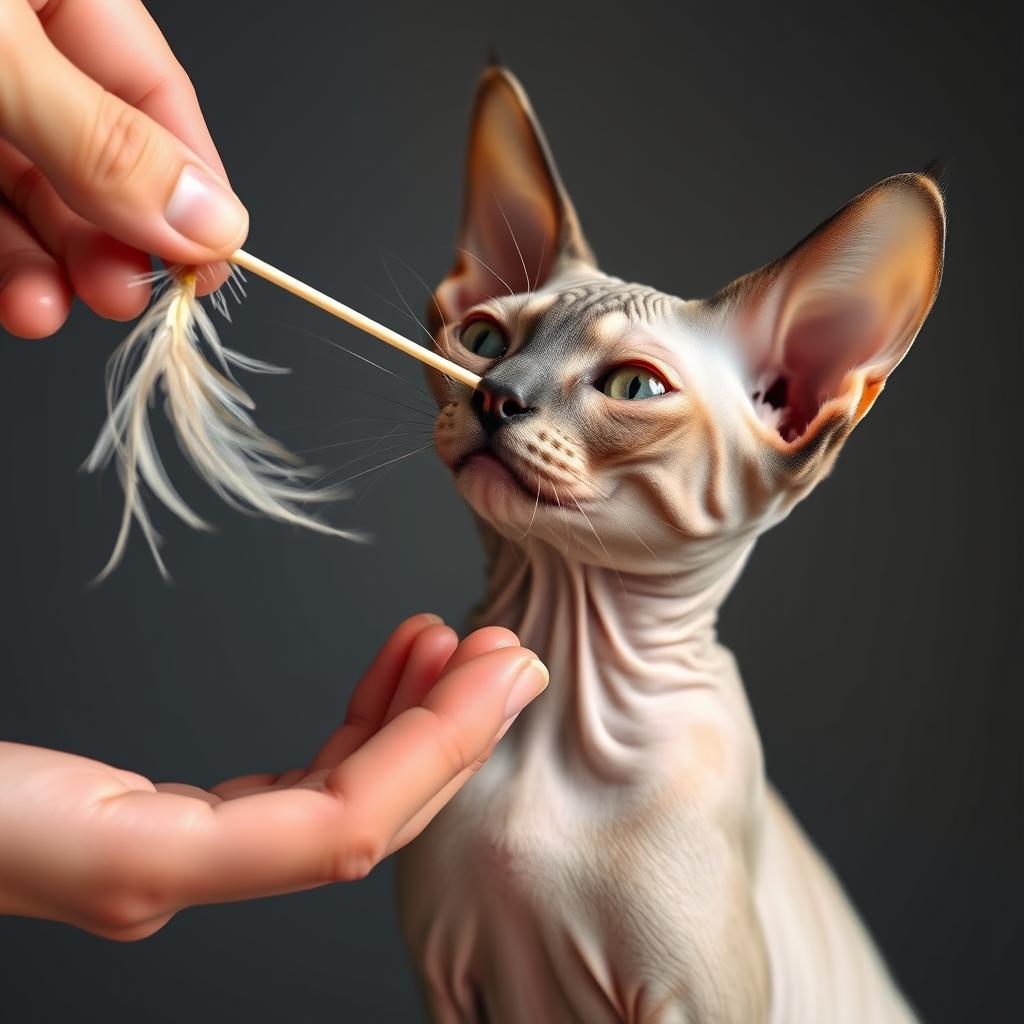
The Devon Rex, with its elfin face, large ears, and short, curly coat, is another breed that captures hearts with its unique look and even more unique personality. Often described as having a playful sense of humor, the Devon Rex is an active, curious, and highly interactive cat that thrives on being part of the family. They might not be the type to simply sit on your lap quietly, but they love being near their people, often perching on shoulders or napping in unusual spots.
Behavior and temperament
Devon Rex cats are known for their playful and sometimes mischievous nature. They have an endless curiosity and a love for exploring, often finding themselves in amusing situations due to their adventurous spirit. They are quite vocal, communicating with a range of chirps and trills. Their playful energy can seem boundless, and they enjoy interactive games, climbing, and even 'talking' to their owners. They tend to be very social and generally get along well with children, other cats, and dogs when introduced properly.
Daily care and needs
The Devon Rex's coat is a defining feature. It's a short, soft, wavy or curly coat that feels quite different from a typical cat's fur. While they don't have the same oil buildup issues as a Sphynx, their coat can still benefit from occasional gentle brushing to keep it healthy and remove loose hairs. Similar to the Sphynx, they can be prone to dental problems, so regular dental care is advisable. Their active nature means they need ample space to move and play. Because they can be sensitive to temperature changes due to their thinner coat, ensuring a warm environment is important, especially during colder months.
Devon Rex and training
Devon Rexes are intelligent and eager to engage, making them receptive to training. They can learn tricks, respond to their names, and are usually easy to litter train. Their playful disposition means training sessions should be kept short, fun, and rewarding. They often enjoy activities like playing fetch, and their ability to climb makes them well-suited for cat trees and other vertical spaces.
Sphynx vs. Devon Rex: Differences and similarities
While both breeds are known for their outgoing and social personalities, there are subtle differences that can help you decide which might be a better fit for your home.
- Coat:
- Sphynx: Appears hairless, but has a fine, downy fuzz. Needs regular bathing.
- Devon Rex: Short, soft, wavy or curly coat. Benefits from occasional gentle brushing.
- Social needs:
- Sphynx: Extremely social, seeks attention, can experience separation anxiety if left alone for extended periods.
- Devon Rex: Very social, playful, enjoys interaction, but typically a little more independent than the Sphynx.
- Energy level:
- Sphynx: High energy, playful, enjoys mischief and climbing.
- Devon Rex: Very high energy, extremely playful, loves to explore and jump.
- Grooming:
- Sphynx: Regular bathing (weekly/bi-weekly), ear cleaning.
- Devon Rex: Occasional gentle brushing, ear cleaning as needed.
- Vocalization:
- Sphynx: Moderately vocal, expressive.
- Devon Rex: Highly vocal, frequently uses chirps and trills.
- Suitability with children:
- Sphynx: Generally good with gentle children.
- Devon Rex: Generally very good with children.
Making your choice: Personality over appearance
When choosing between a Sphynx and a Devon Rex, remember that while their appearances are striking, their personalities are what will truly shape your relationship. Both breeds are intelligent, highly social, and require significant interaction from their owners. If you are home frequently, enjoy active play with your pets, and don't mind a cat that is often by your side, either breed could be a wonderful addition.
Consider your lifestyle. If you have a busy household with a lot of activity, a Devon Rex's playful energy and adaptability might be a good match. If you desire a cat that is like a fuzzy shadow and enjoys being pampered with regular baths, the Sphynx could be your ideal companion. It's also important to note that while both breeds are generally healthy, potential owners should be aware of common breed predispositions. Regular veterinary check-ups are essential for monitoring your cat's health. Always consult with a veterinarian for any specific health concerns.
Ultimately, the best cat for you is one whose temperament and needs align with your ability to provide care, attention, and enrichment. Whether you choose the bold Sphynx or the playful Devon Rex, you're likely to gain a devoted and entertaining companion for many years.
Considering other breeds?
If you're exploring unique cat breeds, you might also be interested in learning about other breeds with distinctive traits. BreedExplorer.com offers comprehensive guides on a wide range of felines, from the regal Siamese to the fluffy Persian. For a broader overview of different cat personalities and care requirements, our cat breeds section is an excellent resource.
Frequently Asked Questions
What are the main behavioral differences between Sphynx and Devon Rex cats?
Sphynx cats are often described as very social, attention-seeking, and mischievous, enjoying being the center of attention. Devon Rex cats are also very social and playful, often described as 'pixie-like' or 'elfin,' known for their unique vocalizations and love of high places. Both breeds are highly interactive and enjoy being part of family activities.
How do their grooming and care needs differ?
Sphynx cats, despite lacking a visible coat, require regular bathing to remove skin oils and need ear cleaning due to oil buildup. Devon Rex cats have a short, wavy coat that needs occasional brushing but generally less intensive than the Sphynx's bathing routine. Both breeds benefit from regular nail trims and dental care.
Are Sphynx or Devon Rex cats better for families with children?
Both breeds are generally good with children due to their social and tolerant natures. However, individual cat personalities vary. Early socialization and teaching children how to interact gently with cats are key for any breed. Both Sphynx and Devon Rex cats tend to be robust enough to handle gentle play from supervised children.
What kind of living environment do these breeds prefer?
Both Sphynx and Devon Rex cats thrive in active, engaging homes. They enjoy being around their people and can become bored or lonely if left alone for extended periods without stimulation. Providing plenty of toys, climbing structures, and interactive play sessions is important for both breeds to maintain their well-being. Understanding <a href="https://breedexplorer.com/cat-behavior">cat behavior</a> is key to providing a happy home.