
Traveling with a dog: Your guide for adventures in 2026
Exploring a new hiking trail or relaxing on a beach with your four-legged companion sounds wonderful. Traveling with your dog can be a deeply rewarding experience, strengthening your bond and creating lasting memories. However, it requires more than just grabbing the leash. Successful pet travel hinges on preparation, understanding requirements, and prioritizing your dog's safety and comfort. Whether you're planning a cross-country road trip or an international flight, this guide covers what you need for a smooth trip in 2026.
Before you go: The essential pre-travel checklist
Spontaneity is enjoyable, but not when it comes to your pet's well-being. Thorough preparation helps prevent stress and potential problems. Consider this your pre-trip briefing.
Health and veterinary visit
Your veterinarian's office should be your first stop, ideally one to two months before your trip. This visit is important for several reasons:
- Make sure your dog is healthy enough for the demands of travel. Discuss any concerns about anxiety or motion sickness.
- Confirm all vaccinations, especially rabies, are current. Some destinations or airlines have specific vaccine requirements. A thorough check-up is the first step. For more on this, explore our guides on canine health and wellness.
- A microchip is your dog's permanent identification. Check that it's working and that your contact information in the registry is up-to-date. This simple step can make the difference between being lost and found.
- For air travel and crossing state or international borders, you'll need a Certificate of Veterinary Inspection (CVI). This is usually issued no more than 10 days before your travel date.
Identification is vital
The thought of your dog getting lost in an unfamiliar place is concerning. Proper identification is your best protection. Your dog should wear a collar with a sturdy ID tag that includes your name, phone number, and a backup contact. A GPS tracker on the collar can offer additional peace of mind, letting you locate your dog via your phone.
Crate training and acclimatization
Your dog's crate should be a safe, comfortable space, not a place of punishment. If your dog isn't crate trained, start now! Make the crate a positive place with soft bedding, special toys, and treats. This is necessary for air travel and the safest way for them to travel in a car. A well-behaved travel companion is a safe one, and that starts with basic dog training long before you pack your bags.
Hitting the road: Mastering car travel with your dog
Road trips offer the most flexibility when traveling with a dog. You control the pace, the stops, and the environment. Here’s how to make it a positive experience.
Safety first: Securing your pup
An unsecured dog is a significant safety risk for everyone in the vehicle. A 60-pound dog can become a powerful projectile in a crash at just 35 mph. Consider these secure options:
- Travel Crate:
- This is the safest option. A sturdy, well-ventilated crate secured in the backseat or cargo area prevents distraction and protects your dog during an accident.
- Dog Seat Belt/Harness:
- This popular choice allows some movement. Always attach the seat belt tether to a harness, not to a collar, to prevent neck injuries.
- Backseat Barrier/Hammock:
- These keep your dog from jumping into the front seat but offer limited protection in a collision. They are best used with a harness.
Packing the perfect doggy go-bag
Having a dedicated bag for your dog keeps you organized and ensures you don't forget essentials. Pack enough supplies for a few extra days, just in case.
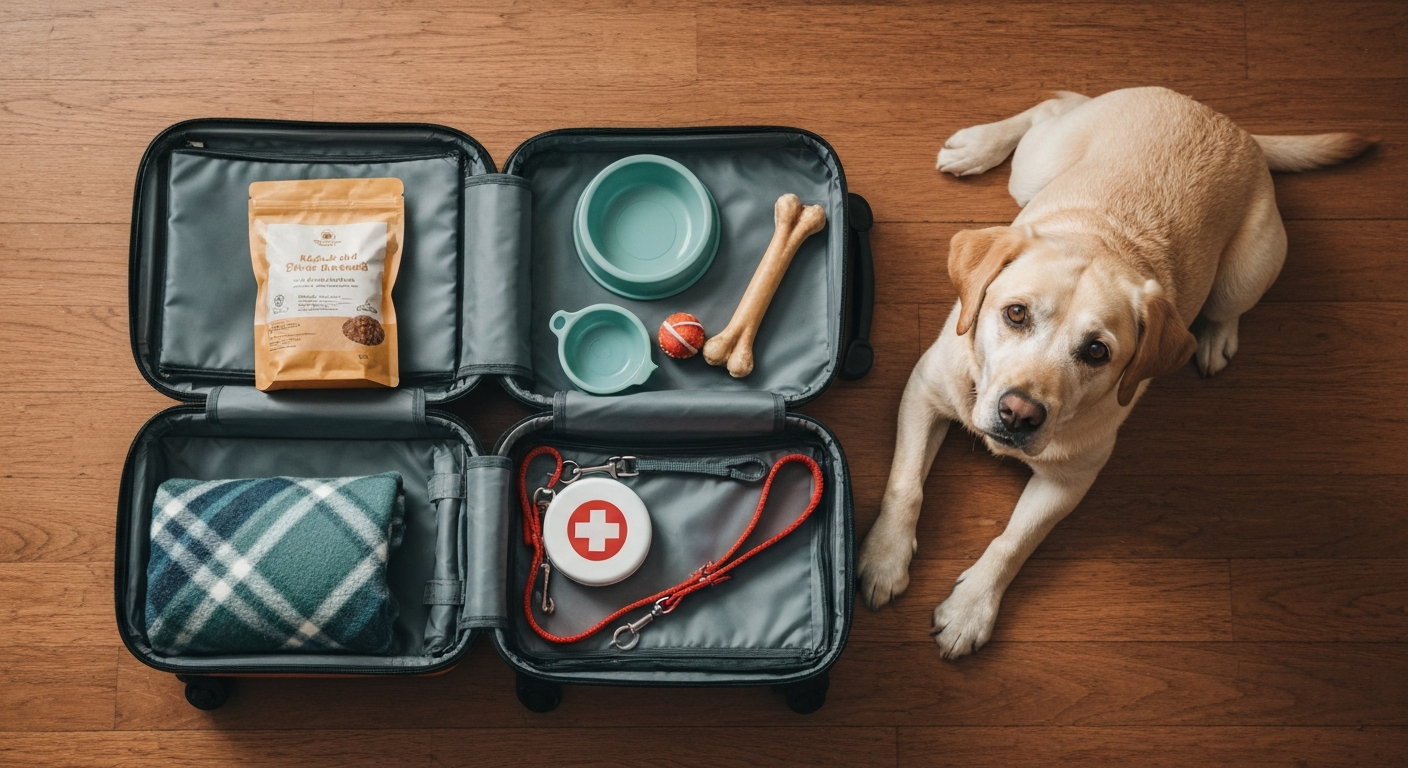
- Food and water (bring from home to avoid upset stomachs)
- Collapsible bowls
- Leash, harness, and collar with ID tags
- Poop bags
- A favorite bed or blanket for comfort
- A few familiar toys
- A pet first-aid kit
- Medications and preventative treatments
- Copies of vaccination records and your vet's contact information
Managing motion sickness and anxiety
Some dogs experience carsickness. To help, avoid feeding a large meal right before you leave. Ensure good ventilation by cracking a window. Frequent potty and stretch breaks (every 2-3 hours) are important for keeping your dog comfortable and happy.
Taking to the skies: Navigating air travel with a dog
Flying with a dog requires careful planning and understanding airline rules, which can be complicated and vary. Always book your dog's ticket by phone, as most airlines limit the number of pets per flight.
In-cabin vs. cargo: What you need to know
If your dog is small enough to fit in a carrier under the seat, they can fly in the cabin. This is the least stressful option. Larger dogs must travel as checked baggage or in the climate-controlled cargo hold. Be aware that many airlines have breed restrictions (especially for brachycephalic or 'snub-nosed' breeds) and temperature restrictions during hot or cold months for cargo travel.
Understanding airline pet policies and fees (2026 update)
Fees and regulations change. The table below offers a general overview, but you must confirm the specifics directly with your airline before booking.
| Airline | In-Cabin Fee (One-Way) | Cargo Fee (One-Way) | Key Requirements |
|---|---|---|---|
| American Airlines | $150 | Varies (via American PetEmbark) | Carrier must fit under seat. Health certificate required. |
| Delta Air Lines | $95 | Varies (via Delta Cargo) | Soft-sided carrier dimensions are strict. No pets in First Class on some aircraft. |
| United Airlines | $125 | Varies (via PetSafe) | Pets cannot fly in premium cabins on certain routes. Hard-sided carriers have specific dimension limits. |
| Southwest Airlines | $125 | Not Offered | Pets in-cabin only. Limited to 6 pets per flight, first-come, first-served. |
The required paperwork
For domestic flights, you'll need that CVI from your vet. For international travel, the requirements become much more complex. Research your destination country's rules months in advance. You may need import permits, specific vaccine records, and a mandatory quarantine period upon arrival. Websites like the USDA APHIS Pet Travel page are a helpful resource.
On arrival: Making your destination pet-friendly
You've made it! The final part of your trip is ensuring your dog settles in and enjoys the vacation too.
- Confirm the hotel's pet policy in writing before you arrive. Be aware of any size restrictions or extra fees. Never leave your dog unattended in a hotel room if they might become anxious or destructive.
- Try to keep feeding and walking times consistent with your home schedule. This predictability helps reduce anxiety in a new environment.
- Always research local leash laws. Be aware of new hazards like local wildlife, different insects, or plants your dog hasn't encountered before.
Traveling with your dog requires commitment, but the joy it brings is immense. With careful planning and a focus on your pet's needs, your next trip can be a wonderful adventure for both of you. For more tips on daily care and enrichment, check out our extensive dog guides. Happy travels!
Frequently Asked Questions
What documents do I need to fly with my dog in 2026?
You will typically need a Certificate of Veterinary Inspection (CVI) issued within 10 days of your flight, proof of rabies vaccination, and a microchip. International travel requires additional paperwork, often including import permits and specific health screenings for the destination country.
How can I keep my dog safe in the car during a road trip?
Never let your dog roam free in the car. Use a crash-tested travel crate, a dog seat belt attached to a harness (not a collar), or a backseat barrier. This prevents them from becoming a projectile in a sudden stop and reduces driver distraction.
What are the first steps to prepare my dog for travel?
Start with a visit to your vet to ensure your dog is healthy enough for travel and up-to-date on all vaccinations. Simultaneously, work on crate training and short car rides to acclimate them to the experience, making the actual trip far less stressful.