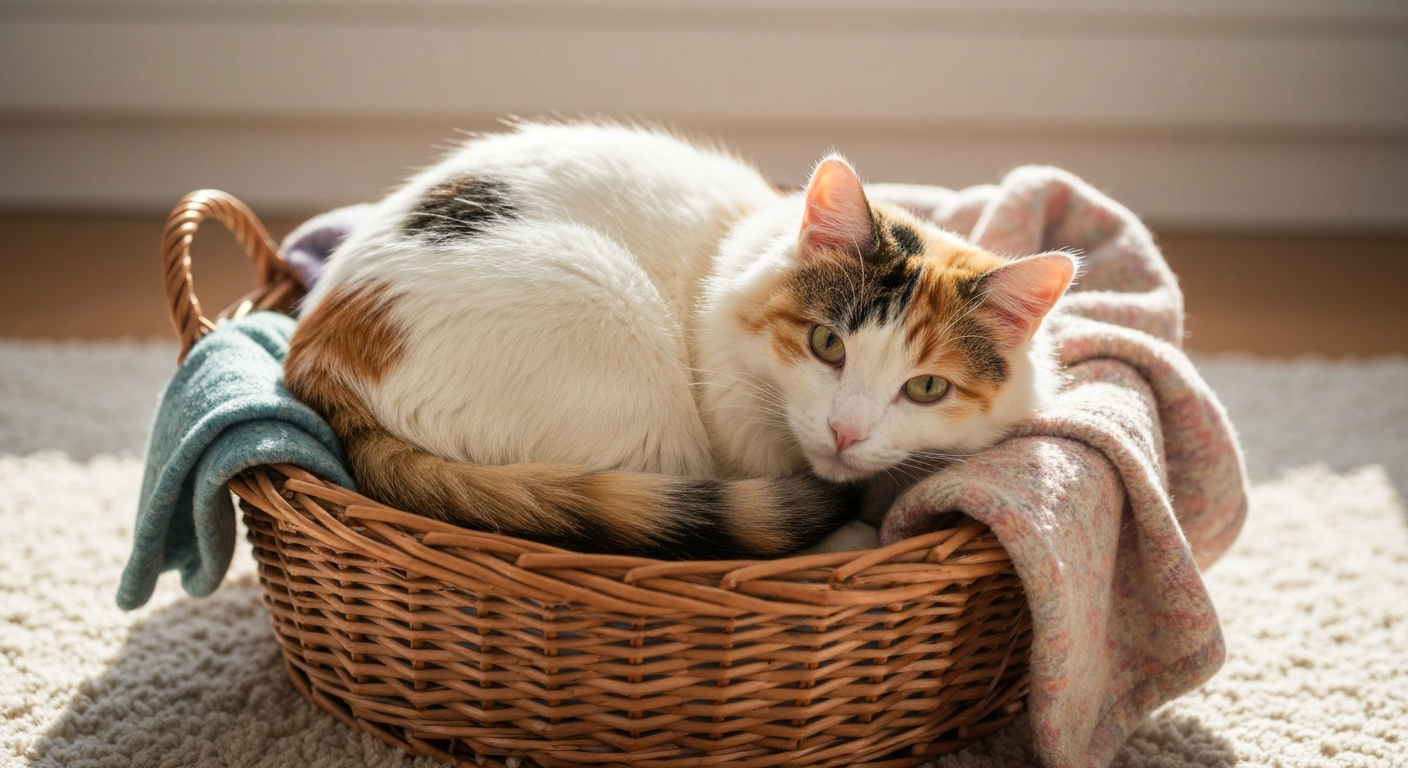
The Exotic Shorthair, with its soft coat, round eyes, and charmingly flattened face, makes for a delightful companion. Often referred to as the "easy-care Persian," these cats offer all the appeal of their long-haired relatives without the intensive grooming demands. However, behind that cuddly appearance is a specific anatomy that every potential and current owner should understand. To ensure your flat-faced friend lives a long, happy, and healthy life, it's important to be aware of the common health concerns associated with the Exotic Shorthair breed.
Understanding their unique facial structure
Before we discuss specific health issues, let's talk about a key characteristic: brachycephaly. This term describes a shortened skull. Through generations of selective breeding, particularly to achieve the desirable flat face inherited from the Persian, the cat's skull structure has been altered. While this gives them their distinctive and endearing look, this conformation is the primary reason for several potential health challenges. Essentially, all the normal features of a cat's head are concentrated into a smaller, compressed area.
- Key features of a brachycephalic skull:
- A skull that is shorter and wider than average.
- Stenotic nares:
- Narrowed nostrils, which can make breathing more difficult.
- Elongated soft palate:
- The soft tissue at the back of the mouth is longer than the shortened head allows, potentially blocking the airway.
- Shallow eye sockets:
- This causes their large eyes to protrude more, making them more vulnerable to injury and dryness.
- Underbite (Brachygnathism):
- The lower jaw may be longer than the upper jaw, leading to misalignment of the teeth.
Understanding this fundamental anatomy is the first step toward providing informed and responsible pet care.
Common health issues linked to their facial structure
The consequences of their brachycephalic skull shape affect breathing, dental health, and vision. Here are the most significant issues to be aware of.
Breathing difficulties
This is a primary concern for the breed. Brachycephalic Obstructive Airway Syndrome (BOAS) refers to a group of airway abnormalities that make breathing challenging. The combination of narrow nostrils and an elongated soft palate can make each breath require more effort. You might notice your cat snoring loudly, making snorting sounds, or breathing with their mouth open. They may also tire quickly during play. In warmer weather or during strenuous activity, they can struggle more. Maintaining a healthy weight and avoiding overexertion, especially on hot days, is essential for managing their breathing.
Dental alignment problems
Trying to fit 30 adult cat teeth into a jaw that is too small often leads to crowding. This misalignment, known as malocclusion, means the teeth don't properly meet. Food particles can easily get trapped, contributing to a rapid buildup of plaque and tartar. This can lead to painful gum disease even in younger cats. Regular veterinary dental check-ups are a vital part of this breed's preventative health care.
Eye health concerns
Those large, expressive eyes, while beautiful, are also prone to certain problems. Due to the shallow eye sockets, the eyes are more exposed and less protected. This can result in several issues:
- Excessive tearing (Epiphora): The tear ducts can become blocked or kinked because of the facial structure. This causes tears to overflow down the face, leading to the characteristic reddish-brown staining. If not cleaned daily, this moisture can irritate the skin.
- Corneal ulcers and scratches: Their prominent eyes are more likely to be injured by everyday objects or even a playful paw.
- Entropion: This condition involves the eyelid rolling inward, causing eyelashes to rub against the surface of the eye, which is painful.
Genetic conditions to monitor
In addition to the structural issues, Exotic Shorthairs can inherit certain genetic conditions from their Persian lineage. Responsible owners and breeders need to be aware of these:
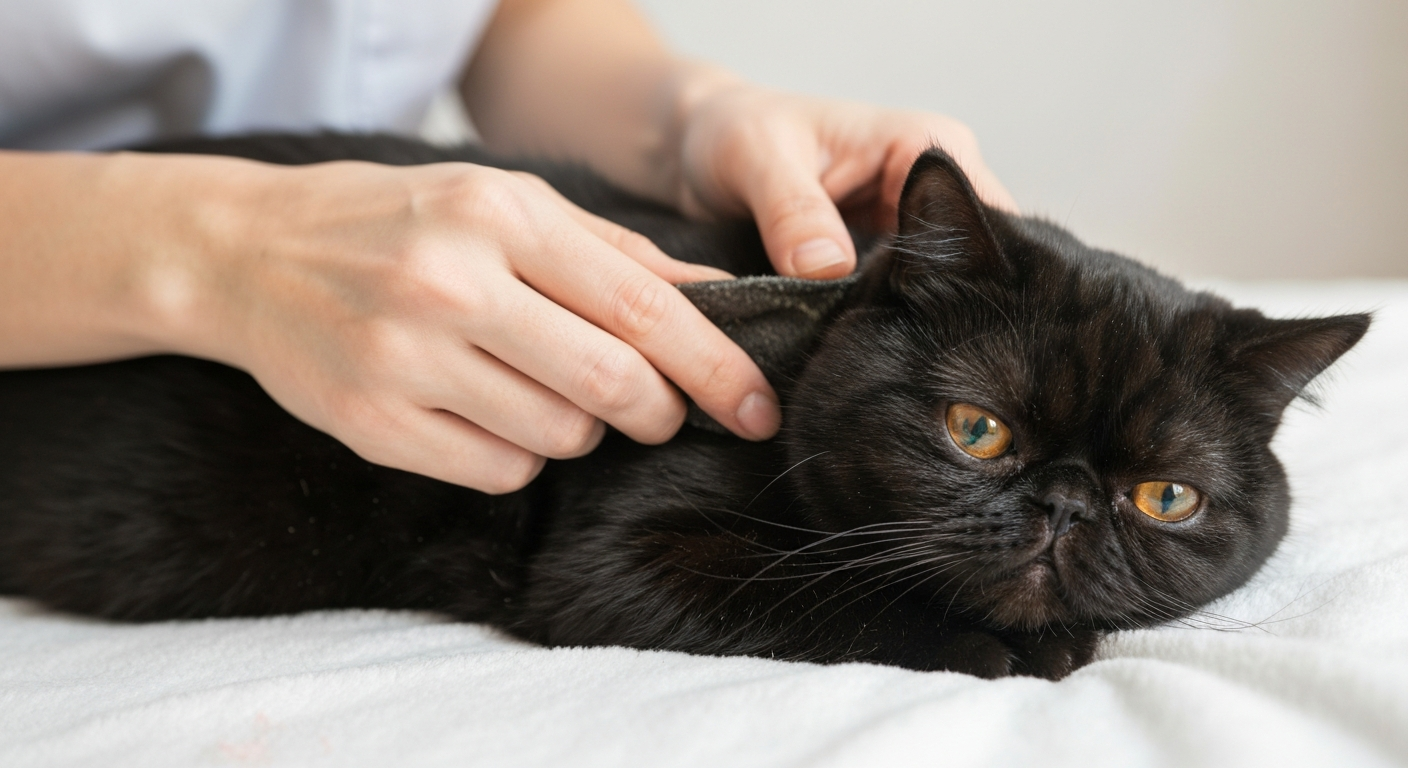
Polycystic Kidney Disease (PKD)
PKD is a serious inherited disorder where numerous cysts develop in the kidneys. These cysts are present from birth and grow over time, eventually impairing kidney function and leading to kidney failure. Fortunately, a reliable DNA test allows ethical breeders to screen their cats and exclusively breed from PKD-negative lines. It is essential to only purchase an Exotic Shorthair kitten from a breeder who can provide proof of DNA testing for both parents, confirming they are negative for PKD. This precaution can prevent significant future distress.
Hypertrophic Cardiomyopathy (HCM)
HCM is a common heart condition seen in many cat breeds, including the Exotic Shorthair. It involves the thickening of the heart muscle, which makes it harder for the heart to pump blood efficiently. Detecting HCM in its early stages can be challenging, which is why regular veterinary check-ups are so important. Your veterinarian will listen to your cat's heart during these visits. In some cases, further screening with an echocardiogram may be recommended.
Additional health considerations
A few other conditions are common in the breed due to their physical traits and calm nature.
Skin and coat care
Those adorable facial folds require regular attention. Moisture and debris can accumulate, creating an environment where bacteria and yeast can thrive, potentially causing skin fold dermatitis. Daily cleaning is necessary. While their coat is short, it is very dense and requires regular brushing to remove loose hair and prevent mats, especially during shedding periods.
Tendency towards weight gain
Exotic Shorthairs are known for their relaxed and gentle demeanor. They often prefer lounging to intense activity. This less active lifestyle, combined with a good appetite, can make them prone to obesity. Excess weight can worsen other health issues, particularly breathing problems and strain on their joints. Careful attention to portion sizes and encouraging gentle play are crucial. Our guides on cat nutrition offer more detailed advice on feeding your feline companion.
Planning for your Exotic Shorthair's health
Being a responsible owner of an Exotic Shorthair means taking a proactive approach to their care. Here's a look at the routine care and potential costs you can anticipate to help your cat thrive.
| Care Aspect | Recommended Frequency | Estimated Annual Cost (USD) |
|---|---|---|
| Regular Veterinary Check-ups | Annually (or twice a year for older cats) | $150 - $300 |
| Vaccinations & Parasite Prevention | As advised by your vet | $100 - $250 |
| Professional Dental Cleaning | Every 1-2 years, requires anesthesia | $500 - $1,200+ |
| Daily Facial Cleaning | Daily | $50 (for cleaning supplies) |
| High-Quality Diet | Daily | $400 - $800 |
| Pet Health Insurance | Recommended | $300 - $600 |
Considering an Exotic Shorthair
The affection and companionship these cats offer are undeniable. They are sweet, gentle, and deeply devoted. However, their unique health needs come with significant responsibilities. They are not a pet for someone seeking a completely independent animal. They require daily attention, a budget for potential veterinary care, and an owner who is observant of their breathing, eyes, and overall well-being.
By selecting a reputable breeder committed to health testing and by dedicating yourself to consistent daily and veterinary care, you can provide a loving home for one of these special cats. The rewarding bond you will share makes the extra attention and effort incredibly worthwhile.
Frequently Asked Questions
What are the most common health problems in Exotic Shorthair cats?
The most common health issues stem from their brachycephalic (flat-faced) nature, including breathing difficulties (BOAS), dental malocclusion, and eye problems. They are also genetically predisposed to Polycystic Kidney Disease (PKD) and Hypertrophic Cardiomyopathy (HCM).
Are Exotic Shorthairs hard to take care of?
While their grooming needs are less intensive than a Persian's, their health is not low-maintenance. They require daily facial cleaning, diligent monitoring for breathing issues, and regular veterinary check-ups to manage their breed-specific conditions.
How long do Exotic Shorthair cats live?
A well-cared-for Exotic Shorthair from a reputable, health-screening breeder typically lives between 12 and 15 years. Proactive health management is crucial for them to reach a full lifespan.